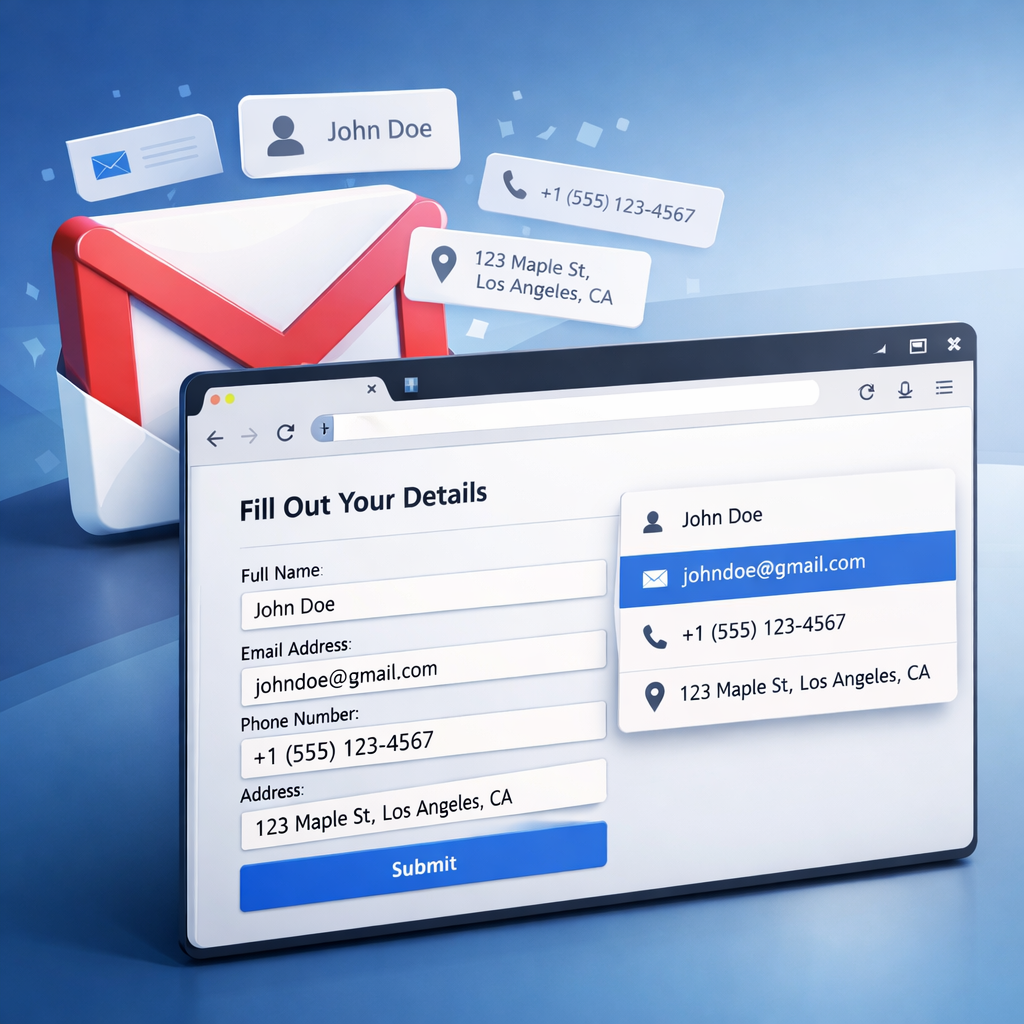
Google is enhancing Chrome’s autofill tools with a new AI-powered feature that enables the browser to look inside your Gmail account to retrieve information for form filling. The updated autofill can suggest data like flight confirmation numbers, order IDs, addresses, phone numbers, membership numbers, and credit card details by scanning emails. It’s designed to streamline filling out forms with information you’ve already shared via email.
This addition builds on Google’s Personal Intelligence tools, which link Google Apps—such as Gmail—with Gemini, its AI assistant. Previously, that system helped answer queries by accessing connected Google Apps; now, with this enhanced autofill, it anticipates and fills in form fields based on the knowledge already stored in your inbox.
Where and When It’s Rolling Out
The feature is being introduced in the United States across desktop, as well as the Gemini-powered Chrome apps on iOS and Android. Users will need to enable enhanced autofill through Chrome’s settings; Google also emphasizes that sensitive information will remain encrypted.
Balancing Convenience and Privacy
This implementation takes Google’s core autofill tools a step further by leveraging your own data stored in Gmail—saving you time, but introducing fresh concerns around privacy. The option is opt-in, so users still control whether Chrome accesses their emails for form completion. Encryption is Spotlighted as the safeguard for data like addresses, credit cards, and order numbers.
This innovation also reflects the broader AI arms race among tech giants, as tools like Apple’s ability to detect verification codes automatically have set user expectations for seamlessness. Google’s strategy seems to be folding more household behavior into the AI experience powered across its ecosystem.
Analysis:The ability for Chrome to read Gmail for autofill marks a pivotal moment in how personal data fuels convenience. For users, this could save frequent time—but the trust threshold is high. Encryption and an opt-in model help, but perception and implementation will matter. Going forward, key indicators will be how securely the data is stored, how granular the control is for individual types of information, and whether this deep integration sets a new baseline for browser-based identity and privacy expectations.