Nvidia’s RTX Spark: A New Challenger to Apple Silicon
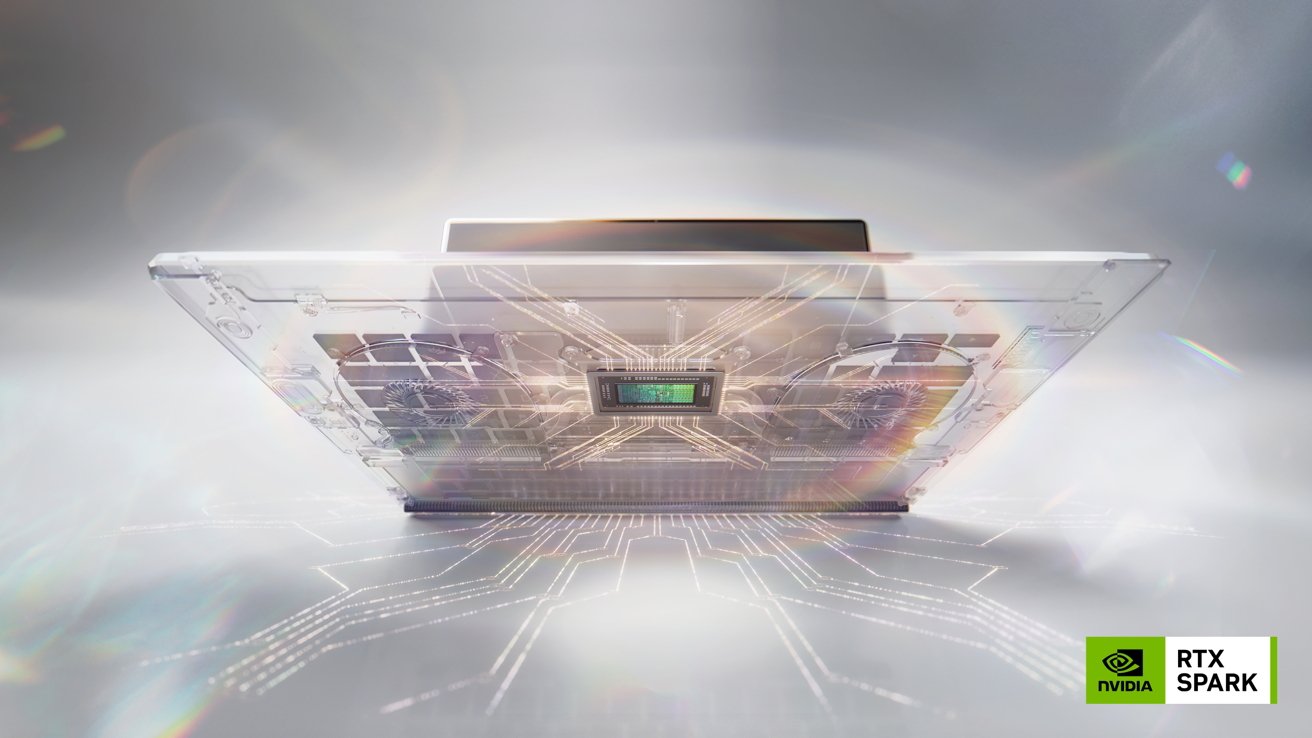
At Computex 2026, Nvidia unveiled the RTX Spark, an ambitious entry into the processor market designed to rival Apple Silicon. This superchip integrates a 20-core ARM-based Grace CPU with a Blackwell RTX GPU housing 6,144 CUDA cores. It supports up to 128GB of unified memory and features a 600GB/s NVLink-C2C interconnect, aiming to deliver substantial AI performance. Nvidia positions the RTX Spark for AI tasks, content creation, and gaming, targeting slim Windows notebooks that offer all-day battery life without compromising performance.
However, a closer examination reveals that the RTX Spark may lag behind Apple Silicon in several key areas. Apple introduced its M1 chip in 2020, setting a high standard for performance and efficiency in ARM-based processors. The M1’s successor, the M2, further enhanced these capabilities, solidifying Apple’s lead in the market. In contrast, Nvidia’s RTX Spark, debuting in 2026, appears to be playing catch-up.
One significant challenge for Nvidia is the optimization of Windows for ARM architecture. While Apple controls both its hardware and software ecosystems, allowing for seamless integration and optimization, Nvidia must rely on Microsoft to adapt Windows for ARM. This dependency could result in performance bottlenecks and compatibility issues, potentially hindering the RTX Spark’s adoption.
Moreover, the RTX Spark’s power consumption raises concerns. Nvidia’s chip is designed to deliver high performance, but this may come at the cost of increased energy usage. In contrast, Apple Silicon is renowned for its energy efficiency, providing robust performance while maintaining impressive battery life. This efficiency is a critical factor for consumers seeking portable devices that don’t sacrifice longevity for power.
Another area where Nvidia faces challenges is in the software ecosystem. Apple’s transition to ARM-based processors was accompanied by a comprehensive strategy to ensure software compatibility, including the development of Rosetta 2 for seamless translation of x86 applications. Nvidia, however, must rely on third-party developers to optimize their applications for ARM, which could lead to a fragmented software experience and limit the RTX Spark’s appeal.
In summary, while Nvidia’s RTX Spark represents a bold move into the processor market, it appears to be trailing behind Apple Silicon by approximately two years. The combination of hardware integration, software optimization, and energy efficiency that Apple has achieved sets a high bar for competitors. Nvidia’s success with the RTX Spark will depend on its ability to address these challenges and deliver a product that not only matches but surpasses the standards set by Apple Silicon.