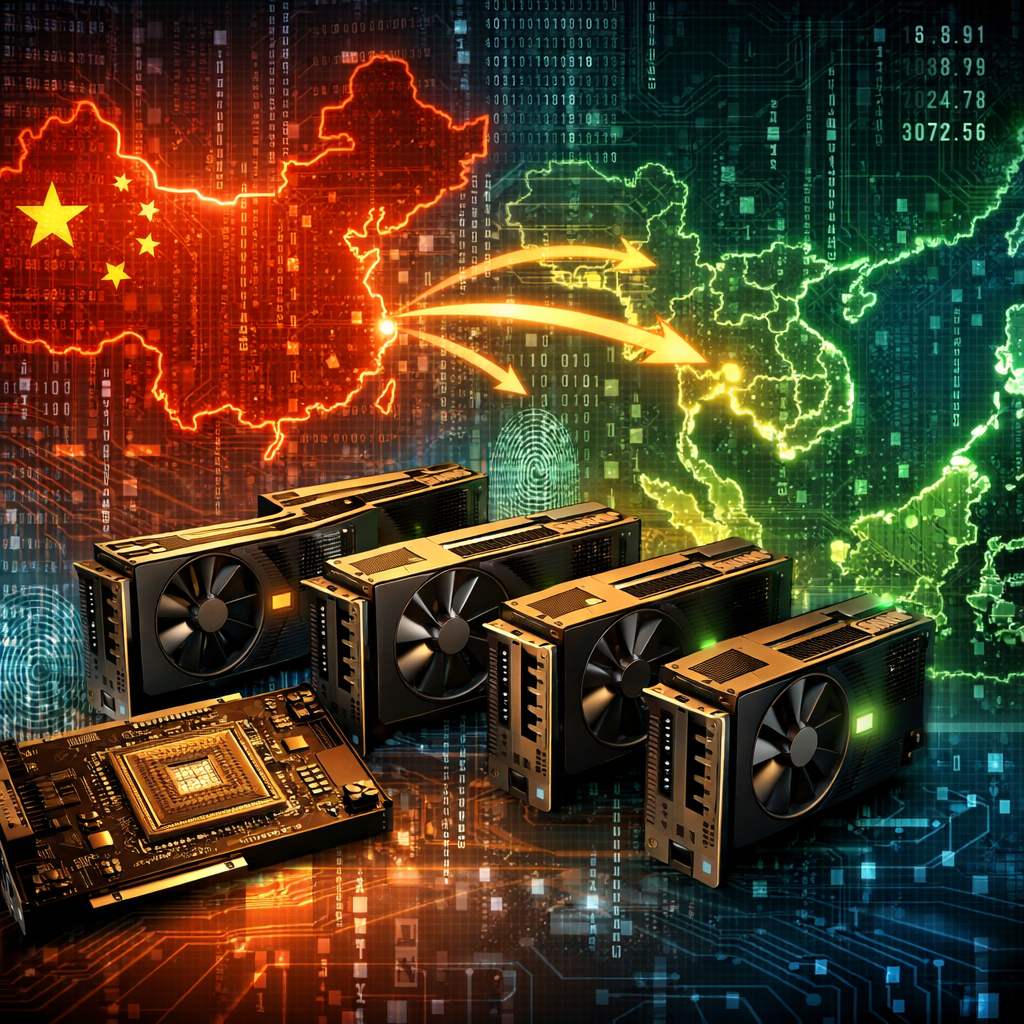
Recent research reveals that several leading Chinese AI models may owe their training to Nvidia Blackwell GPUs—chips that the U.S. has banned from export to China and Chinese-owned companies. The allegations center on weight initialization patterns found in open-weight models from labs including DeepSeek, Moonshot AI, MiniMax, and Ant Group. These findings, if substantiated, suggest cracks in the global AI export control framework.
Forensics point to Blackwell chips
A new forensic analysis from Unemployment Labs indicates that six open-weight Chinese models carry initialization fingerprints consistent with Nvidia’s Blackwell class GPUs, which are subject to strict U.S. export restrictions. Among them are Moonshot AI’s “Kimi K3” series and DeepSeek’s V4 models. The method used relies on how PyTorch seeds model weights and how those seeds map to hardware-dependent architecture layouts; the patterns match those generated by Blackwell-compatible chips. The report emphasizes that while initialization fingerprints are strong indicators of hardware use, they don’t by themselves prove the entire training run was done on those specific GPUs.
Shipping routes and regulatory loopholes
U.S. export restrictions ban Blackwell GPUs from China outright; however, models such as Nvidia’s H200—less powerful chips—have been allowed under certain pathways that still involve steep tariffs. Analysts estimate that about two million advanced GPUs entered China in 2024 and 2025 through indirect channels, including shipments to third-country data centers in places like Malaysia. These transit networks may involve companies acting as intermediaries, possibly obscuring final destinations. One Singapore-based firm under scrutiny is Megaspeed, led by Alice Huang, which reportedly procured nearly $4.8 billion worth of Nvidia product from mid-2024 to early 2026 through its Malaysian subsidiary. Authorities believe some of this equipment may have been diverted into China.
Institutional entanglements and leadership fallout
This issue has also sparked a storm around Nvidia’s former CEO, who recently resigned. His departure followed revelations of a romantic relationship with Alice Huang, whose company has been under U.S. and Singaporean investigation for suspected involvement in chip diversion. Prosecutors and government officials are now examining whether Nvidia had knowledge of, or participated in, illicit export schemes. Amid this scrutiny, the U.S. Commerce Department’s management of chip export licensing and monitoring is under pressure. Critics argue controls should apply not just to ownership or location of hardware, but to who operates it and where.
Export-controlled chips are meant to safeguard U.S. technological leadership. But the so-called Blackwell findings raise questions about enforcement efficacy. Even with plausible evidence, the stakes are high: confirmed violations could lead to legal exposure, trade tensions, and increased regulation across the AI supply chain. As this story unfolds, expect intense legal, diplomatic, and technological examinations of how China has accessed advanced GPUs—how smuggling networks work, how export controls are enforced, and what it means for the global AI ecosystem.
Why this matters: If even a fraction of this evidence holds up, it suggests that China’s frontier AI models may have advanced with hardware the U.S. explicitly blocked. Beyond ethical and legal implications, this challenges the idea that export bans alone can preserve an AI edge. Observers should watch for follow-ups validating the forensic findings, the outcomes of investigations into Megaspeed and Nvidia, and any shifts in export policy in response to these revelations.