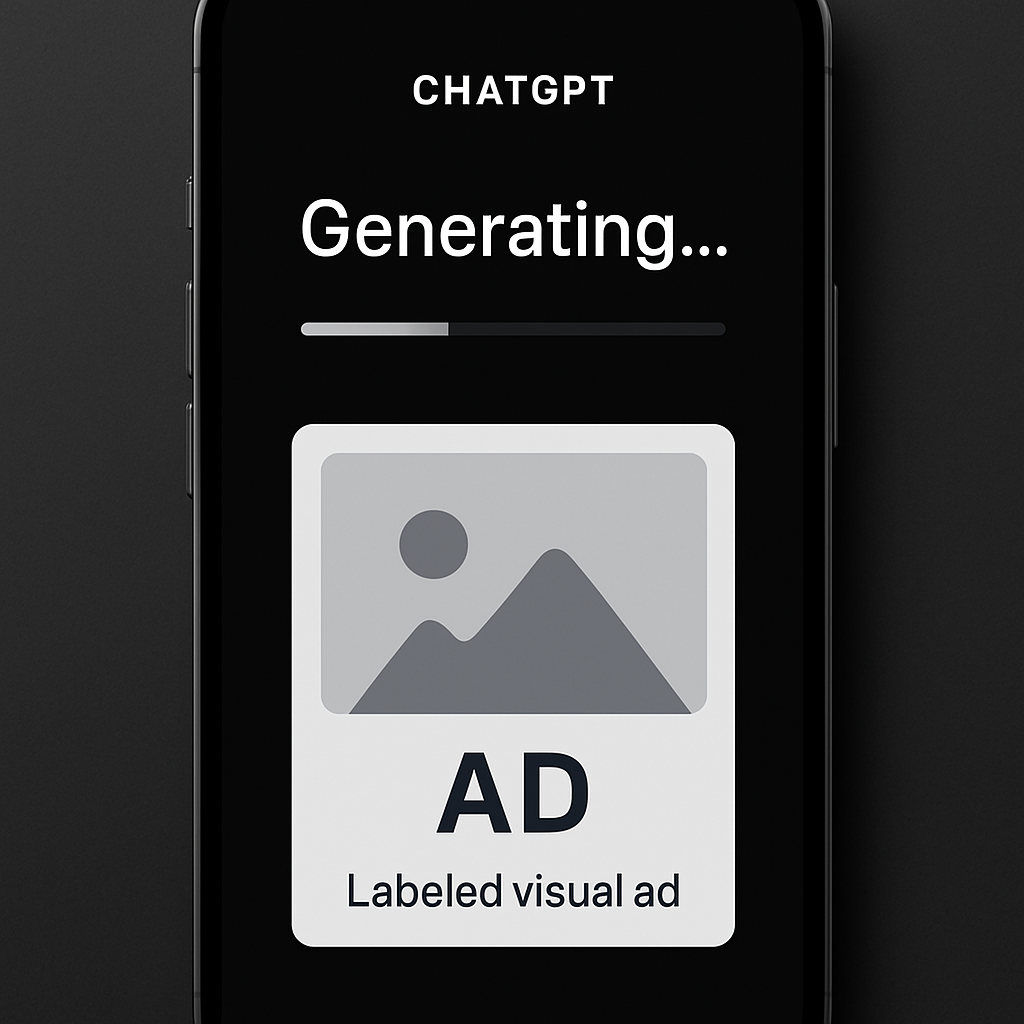
OpenAI is preparing to deploy a fresh ad format in the ChatGPT mobile app, introducing visuals while prompts are processing. This feature, launching in a limited U.S. test later this month, will display visual advertisements during image generation—these ads are clearly labeled and kept distinct from content produced by ChatGPT. The messaging service assures users that these promotions won’t influence the assistant’s response content.
What’s changing in ads for ChatGPT
Here’s how ChatGPT’s ad system is evolving: the new visual ad format will appear not in conversations or static answers, but precisely while the AI is rendering images. Rather than slipping in *after* responses, these ads are designed to sit alongside the generation process. Ads remain separate from the generated image, preventing confusion over what’s created by AI versus what’s marketing material. The update builds upon existing ads that appear at the bottom of responses—like when a recipe is followed by a related grocery delivery ad.
Launch plans, objectives, and advertiser promise
The rollout begins in the U.S. this month via testing, but OpenAI hasn’t yet committed to a full global release. Advertisers are already reporting promising results: lower acquisition costs and a better flow of new customers via ChatGPT ads. OpenAI emphasizes that although ads will be more visible during certain interactions, they won’t interfere with how the model generates answers or recommendations.
These changes stem from OpenAI’s push to expand monetization while maintaining user trust. By placing ads in transition moments—like prompt processing—the company gets visibility without disrupting core functionality. It’s a balancing act: preserving the AI conversation flow while opening new revenue avenues.
Why this matters
This shift marks a meaningful change in how AI chat platforms monetize. Visual ads during image generation hint at greater integration of advertising into user experiences. For users, it raises questions about the line between product inspiration and content creation. For advertisers, it opens up enriched storytelling through images rather than plain text links. OpenAI’s reports of better performance back that strategy.
Watching how users respond—and whether this ad insertion feels intrusive—will be key. If users accept it, AI assistants will likely adopt more dynamic ad placements ahead. If pushback emerges, this could prompt rework or rollback. Either way, this move signals an accelerating trend toward more visible, visually rich advertising in generative AI platforms.