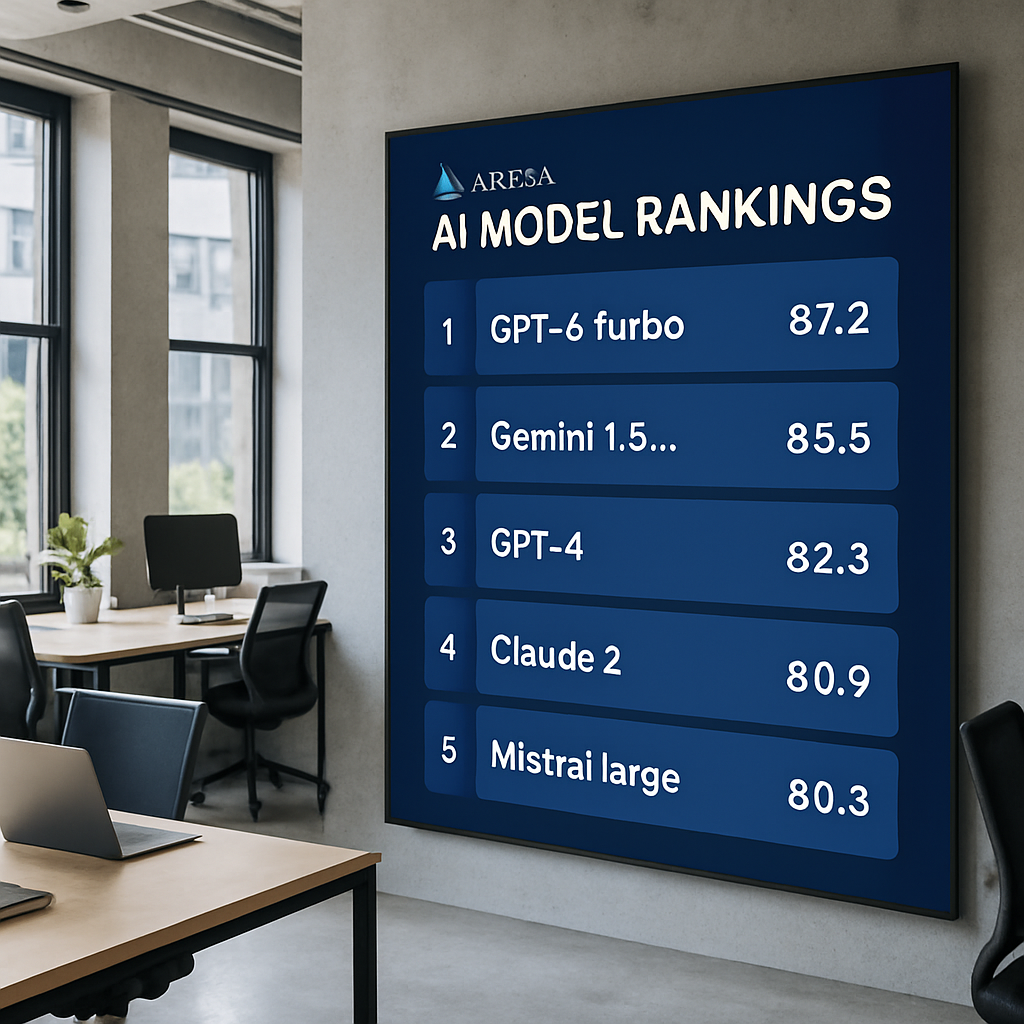
In a remarkable ascent, Arena, the AI leaderboard platform that began as a UC Berkeley research initiative in 2023, has achieved an annualized run-rate revenue of $100 million just eight months after launching its commercial services. This milestone underscores the platform’s pivotal role in the AI community.
Arena’s primary offering is a crowdsourced leaderboard that evaluates AI model performance based on over 10 million user assessments. Users can input prompts, receive outputs from two different models, and select the superior response, facilitating a dynamic and transparent comparison of AI capabilities.
While the leaderboard remains freely accessible to the public, Arena introduced a monetization strategy in September with the launch of AI Evaluations. This service provides in-depth performance analytics to model developers and enterprises, leveraging insights from its extensive user base. The swift revenue growth indicates strong market demand for such analytical tools.
Co-founder and CEO Anastasios Angelopoulos noted that many still perceive Arena as an open-source project, unaware of its substantial revenue generation. He clarified that the company’s revenue model is consumption-based, meaning earnings are tied to usage rather than recurring subscriptions.
Although Arena lacks direct competitors—especially after the closure of similar startup Yupp in March—it contends with human labeling firms like Mercor, Surge, and Scale AI. These companies assist in refining AI models post-training, a service increasingly sought after as AI developers aim to enhance model performance.
In January, Arena secured a $150 million Series A funding round, valuing the company at $1.7 billion. At that time, its annualized revenue was $30 million, highlighting significant growth in a short period. This trajectory reflects a broader industry trend, with companies like Handshake and Mercor also experiencing substantial revenue increases in the AI training sector.
Arena’s platform evaluates models across various tasks, including text processing, coding, vision, and image generation. The recent introduction of Agent Mode allows for the assessment of complex, long-running workflows, further expanding its analytical capabilities.
Founded by UC Berkeley postdoctoral researchers Anastasios Angelopoulos and Wei-Lin Chiang, along with professor and Databricks co-founder Ion Stoica, Arena has attracted $250 million in investments from notable firms such as Felicis, Andreessen Horowitz, The House Fund, LDVP, Kleiner Perkins, Lightspeed Venture Partners, Laude Ventures, and UC Investments.
Arena’s rapid growth and substantial revenue underscore the increasing importance of transparent and community-driven AI model evaluation. As the AI landscape becomes more competitive, platforms like Arena play a crucial role in benchmarking performance and guiding development efforts. The company’s success also highlights the viability of consumption-based revenue models in the tech industry, offering flexibility and scalability aligned with user engagement.