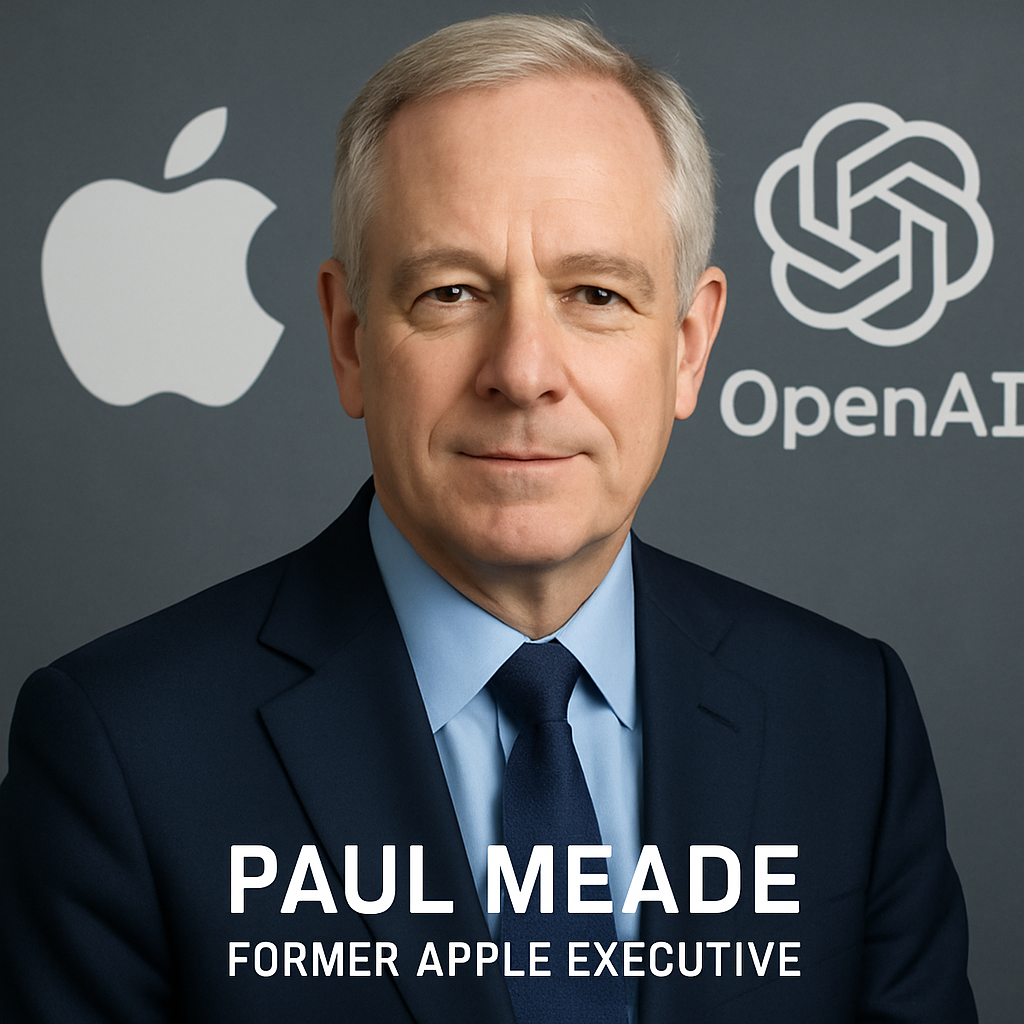
Apple’s Vision Products Group is experiencing a significant leadership change as Paul Meade, the executive overseeing the development of the Vision Pro and upcoming smart glasses, departs for OpenAI. Meade’s departure marks another high-profile exit from Apple to the AI research organization.
Meade’s tenure at Apple began in 2010, with his initial contributions to the iPad and iPhone teams. In 2017, he transitioned to the Vision Products Group, where he played a pivotal role in hardware engineering for the Vision Pro. Following Mike Rockwell’s shift to enhance Siri’s AI capabilities, Meade assumed leadership of the Vision Products Group. His recent focus included spearheading the development of AI-integrated smart glasses aimed at competing with Meta’s Ray-Ban collaboration, as well as leading efforts on future augmented reality eyewear.
Meade is set to join OpenAI’s hardware division in the coming week, bringing his extensive experience in consumer electronics and augmented reality to the organization. Fletcher Rothkopf, currently responsible for product design within the Vision Pro and smart glasses teams, will succeed Meade in his role at Apple.
This transition occurs amidst broader executive restructuring at Apple. With John Ternus preparing to ascend to the role of CEO, Johny Srouji, the company’s chip lead, is slated to become the chief hardware officer. These organizational shifts have reportedly caused unease among some hardware executives, potentially influencing Meade’s decision to leave.
OpenAI has been actively recruiting talent from Apple in recent years. Notably, former Apple design chief Jony Ive, along with Tang Tan and Evans Hankey, have joined OpenAI to contribute to its hardware initiatives. This trend underscores OpenAI’s commitment to integrating top-tier hardware expertise into its AI-driven product development.
Meade’s move to OpenAI highlights the intensifying competition for talent in the tech industry, particularly in the realms of artificial intelligence and augmented reality. As companies like OpenAI expand their hardware ambitions, attracting seasoned professionals from established firms like Apple becomes a strategic priority. This trend may prompt Apple to reassess its talent retention strategies to maintain its leadership in innovation.