Apple’s newest wearables, the Watch Series 12 and Watch Ultra 4, double down on what already made the Apple Watch great—health tracking, battery life, sensing—and make them markedly more personal.
Design evolution: substance over flash
Visually, the Series 12 and Ultra 4 retain much of the design DNA from their predecessors. The Ultra 4 still comes in the same two titanium options (Natural and Black), while the Series 12 swaps up the color palette, materials, and front-glass technology. Aluminum models offer Dark Bronze, Light Gold, Black, and Space Gray finishes, with the front glass moving from Ion-X to Ceramic Shield 2. Titanium makes a comeback with natural and a new Radiant Gold finish, while ceramic returns after a long hiatus with two finishes: Night Blue and Pearl White. Though the display area of the Series 12 is about 2% smaller than Series 10 and 11, and its casing width slightly larger, none of that is noticeable in day-to-day use.
Health sensing: the deepest upgrades yet
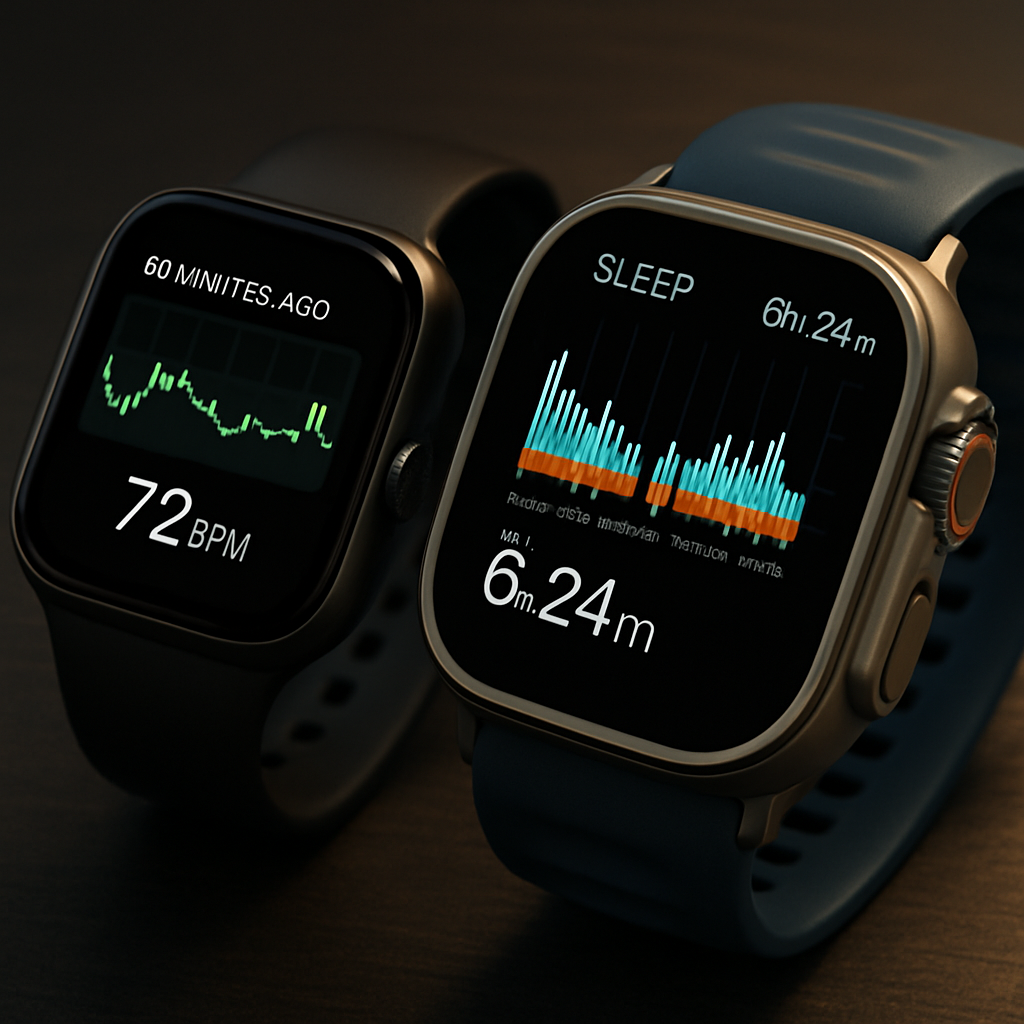
The headline is Apple’s all-new Health Sensing System, which revamps core sensors with larger green LEDs for motion readings, a ring-shaped photodiode layout, and electrodes with more skin contact. These changes aren’t cosmetic—they enable much more frequent and accurate heart-rate tracking. Earlier models sampled heart rate every five minutes while stationary; now both watches sample every five seconds, even when moving. Heart rate variability (HRV) monitoring improves too: Apple has boosted resting HRV sample frequency from once every two hours to once every five minutes, and added “recovery HRV” to further indicate stress and fatigue.
Better insights: Vitals and Readiness
The Vitals app gets a daytime view that surfaces your HRV and heart rate metrics beyond overnight data. It also adds four levels for those metrics—“notably off,” “slightly off,” “typical,” and “favorable”—replacing the old binary categorization. Paired with that is Readiness, a new score that aggregates sleep data, activity, vitals, and training load into a dynamic 0-10 scale that updates through the day based on naps, workouts, and other signals. It’s Apple’s answer to similar offerings from wearable brands like Whoop and Oura.
Performance and battery: chip gains, longer life
Both watches are powered by Apple’s new S11 chip—the first fully new wearable chip since S9. It includes elements derived from the A20 Pro in the iPhone 18 Pro, doubles RAM from 2 GB to 4 GB, and introduces a specialized always-on processor with a secure enclave. Tasks like audio intelligence, higher frequency heart rate monitoring, and a more accurate pedometer—even when wrists are stationary—benefit from the upgrade. Battery life sees significant gains: the Series 12 keeps 24 hours of normal use but adds two hours of workout time and faster sleep tracking charging. The Ultra 4 pushes further—with 50 hours in regular use (up from 42), expanded Low Power Mode, and much longer workout and extended modes.
Other refinements and what’s ahead
You’ll also find small but satisfying changes: a new real-time Steps complication, a lighter translucent Ocean Band for the Ultra, and a new Siri Modular watch face compatible across devices. Upcoming software updates promise more, with a Health app overhaul introducing a Longevity tab and metrics like Health Age, plus AI-driven Audio Intelligence features like Live Rewind (recap recent speech via Digital Crown double-press) and Siri Recap, which summarizes conversations. These arrive later this year.
The Series 12 and Ultra 4 represent among the most meaningful upgrades Apple has made in years—not by reimagining how a watch looks or works, but by deepening its understanding of its wearer. If you’re coming from an older model like Series 9 or Ultra 2, the improvements in health data, performance, and battery make this a serious upgrade. If you’re already on a very recent model, the choice hinges on how much you value those new sensing and readiness features.
What makes these models stand out is that Apple didn’t just pack in more sensors—it connected them to software insights that feel genuinely actionable. With Apple pushing further into AI with Siri Recap and Live Rewind, the Series 12 and Ultra 4 are less about ticking boxes and more about changing how wearables support daily life. This feels like the clearest signal yet of where wrist-computing is heading.