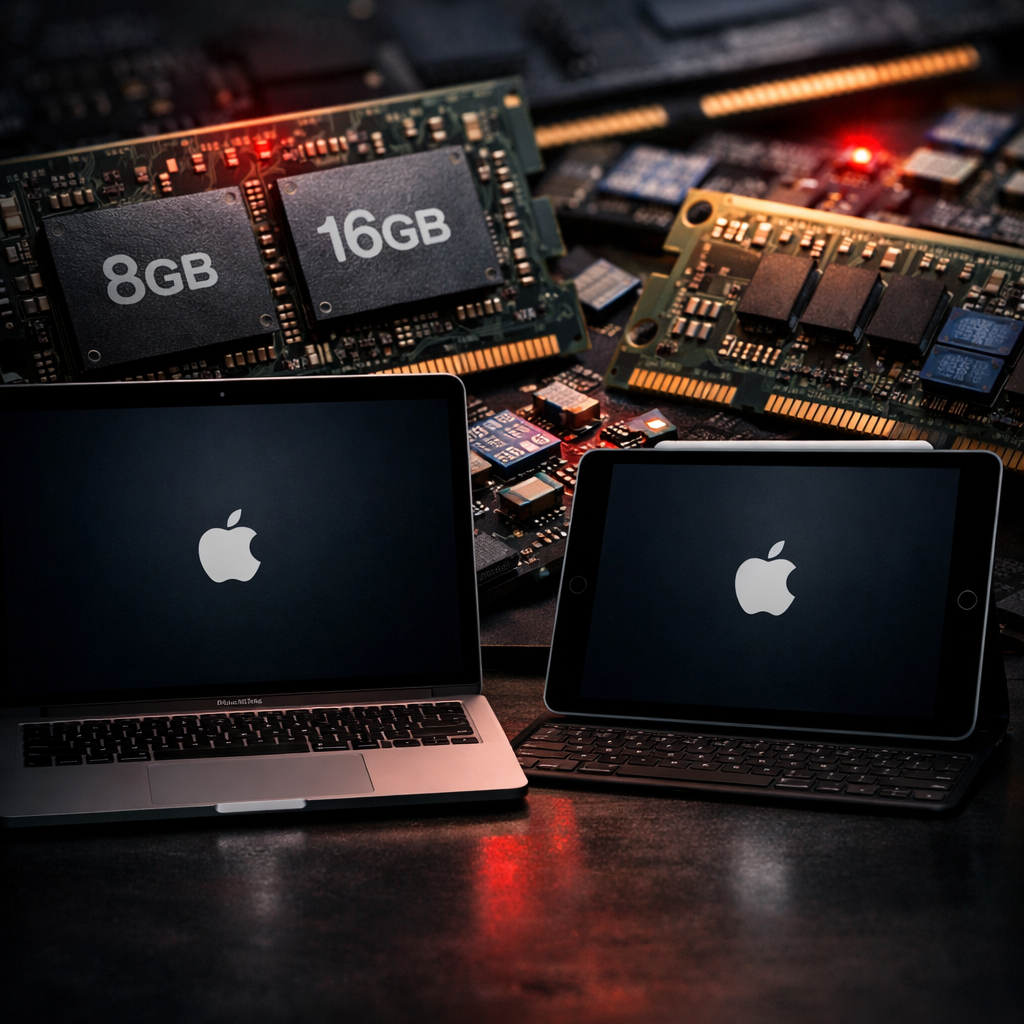
Apple is bracing for rising memory costs through the December quarter and beyond, revealed CEO John Ternus during Apple’s latest earnings call. Alongside COO Sabih Khan and CFO Kevan Parekh, he stressed that what the company is navigating with memory pricing is “unprecedented.”
In the September quarter, Apple already felt the squeeze from heightened memory costs. Ternus cautioned that the December quarter will be even tougher. And looking further ahead, he expects memory prices to continue escalating.
How Apple is Buffering the Blow
To soften the impact, Apple leaned on memory previously stockpiled at lower prices, and managed to secure more favorable pricing for various non-memory components in the September quarter. The expectation is that these strategies will help carry into the December quarter as well. Higher costs from memory are also contributing to what including elevated prices in Macs, iPads, and iPhones in past quarters.
Khan was asked if Apple might raise prices again, but sidestepped giving a definitive answer. Parekh described any past price hikes as reluctant moves, emphasizing the company’s goal to balance short-term pressures with long-term strategy.
Margin Pressures and Inventory Moves
One key mitigator—buying ahead of price surges—is losing its edge. Ternus noted that these pre-purchases will offer diminishing benefits over time. Apple already more than doubled its inventory year over year, reaching $14.5 billion, indicating aggressive purchasing before prices rise further. In addition, the company’s manufacturing purchase obligations jumped by $33 billion between the June and September quarters.
This financial stretch is expected to weigh on profitability. Apple projects its gross margin will slide from 47.9% in the September quarter to somewhere between 45% and 46% in December. The decline is primarily due to rising memory costs, but costs tied to Siri’s AI capabilities also play a role. Apple also anticipates constraints in supply, particularly for Macs and iPads, driven by memory supply issues.
What this means: Apple’s future pricing and profitability hinge heavily on volatile memory markets. Higher component costs ripple through product pricing, margin calculations, and the supply chain.