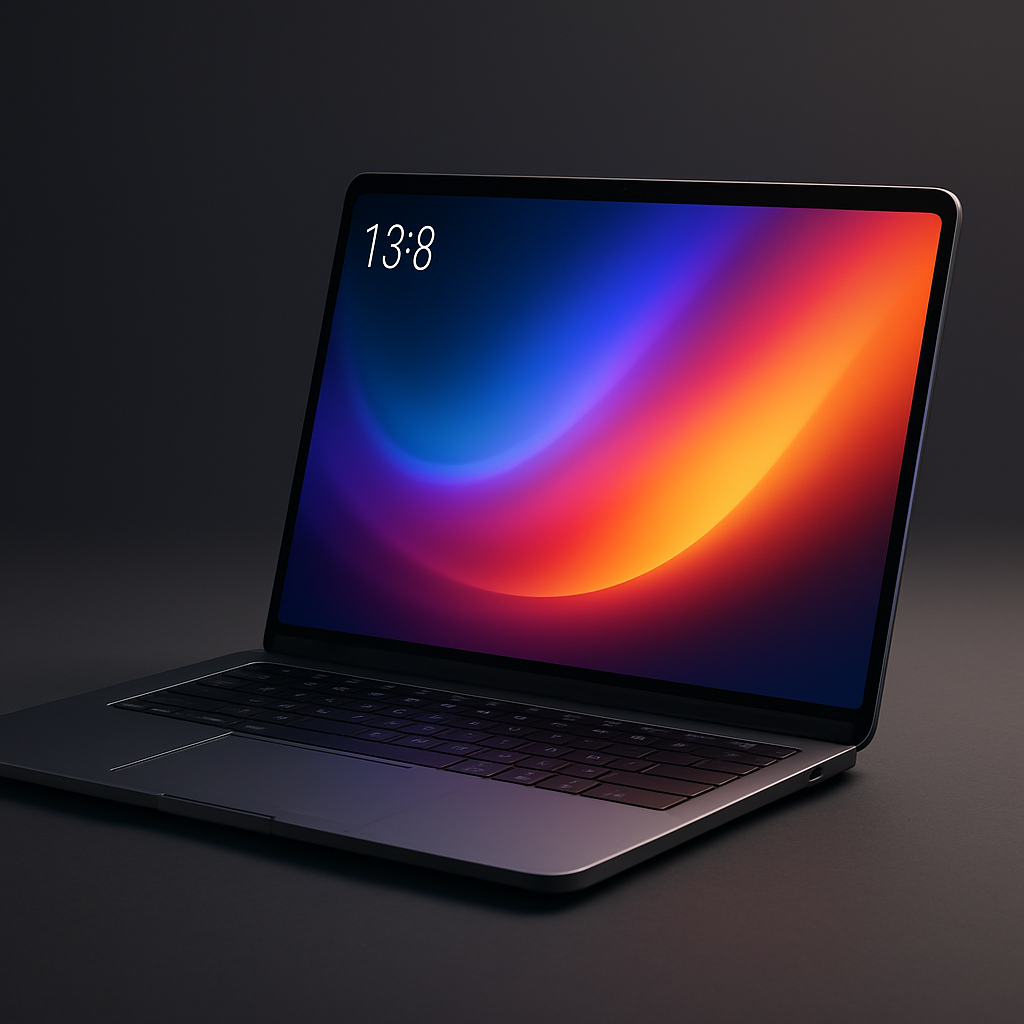
Apple appears to be preparing a new MacBook model that sits between its MacBook Air and MacBook Pro lines, according to a leaked roadmap from Omdia. The still-hypothetical 13.8-inch laptop would feature OLED display technology and arrive sometime in 2029. It’s expected to introduce a display stack and spec mix that bridges gaps in Apple’s current MacBook lineup.
Where it fits in the lineup
The proposed 13.8-inch MacBook would form an entirely new product tier, positioned between the current LCD-based MacBook Air and the more premium OLED MacBook Pros. According to the roadmap, Apple isn’t planning to give the MacBook Air an OLED screen through 2030 — instead, the new model would deliver OLED, while Air remains LCD for the foreseeable future.
Display & design features
The new MacBook’s display is expected to leverage a single-stack hybrid OLED panel — simpler than the tandem OLED architecture anticipated for upcoming OLED MacBook Pro models. Additional rumored features include an LTPO+ backplane (which allows adaptive refresh rates), built-in touch sensing, an under-display camera, and a color filter embedded in the OLED’s encapsulation layer. These components suggest Apple is aiming for a high-end screen experience without some of the cost or complexity of its top-tier Pro OLEDs.
Talks earlier this year reportedly involved Samsung Display, LG Display, and BOE for a 13.8-inch OLED panel. Initial expectations presumed this might be for the first OLED MacBook Air, but Omdia’s roadmap implies the new model is distinct from the Air lineup.
While these plans still lie well into the future — around 2029 — and may shift based on display-supplier capacity, costs, or broader strategic priorities, the roadmap suggests Apple is preparing for a broader OLED rollout across its laptop range.
The MacBook Air, meanwhile, is projected to continue using LCD screens well into 2030, reinforcing the notion that Apple sees clear value in maintaining distinct tiers based on display type and performance.
What to expect & what to watch: Apple’s strategy with displays has long revolved around differentiating models by their screen tech. By introducing an OLED model between Air and Pro, it may address a demand for more premium visual features without stepping into full Pro class pricing or capabilities. Key indicators to track include whether display makers like Samsung, LG, and BOE lock in contracts, whether manufacturing costs fall, and whether this new model actually replaces or complements current lines. For now, this is a forecast based on current data — exciting, but far from certain.
This development signals a potential shift in how Apple structures its laptop offerings. If it goes ahead, this middle-tier OLED MacBook could attract users who want more than Air but don’t need—or can’t afford—Pro-level hardware. It raises questions about how Apple balances cost, performance, and product differentiation. What remains to be seen is how this model will affect pricing tiers, feature trade-offs, and whether it will prompt earlier transitions away from LCD across the MacBook lineup.