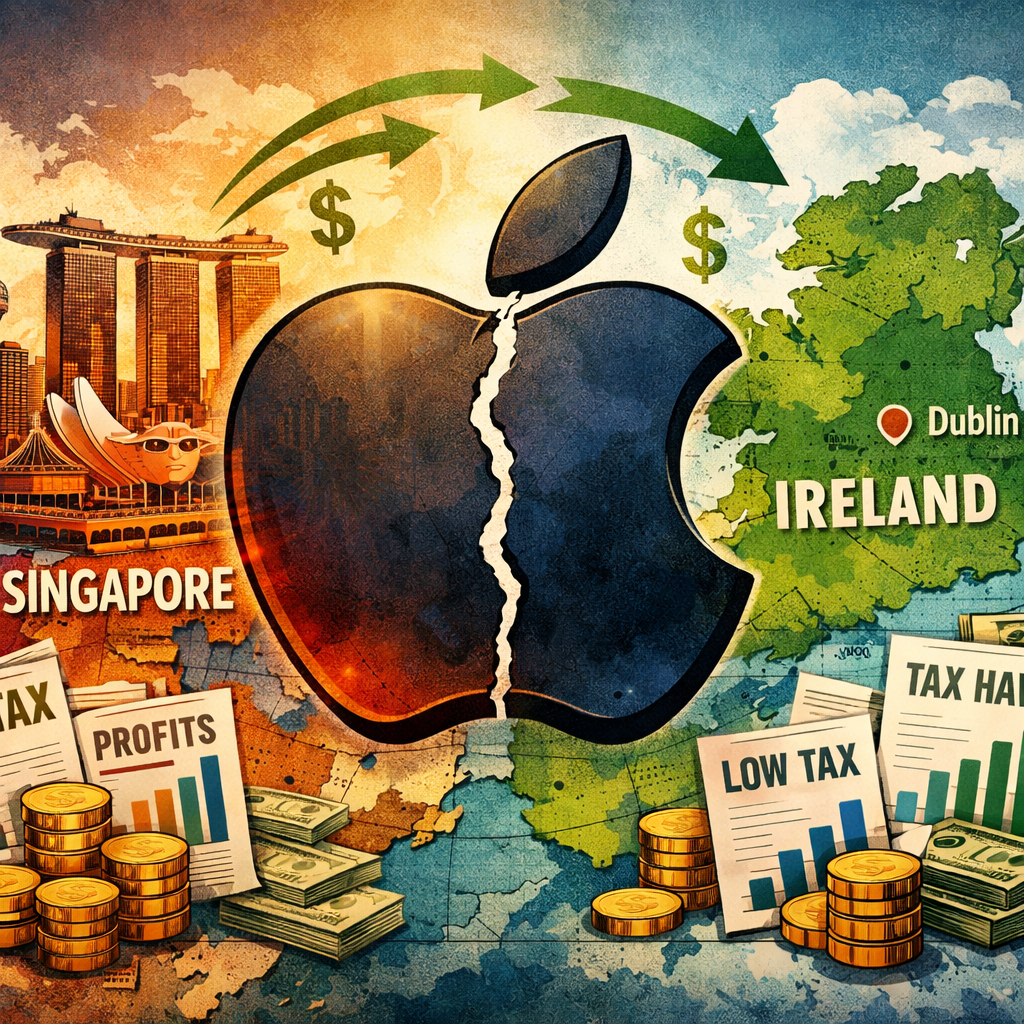
Apple has saved roughly $2.7 billion in U.S. taxes by routing about $50 billion in profits through Singapore during 2026. This approach surpassed its usual tax benefits from dealing with Ireland, which saved it approximately $2.6 billion in the same period.
How Singapore Became Apple’s Latest Tax Gateway
In accordance with U.S. reporting requirements, Apple disclosed that its Singapore-based financial operations yielded more favorable tax incentives this year. By funnelling a significant portion of its profits through the Asian hub, the tech giant was able to hold onto billions it otherwise would have owed in taxes under standard domestic or European schemes.
For comparison, Apple’s European headquarters in Ireland—often spotlighted as a key tax strategy—still offered substantial relief. But the savings from Ireland trailed Singapore by about $100 million, underscoring a strategic shift in where Apple concentrates its international tax planning efforts.
Wider Context: Corporate Taxes and Priorities
Despite optimizing its international tax exposure, Apple’s overall tax bill for the year stood at $27 billion. If taxed solely at the U.S. federal rate on its global profits, that figure would have risen to $33 billion—meaning the Singapore route accounted for a meaningful drop in its effective rate.
The company has dipped into such strategies before. One of the most notable was in Ireland, where arrangements drew scrutiny from the European Commission. Apple was previously assigned a near-zero tax rate in reference years like 2003 and 2014—a finding that led to a legal dispute and a mandated payout of over $14 billion into escrow. By 2025, that obligation climbed to $17 billion, contributing to a total of $43 billion for the year when factoring the broader tax burden.
This year’s Singapore-based approach appears to reflect a learning curve—applying cross-border profit allocation techniques while staying clear of the regulatory triggers that drew ire over Ireland.
Strategically, this move shines a light on a broader trend: global corporations increasingly deploying finance hubs outside traditional Western jurisdictions to reduce tax burdens. It also raises questions about ongoing international efforts to clamp down on profit shifting, and how Apple and its peers will adapt as laws evolve.
Critically, while Apple’s strategy this year has delivered material savings, this doesn’t guarantee similar outcomes long term. Tax policy reforms, enhanced global cooperation, and regulatory oversight are converging to reduce the viability of such arrangements. For any multinationals, staying ahead means not just optimizing for today, but anticipating the shifting frameworks of tomorrow.