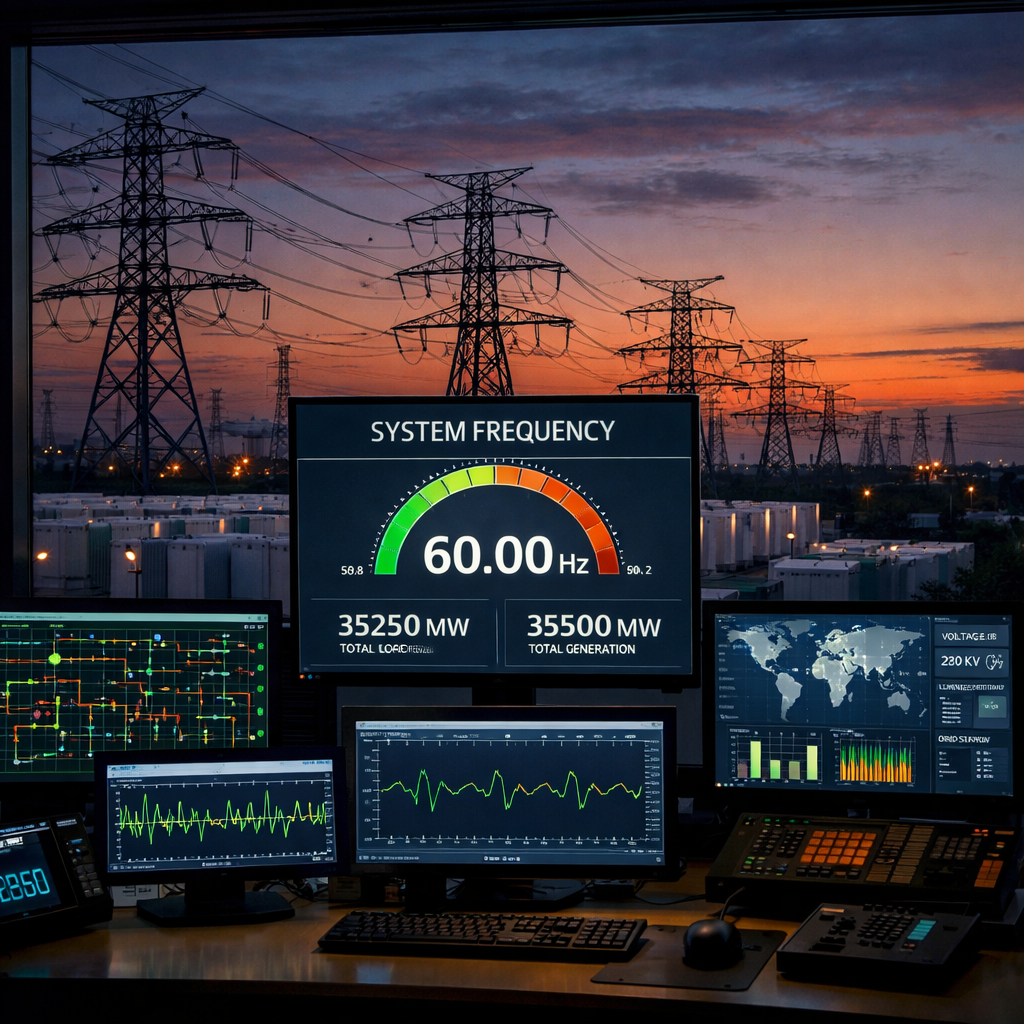
For years, grid operators around the world have been puzzled by micro-scale electrical ripples—small frequency dips that drop ever so slightly every 60 seconds. What’s surprising is how synchronized these fluctuations are: the sag in frequency shows up at the same time across continents, in places like Europe, the U.S., Australia, and Malaysia.
What was thought, and what was found
These minute-by-minute swings in grid frequency are more than intellectual curiosities. Grid systems depend on a steady frequency; too much variation risks equipment damage—especially in sensitive setups like hydropower turbines—and in extreme cases, full outages. A team led by Dirk Witthaut at Forschungszentrum Jülich, prompted by Germany’s transmission operator Tennet, undertook a long investigation to uncover the source.
Initially, hydropower was the prime suspect, especially since turbines are well known to generate resonances when their mechanical control systems align just right. Modeling suggested such a system could produce a dip in frequency every minute—but typical resonance phenomena are sporadic, not an unrelenting, clockwork pulse as researchers observed.
The surprising culprit
To dig deeper, the team turned to their own campus, putting more than 80 smart meters in place. Those meters, spread across transformers, battery storage backups, solar arrays, and uninterrupted power supplies (UPS) of all sizes, sampled electrical properties every three seconds. It was here that the minute-long frequency dip reappeared—and traced back to battery storage systems and UPSes.
The signature activity: every UPS or grid-scale battery was performing a state-of-charge check at the top of the minute. Because these checks are automated and internet-connected, the clocks in those devices are highly synchronized. One device barely moves the needle; thousands doing it simultaneously causes a detectable drop in grid frequency.
Evidence came from countries like Ireland, where data centers play a large role in electricity demand. From 2016 to 2021 the amplitude of the minute-frequency dip grew from about 3 millihertz to roughly 12 mHz—and more recently, some events have pushed past 20 mHz. Ireland’s grid tolerates swings up to ±200 mHz, though operators prefer to limit those swings. The concern is cumulative: as more UPSes and storage devices join the grid, their synchronized behavior could risk dangerous interactions.
A fix that’s already in reach
The solution is surprisingly simple. Instead of scheduling state-of-charge checks to happen precisely on the minute, manufacturers can randomize the timings. That breaks the synchronicity. Software patches to do this are already feasible.
The study also found that many Internet-of-Things (IoT) devices—smart ovens, small compute clusters—are showing similar periodic influences. Yet, updating those devices is a bigger challenge; fewer than 3% of IoT units are believed to have current firmware.
Regulators might soon need to step in. Because the minute-by-minute dips are happening globally, a patch locally won’t completely fix the issue. Full mitigation will likely require coordinated standards across manufacturers and grid operators in many countries. The mystery behind the disturbances is solved; preventing them from growing into a bigger problem remains the task ahead.
What this means is that the increasingly digitized, battery-rich future of the grid brings not just opportunities but unexpected systemic risks. As battery storage, UPS systems, and IoT devices proliferate, minor design decisions—like when to run diagnostics—can scale into anomalies felt across continents. What to watch: whether regulators establish rules around synchronized device behavior, whether major battery and UPS makers begin deploying randomized state-of-charge routines, and how efficiently the vast, often neglected IoT ecosystem can be secured against systemic oscillations.