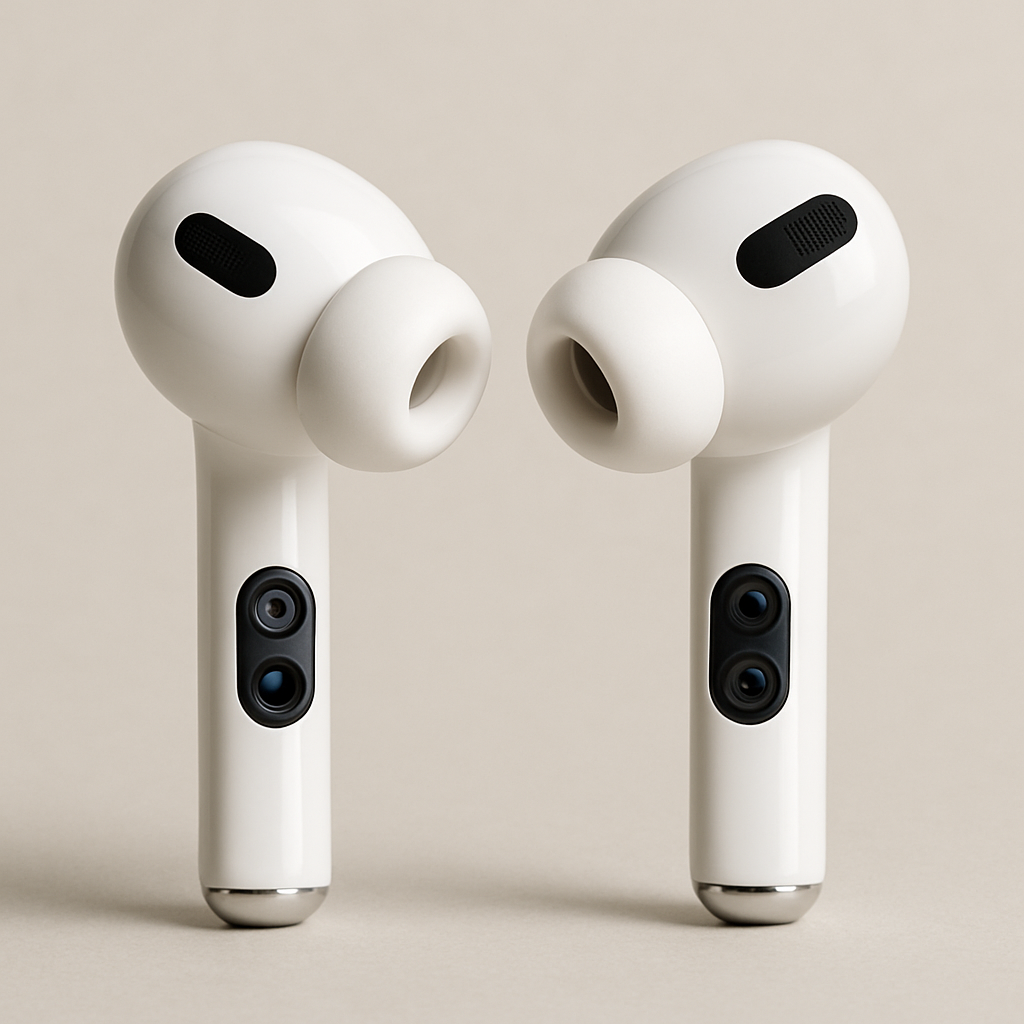
Apple has reportedly suspended the development of its anticipated camera-equipped AirPods Pro, according to information from leaker and prototype collector “Kosutami.” This development comes as a surprise, especially considering earlier reports suggesting the product was nearing completion.
In May, it was reported that these innovative AirPods Pro had reached an advanced testing phase, with designs and features nearly finalized, indicating that mass production could commence soon. The built-in cameras were intended to provide visual data about the user’s environment to Siri, enhancing AI functionalities. Notably, these cameras were not designed for capturing photos or videos but were focused solely on AI applications.
The decision to suspend the project may be linked to the ongoing development of a more advanced AI version of Siri. This enhanced Siri is currently available in the iOS 27 beta and is expected to be widely released with iOS 27 in September. The integration of the camera-equipped AirPods Pro with this new Siri was a key aspect of the product’s functionality.
Additionally, Apple had anticipated strong demand for these new AirPods Pro and had been working to secure necessary components amid industry-wide shortages of memory chips and other silicon materials. It’s unclear if these supply chain challenges contributed to the suspension of the project.
“Kosutami” has a history of providing accurate information about Apple’s product plans. For instance, they correctly revealed that the iPhone 16 Pro would feature a metal-enclosed battery approximately ten months before its launch. However, it’s worth noting that not all of their predictions have been accurate; they previously claimed that AirPods Pro 3 were imminent in August 2024, which did not materialize.
The suspension of the camera-equipped AirPods Pro project highlights the complexities involved in integrating advanced AI features into consumer devices. While the exact reasons for the halt remain speculative, it underscores the challenges Apple faces in aligning hardware development with software advancements, particularly in the rapidly evolving field of artificial intelligence.