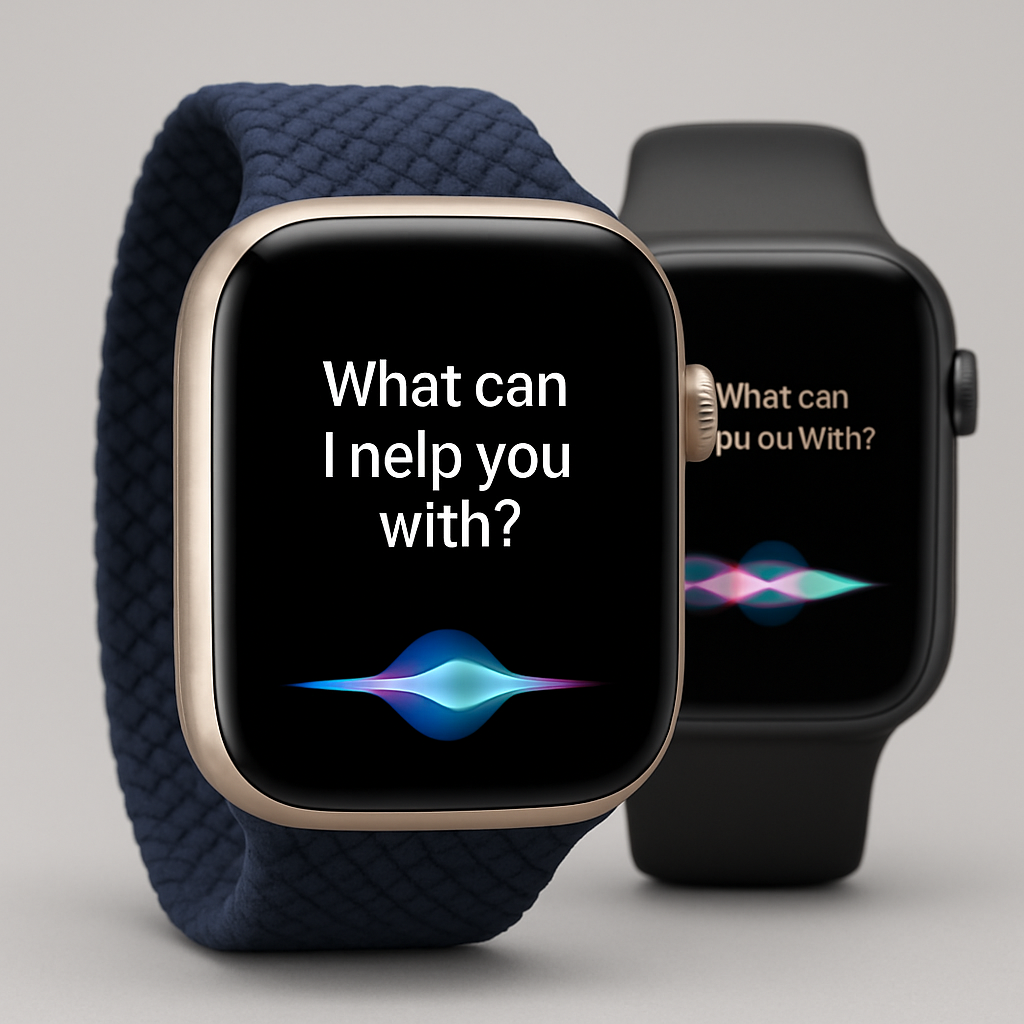
Apple’s latest iteration of its voice assistant, Siri AI, is set to debut with watchOS 27, bringing advanced artificial intelligence capabilities to the Apple Watch. However, this update will only be available on newer models, specifically the Apple Watch Series 9, Series 10, Series 11, Ultra 2, Ultra 3, and SE 3. This decision leaves owners of older models, such as the Series 8, Ultra 1, and SE 2, without access to the enhanced features.
The exclusion of these older models is particularly notable given that Siri AI requires an iPhone equipped with Apple Intelligence to function. This dependency raises questions about why older Apple Watches are not supported, especially when they are paired with compatible iPhones. Apple has not provided a clear explanation for this decision, leading to speculation about the underlying reasons.
One possible factor is the hardware limitations of older Apple Watch models. The new Siri AI is designed to leverage advanced processing capabilities, which may be beyond the capacity of earlier devices. For instance, the Apple Watch Series 8 and Ultra 1 are powered by the S8 chip, whereas the newer models feature the more powerful S9 and S10 chips. This hardware disparity could impact the performance and responsiveness of Siri AI on older devices.
Another consideration is the broader trend of phasing out support for older hardware to streamline software development and ensure optimal performance on newer devices. By focusing on the latest models, Apple can allocate resources more effectively and deliver a more cohesive user experience. However, this approach inevitably leaves some users behind, particularly those who have invested in Apple products with the expectation of longer-term support.
It’s also worth noting that this is not the first time Apple has discontinued support for older devices in its software updates. Similar patterns have been observed with previous watchOS releases, where certain models were excluded from new features due to hardware constraints or strategic decisions. This practice underscores the importance for consumers to consider the longevity of device support when making purchasing decisions.
In the absence of a definitive explanation from Apple, users of older Apple Watch models are left to weigh their options. They can continue using their current devices without access to the new Siri AI features, or consider upgrading to a newer model to take advantage of the latest advancements. This situation highlights the ongoing challenge of balancing innovation with inclusivity in the rapidly evolving tech landscape.
As Apple continues to push the boundaries of wearable technology, the decision to limit Siri AI to newer Apple Watch models reflects a broader strategy of aligning software capabilities with hardware advancements. While this approach ensures optimal performance and user experience on the latest devices, it also raises important questions about device longevity and the pace of technological obsolescence. Consumers will need to navigate these considerations carefully, especially as the lifecycle of tech products continues to shorten.