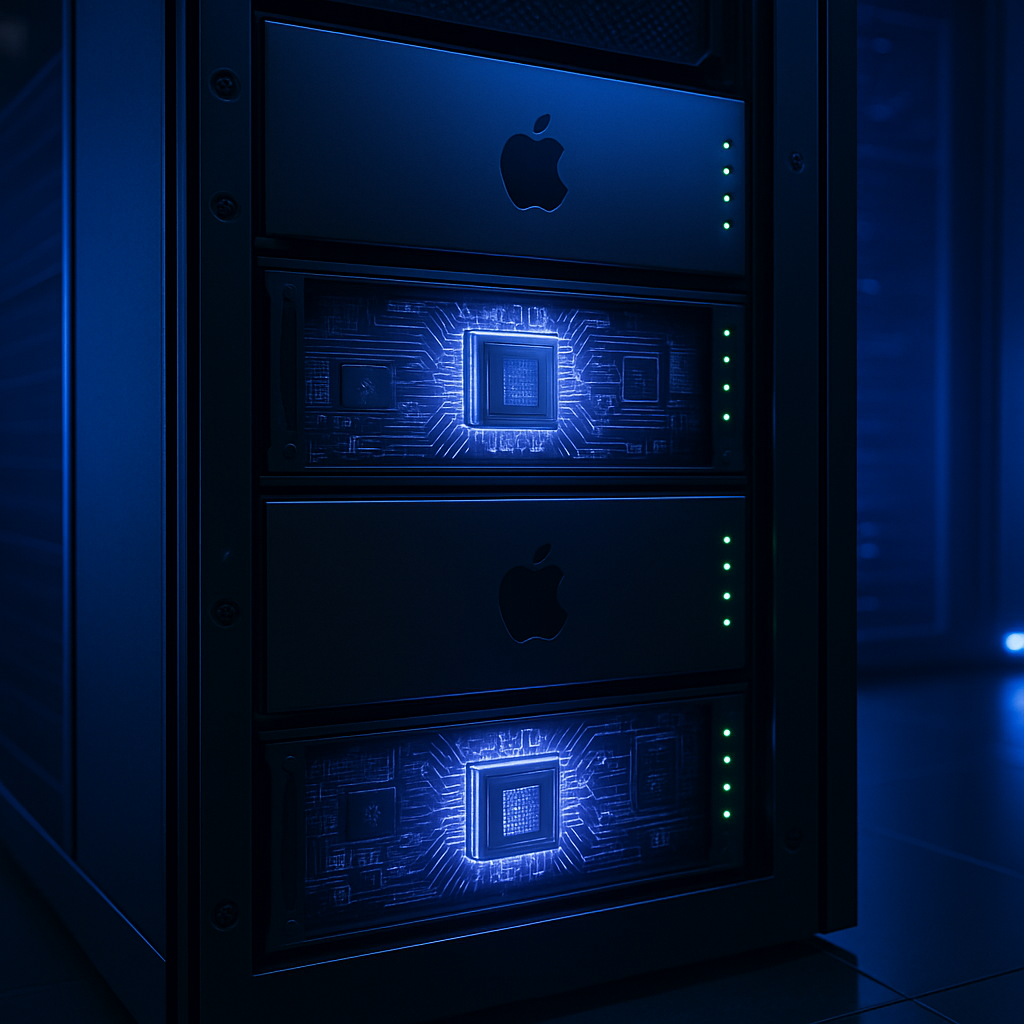
Apple is reportedly planning to manufacture artificial intelligence–focused servers powered by its upcoming M8 Ultra silicon. According to internal documents obtained by industry watchers, the company intends to sell these servers not only for use in its ecosystem, but also to external enterprises, AI startups, and government agencies. The selling date is tentatively set for 2029, though the project remains under review and could still be scrapped.
Powerful Hardware & Two Distinct Configurations
The plan includes two different server models. One variant will combine two M8 Ultra chips, while a more robust version will feature four of those chips working together. To facilitate ultra-fast interconnectivity between those chips, Apple is exploring integrating NVIDIA’s NVLink Fusion technology—an infrastructure suite including switches, chiplets, and software that enables high-throughput communication in data centers.
Timeline, Leadership & Strategy
Development on the server project has reportedly been ongoing for about a year. The company’s leadership, including CEO John Ternus, is said to be supportive of pursuing external sales. However, no final decision has been made, and many engineering and business details—such as final specs, pricing, and support models—remain unresolved.
While the 2029 target reflects a long-term investment, competition in AI infrastructure is heating up. Other companies have already begun offering AI servers and interconnect technologies, making this a critical moment for Apple as it evaluates whether to enter that market.
Why this move matters: Enterprises and governments are demonstrating strong demand for AI-specific infrastructure. Apple’s ability to compete in that space hinges not just on raw performance of its chips, but also on how well its servers integrate with existing AI workflows, software ecosystems, and data center networking standards.
What to watch: How Apple positions its servers versus incumbents in terms of energy efficiency, latency, and price; whether it opens up software and networking layers to support third-party AI frameworks; and how this might affect demand for its traditional products and its strategy around cloud computing and AI partnerships.
Though it’s early, the idea of Apple building AI servers for external clients reflects a wilder shift—not merely enhancing devices, but moving toward being a provider of backbone infrastructure. Given Apple’s history of vertically integrating hardware with software, this could reshape its role in the AI ecosystem if it pulls through.