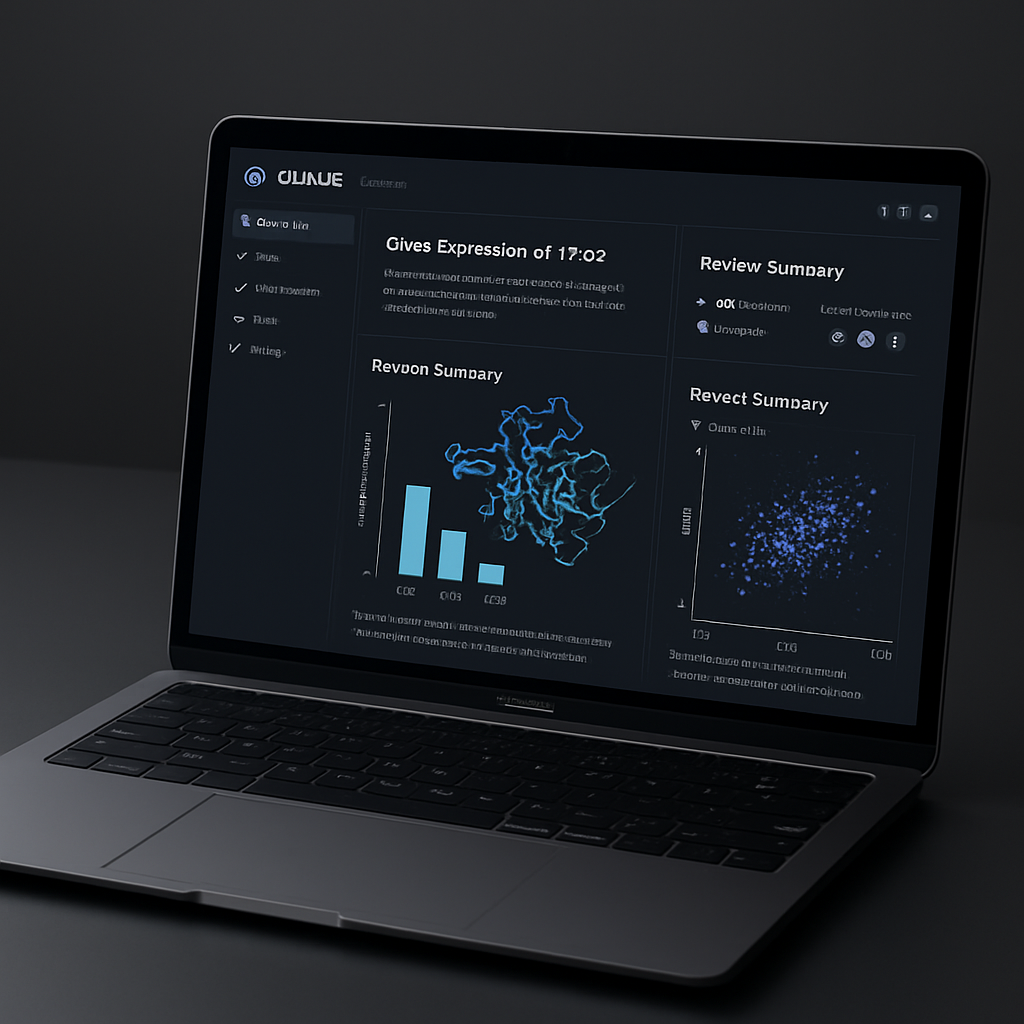
Anthropic has unveiled Claude Science, a new desktop application designed to enhance scientific research workflows. This beta release is now available for macOS and Linux users.
Claude Science integrates with existing Claude models, providing tools for data analysis, database searches, and comprehensive tracking of research processes. The application aims to streamline tasks such as running analyses and managing data pipelines, allowing researchers to focus more on scientific inquiry.
Unlike general AI assistants, Claude Science offers specialized capabilities tailored for scientific domains. It manages compute environments for specialists and maintains detailed records of all results. The app includes analysis tools for fields like genomics, single-cell analysis, proteomics, structural biology, and cheminformatics. Additionally, it connects to over 60 scientific databases and domain-specific open models, utilizing NVIDIA’s BioNeMo Agent Toolkit to access life sciences models and libraries, including Evo 2, Boltz-2, and OpenFold3.
Anthropic emphasizes that Claude Science is an application, not a new AI model. It leverages existing Claude models within a framework equipped with scientific tools, database connections, and compute integrations, enabling comprehensive analyses on users’ infrastructure.
The app is compatible with Pro, Max, Team, and Enterprise plans. Detailed documentation and download links are available on Anthropic’s website.
By introducing Claude Science, Anthropic is addressing the growing need for AI-driven tools in scientific research. This development reflects a broader trend of integrating AI into specialized fields, potentially accelerating discoveries and enhancing the efficiency of research processes.