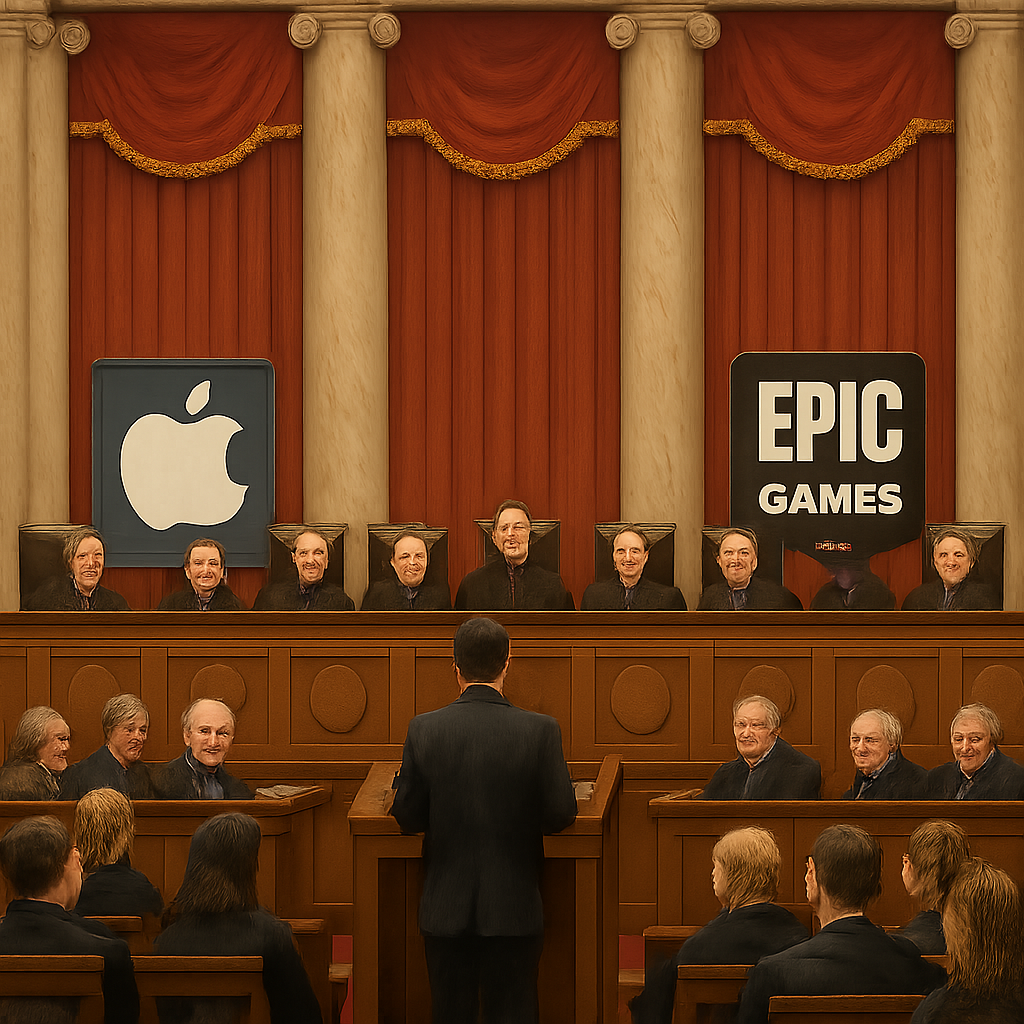
The United States Supreme Court has agreed to hear Apple’s appeal concerning a contempt ruling in its ongoing legal battle with Epic Games. This development marks a significant turn in the protracted dispute over App Store policies and developer fees.
The conflict began in 2020 when Epic Games, the creator of the popular game Fortnite, implemented a direct payment system within its app, circumventing Apple’s in-app purchase mechanism. This move violated Apple’s App Store guidelines, leading to Fortnite’s removal from the platform and prompting Epic to file an antitrust lawsuit against Apple.
In 2021, a district court largely sided with Apple but issued an injunction requiring the company to allow developers to include links to external payment options within their apps. Apple complied by permitting such links but imposed a commission fee ranging from 12% to 27% on transactions made through these external methods. Additionally, Apple restricted the design of these links to plain text, prohibiting more prominent buttons or calls to action.
Epic Games contested these measures, arguing that Apple’s actions did not align with the court’s directive. The district court agreed, finding Apple in contempt for not fully adhering to the injunction. Apple subsequently sought to have this contempt ruling reviewed by higher courts.
In May 2026, Apple formally requested the Supreme Court to examine the contempt ruling and the broader implications for its App Store policies. The company expressed concerns about making substantial changes to its fee structure, only to have them potentially overturned by future legal decisions.
Epic Games opposed Apple’s petition, urging the Supreme Court to dismiss the appeal. However, Apple countered by emphasizing the need for clarity on the scope of the injunction and the permissible extent of its App Store policies.
On June 30, 2026, the Supreme Court agreed to hear Apple’s appeal regarding the contempt ruling. Notably, the Court declined to consider a separate issue raised by Apple concerning the application of the injunction to developers worldwide.
This decision by the Supreme Court to hear Apple’s appeal underscores the ongoing complexities in defining the boundaries of platform control and developer autonomy. The outcome of this case could have far-reaching implications for the app ecosystem, potentially reshaping how platform holders enforce policies and share revenue with developers. Stakeholders across the tech industry will be closely monitoring the proceedings, as the final ruling may set a precedent for future platform-developer relationships.