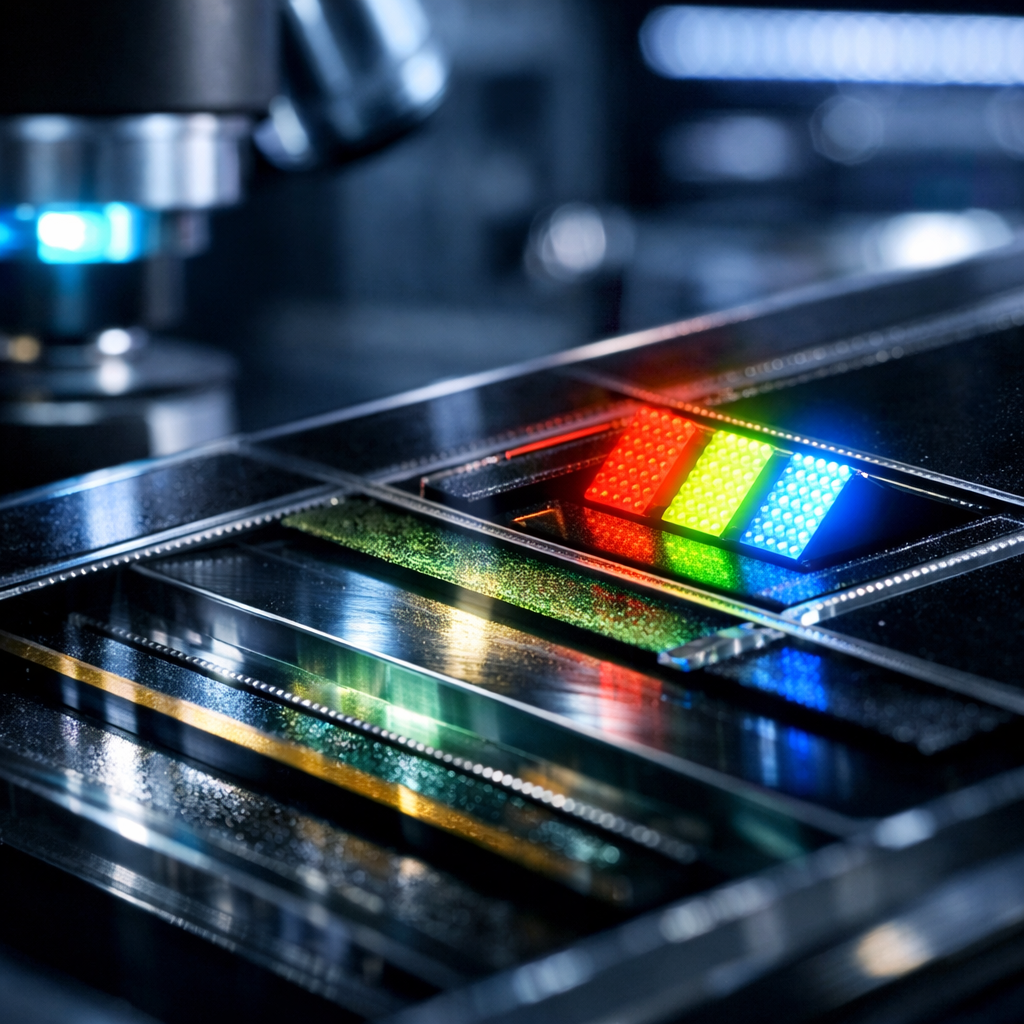
Apple’s display suppliers are developing a new OLED production method that promises brighter screens for future iPhones, iPads, and Macs. Samsung Display and LG Display are experimenting with a sputtering deposition process for High Mobility Oxide (HMO) thin-film transistors — a shift that could bring sharper contrast, faster performance, and possibly lower costs. This change could represent the next major leap in the company’s move toward fully OLED-based devices.
What’s Changing—and Why It Matters
Currently, Apple uses OLED panels with Low-Temperature Polycrystalline Silicon (LTPS) or Low-Temperature Polycrystalline Oxide (LTPO) backplanes in many of its devices. The proposed shift would rely on HMO, which enables electrons in the transistors to move three to five times faster than in conventional materials. That increased mobility supports higher refresh rates — including those Apple labels “ProMotion” — with better power efficiency and faster pixel transitions.
The sputtering process would be one of the methods to deposit the critical layers for HMO, alongside Atomic Layer Deposition (ALD). Sputtering works by ionizing a target material in plasma so atoms detach and settle onto the OLED substrate, forming functional layers. It’s already used on existing OLED production lines, which could allow more seamless integration. ALD, in contrast, involves gaseous precursors and grants tighter control over layer thickness but requires more specialized, expensive equipment.
Benefits Beyond Brighter Screens
Brighter individual pixels aren’t the only payoff. Higher contrast ratios and more vivid visuals are expected outcomes. Devices could display deeper blacks, more vibrant colors, and better clarity in bright ambient light. Additionally, adding sputtering might bring cost savings in the long-term: it leverages existing infrastructure, potentially reducing manufacturing expenses compared to adopting ALD spread wide-scale.
Furthermore, there’s an expectation that Apple will first employ HMO with existing methods — in particular using Samsung’s A6 fabrication facility. It’s already reported that the new MacBook Pro “PROLED” panels are using HMO, replacing LTPS and LTPO backplanes. But those panels do not yet include sputtering or ALD-based processes. Once approved and scaled, these newer methods could deliver even greater display improvements.
Samsung and LG are said to be prioritizing sputtering development while keeping ALD research ongoing. This suggests sputtering may hit production readiness earlier, offering a practical path for Apple to upgrade displays rapidly—starting, perhaps, with high-end products before trickling to mid-tier models.
Analysis: If Apple successfully rolls out sputtering-based HMO panels, we could see markedly brighter, more efficient displays in its next wave of devices. The move fits into the broader trend toward OLED everywhere — inside phones, tablets, laptops, and even monitors. For consumers, that means sharper visuals and possibly longer battery life. For the supply chain, it’s a test of scaling cost-effective, high-performance display tech. What to watch next: when sputtering methods achieve mass production, and which Apple products get them first. The pace of adoption will tell us how aggressively Apple is pushing display innovation right now.