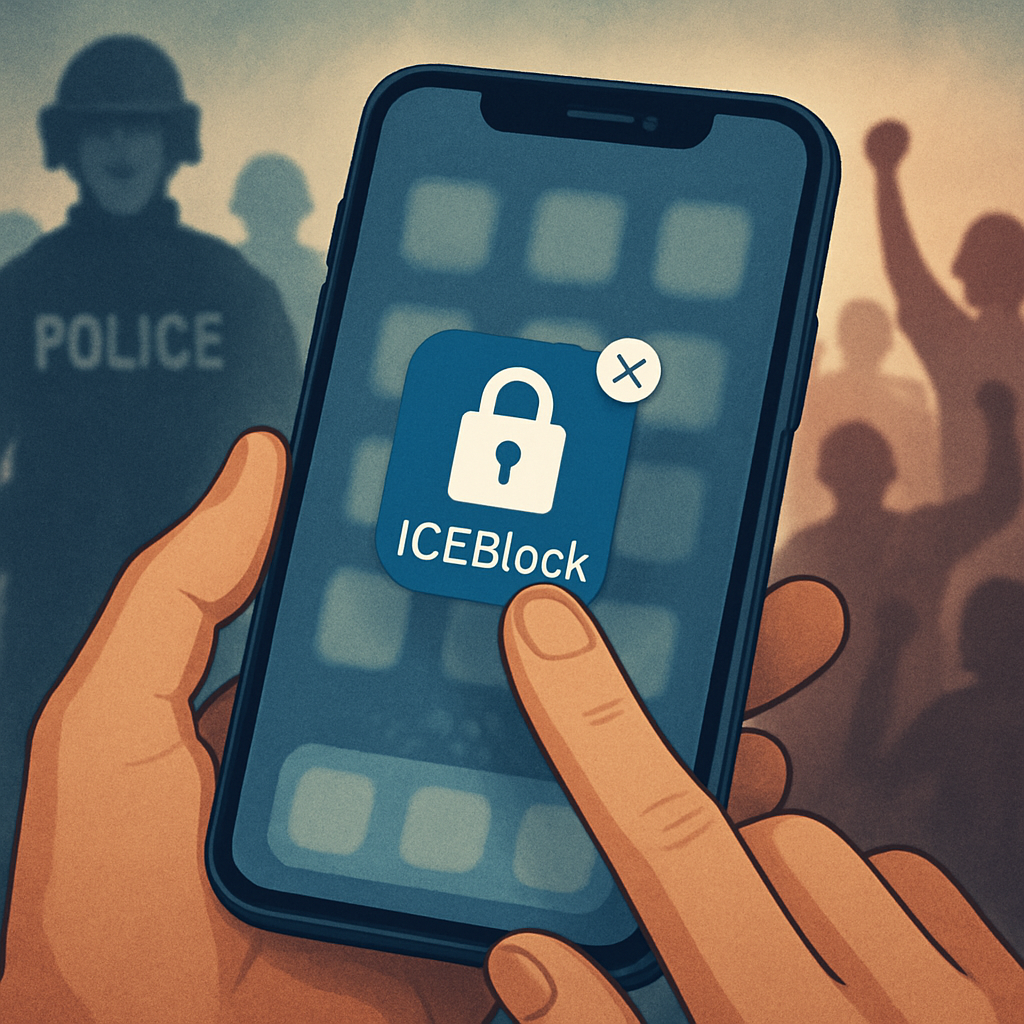
Apple has maintained that the removal of ICEBlock and similar tracking apps was driven by serious safety concerns—not by compliance with government demands. The company made this case in a July 2026 letter responding to Representative Jamie Raskin’s inquiry into why ICEBlock was taken down from the App Store. ICEBlock allowed users to report sightings of Immigration and Customs Enforcement (ICE) agents in real time to alert others, particularly those seeking to avoid ICE presence. theDailyTechFeed has reviewed Apple’s letter and related materials shared with Congress.
What prompted the removal
Back in July 2025, the Department of Justice raised alarms about ICEBlock, arguing it posed threats to federal officers. The DOJ claimed the app could enable targeting of agents. Apple’s letter echoes that view, noting a rise in ICE activity and in threats directed toward officers. Separately, statements from then-FBI Director Kash Patel linked such apps to a shooting at an ICE facility in September 2025—though Apple points out the facility was already a known ICE location, and the event wasn’t connected to ICEBlock’s functionality.
How Apple justifies its decision
According to Apple, the app violated its App Store rules by giving users precise location information about ICE officers and potentially other nearby individuals, such as protestors or detainees. Apple says that this level of information could facilitate violence, making the app a safety risk. While the DOJ and FBI asserted that ICEBlock was used to track agents, Apple emphasizes that it did not act under any legal order. The company insists removal was voluntary and rooted in its policies.
Free speech controversies and oversight
Representative Raskin has challenged Apple’s rationale, stressing that people have a First Amendment right to monitor federal agents in public spaces. He argued that even standard map apps can show where ICE operations are and weren’t removed. Raskin also noted that the September 2025 shooting didn’t result from tracking agents via ICEBlock, but from someone targeting a known facility. He’s pushing for details on what criteria Apple uses to judge which apps threaten safety and why some tools are banned while others are allowed.
What’s next
Apple hasn’t released the full text of its response to Raskin, leaving open questions about whether the lawmaker will be satisfied. The House Judiciary Committee launched its investigation in February 2026, seeking transparency from Apple and Google about how they gauge app risks and enforce related policies. Meanwhile, the Department of Justice continues to insist that ICEBlock and apps like it pose dangers to law enforcement.
Analysis: This case lays bare the tension between public safety and free speech in the digital age. Apps like ICEBlock raise thorny questions: When does informing the public cross into enabling threats? Apple’s posture—removing apps without a court order but citing policy—suggests a strategy to avoid constitutional challenges while being responsive to government concerns. What we’ll be watching closely is how companies define “threat,” who gets to judge it, and whether this sets precedent for broader content and app moderation down the road.