Security researchers have discovered a sophisticated Windows malware campaign tied to the SilverFox (a.k.a. Yinhu) hacking group. The attackers are deploying cloned software download sites that impersonate trusted brands to distribute malicious installers to unsuspecting users. The campaign has hit a variety of industries, especially among Chinese-speaking communities. Top victims are people who search online for legitimate software, trust the logo, and download without verifying the source.
How the Fake Installer Campaign Works
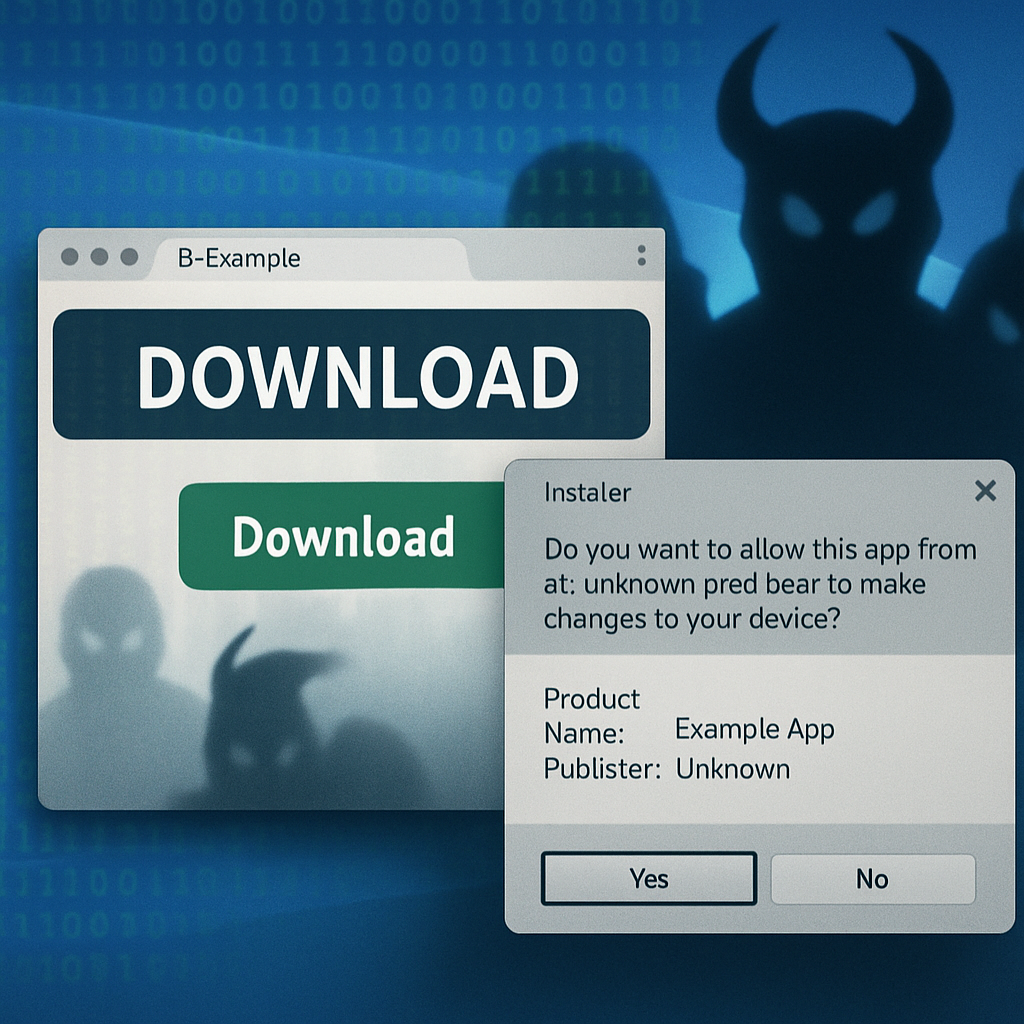
The cloned sites replicate the look and feel of widely used applications—everything from browsers to common utilities—tricking visitors into thinking they’re on a legitimate download page. When users click to download software, they receive a ZIP archive from compromised servers that is timestamped and named identical to what users might expect—but its contents vary subtly depending on when it’s requested. Researchers noted two archives with the same name arriving within 70 seconds of each other but containing different payloads. This ensures that simple checks like archive name, URL, or even archive hash often fail to flag the malicious version. Once extracted, the installer drops nefarious code into a randomly named Windows folder and in some samples uses Windows Installer to make the malware execution even more opaque.
Persistence, Evasion, and WhatsApp Side Campaigns
After installation, the malware doesn’t just sit idle. It establishes persistence via scheduled tasks, modifies system security settings, disables Windows Update, and eliminates recovery options. These steps are designed to make detection, response, and cleanup much harder.
A related yet distinct campaign was uncovered via a phishing-style WhatsApp message aimed at a recipient in Malaysia. The attachment in that case had a legitimately signed launcher paired with an unsigned library which handled malicious activity. The library decoded data, copied executable content into memory, staged files inside the user profile, and set up a registry key to execute the code on startup. Frequent, systematic attempts to reach out to command-and-control servers were also observed. While this chain shares some traits with the fake sites campaign, it hasn’t been confirmed to be part of the same operation or infrastructure.
Indicators & Mitigations
Researchers listed specific Indicators of Compromise: hash values for malicious ZIPs, executables, unsigned DLLs; file paths; registry keys; and network endpoints used by the malware. These IoCs offer a way for defenders to detect and respond to infections.
Recommendations include downloading software only from verified sources, scrutinizing archive downloads, and watching for system modifications like scheduled task creation and disabling of updates. For investigations of WhatsApp-based infections, researchers suggest flagging paired launcher + unsigned library deployment, odd startup entries, and persistent external network connections.
What this reveals is a growing trend of malware threats using sophisticated deception—blending valid digital signatures, branded fake sites, and multi-stage payloads to fly under the radar. As detection tools increasingly rely on static markers like file hashes or domain names, these campaigns take advantage of gaps in verification. For organizations and individuals alike, this underscores the need for multi-faceted security strategies: reputation checks, behavior analysis, code signing scrutiny, and ongoing vigilance. The SilverFox operations are a reminder that threats are evolving—so defense must evolve too.