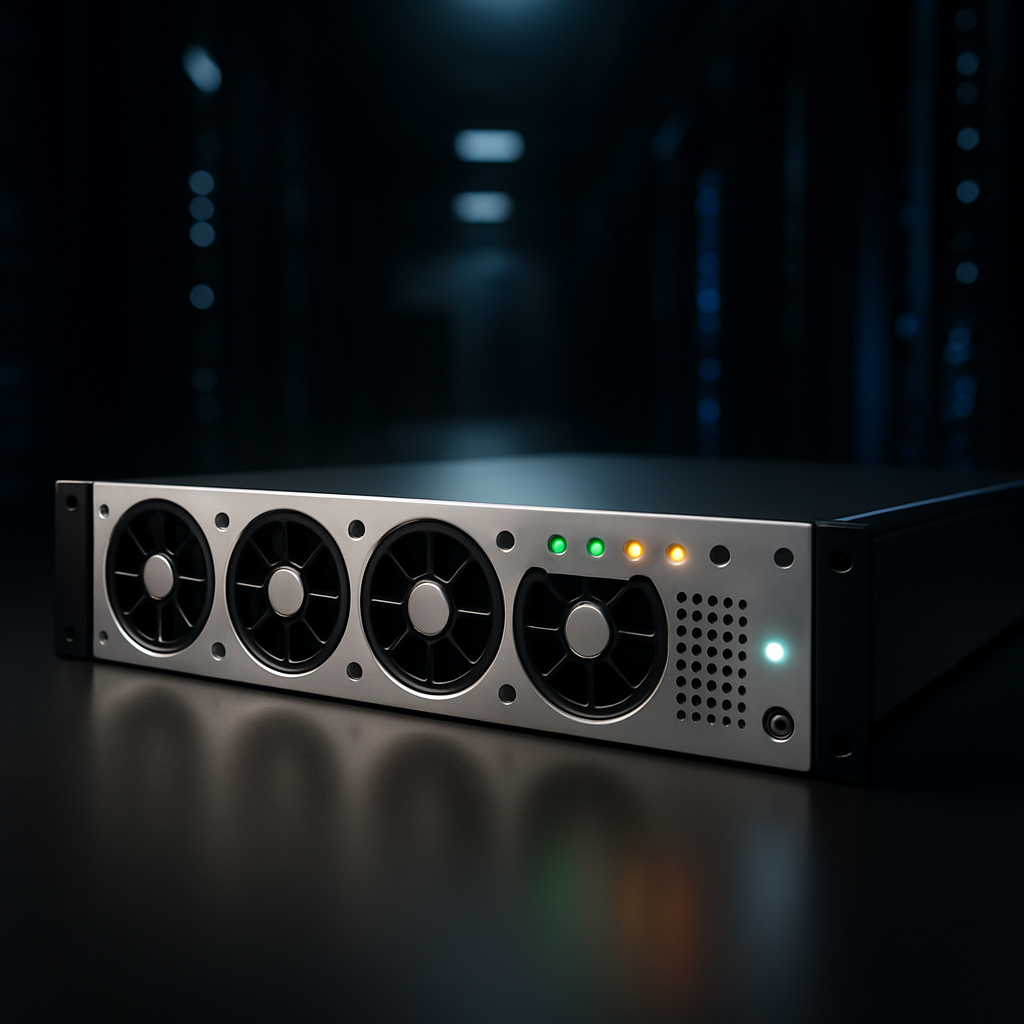
Apple is reportedly exploring a revival of its rack-mounted server line, Xserve, resurrecting the brand with bleeding-edge hardware built around the upcoming M8 Ultra chip and integrated Nvidia technology. This would mark the company’s return to a server segment it exited years ago, repurposed to meet modern demands and targeting enterprise, government, and AI computing markets.
What’s Being Designed
The plans under consideration include two main configurations: one combining two M8 Ultra chips, and a higher-end model that would house four. These aren’t expected to ship until at least 2029. They’re aimed at buyers who need serious number-crunching power — AI researchers, governmental bodies, and other enterprise customers.
A critical pillar of the rumored revival is Nvidia’s NVLink Fusion, a high-bandwidth, low-latency interconnect technology initially built for Nvidia’s own gear. Apple is said to be considering licensing this tech so it can tightly mesh its chips and AI accelerators with Nvidia’s data center infrastructure. The move would represent a strategic shift for Apple, given its history with Nvidia.
Corporate Backstory & Market Fit
Apple hasn’t offered a commercial Xserve-style rack server since it discontinued the original series. While Apple does currently produce its own Private Cloud Compute hardware used internally (for instance in its Houston data center), this new product line would be aimed outward. Selling to external businesses, developers, and governments would be a big departure from Apple’s recent server usage mainly for internal infrastructure.
At the leadership level, this initiative is said to have found support from Apple CEO John Ternus, and has been in motion for roughly a year. For Apple to pull this off, it would need to secure expensive components in volume well ahead of any product debut. One reported move: earlier in 2026, the company purchased around 250 of Nvidia’s NVL72 servers—valued at roughly $3.7–4 million apiece—totaling near $1 billion, suggesting serious investment in external compute capacity this year.
The relationship between Apple and Nvidia has been cold for years—especially when it comes to driver support and hardware collaboration. Apple largely discontinued Nvidia driver support in its Macs around 2019, marking a long freeze in their hardware partnership. But NVLink Fusion—in effect modern interconnect and accelerator tech from Nvidia that Apple may now leverage—implies a thaw in that icy relationship.
No consumer or SMB versions are expected in this refresh; at least initially, any new Xserve models would be extremely expensive, likely available only to select sectors. Apple’s internal R&D and infrastructure projects have long focused on autonomy and proprietary silicon, but this would represent a calculated turn toward more collaborative, cross-vendor server architectures.
Reviving Xserve would reconnect Apple to its data-center heritage and allow it to address explosive growth in AI and cloud computing demand. But challenges loom: sourcing parts, engineering such systems, building a supply chain for ultra-high-end server racks, and standing up sales, support, and cloud integrations that enterprise users expect.
What this means going forward: Apple’s potential Xserve return signals big changes. It suggests the company believes there’s real profit—and strategic value—in offering high-end servers again. Look for major investments in interconnect tech like NVLink, possibly licensing agreements, and early sales to governments or AI labs as proof-points. Apple’s relationship with Nvidia will be one of the most important dynamics to watch.