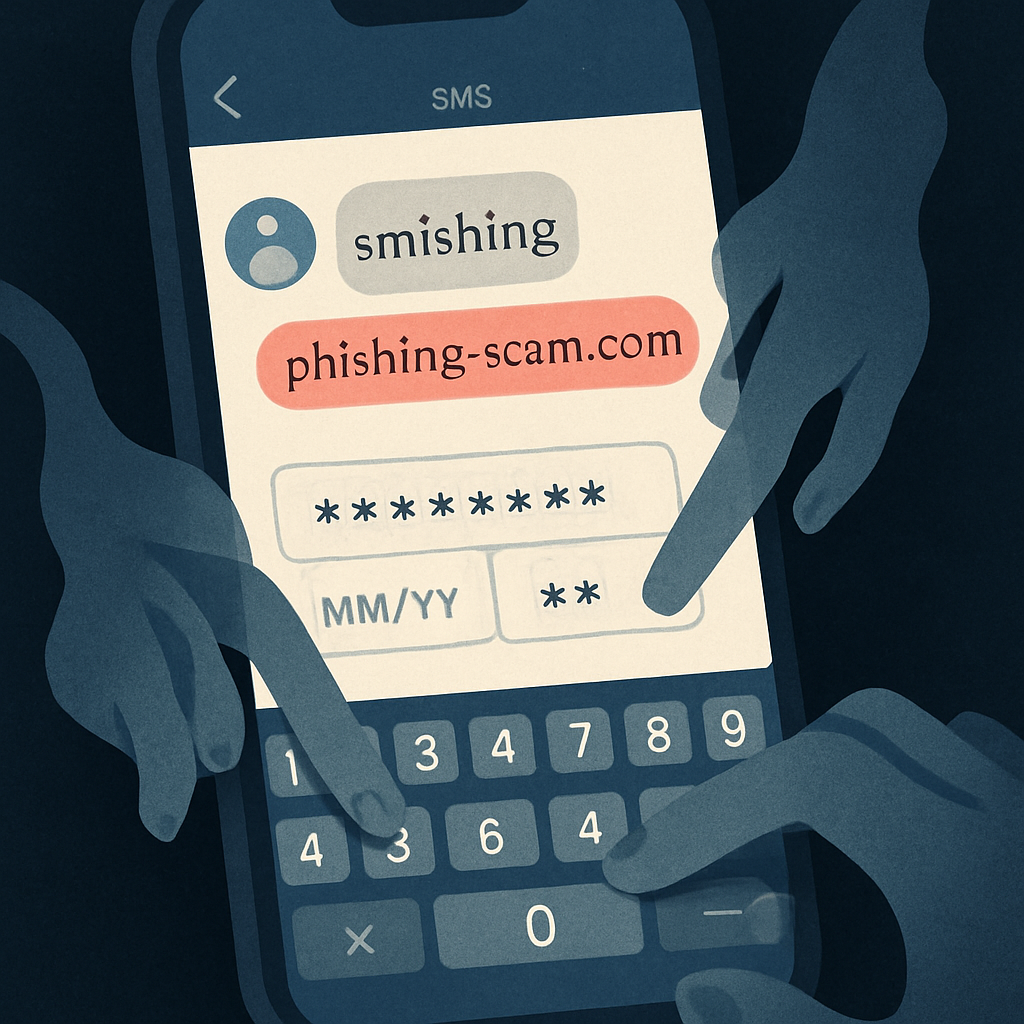
A fresh wave of SMS phishing—smishing—is turning routine payment alerts into live data-harvesting sessions. Once a victim clicks a fraudulent link, attackers can observe every keystroke across multiple form fields, capturing credit card details, one-time passcodes (OTPs), passwords, and other sensitive information in real time.
How This Attack Works
This campaign uses SMS messages posing as notices about unpaid fees, delivery confirmations, or account verification. The texts use shortened URLs to redirect victims to convincing counterfeit sites. None of the data entry tasks on those sites are harmless: everything from identity details to bank credentials can be stolen.
The toolkit powering the scheme is the “JWR” phishing kit, tied to an operator cluster known as Outsider, part of what’s called the Smishing Triad ecosystem. The key innovation: a live operator console that lets attackers watch as victims type—meaning if someone begins entering their card number, CVV, expiry date, and later the OTP sent by SMS, the criminals observe it all as it’s entered.
Technical Tricks & Evasion Measures
To maintain stealth and flexibility, the kit employs several evasion and adaptation tactics. It cycles through different domain names and uses disposable infrastructure so blocklists struggle to keep up. When WebSocket channels aren’t available, it falls back on periodic data exfiltration every few seconds, all hidden via AES-256-CTR encryption.
Functionally, the JWR kit can navigate a victim through dozens of phishing pages—including requests for SMS codes, PINs, or even a QR verification if a payment “fails.” It also includes integrations with WordPress and Shopify, meaning the phishing tactics can masquerade as legitimate sites built on common commerce platforms.
Detection & Defense Tips
Indicators of compromise (IoCs) have been identified: storage keys like JwrCvvForm, page names such as cpay.html or ipayalselectverify.html, and URL components like apiopen* and WebSocket paths including webSocketQT/JWRCID/…. Monitoring for these specific patterns helps defenders flag phishing pages even when logos and branding vary.
For individuals, the safest course is ignoring unexpected payment-related text messages, typing known web addresses directly in a browser, and never submitting OTPs, bank or card details through links in texts. If any data has already been submitted, affected users are advised to change passwords, alert banks, and check transactions closely.
Why It Matters—and What Comes Next
This evolution in smishing underscores a growing shift from passive data-stealing sites to active, interactive fraud operations. By watching users type—but before a form is submitted—the attackers shorten the window for detection or intervention. The campaign also highlights how supply chain risk (through WordPress/Shopify integrations) lets attackers piggyback on trusted vendor ecosystems.
Defenders—both individuals and organizations—need to treat this as a signal to upgrade defense strategies. This means developing detection signatures, investing in rapid takedown, educating users, and treating even polished SMS warnings as potential traps. Only by narrowing the time between exposure and action can we reduce the damage this kind of live smishing threat can inflict.