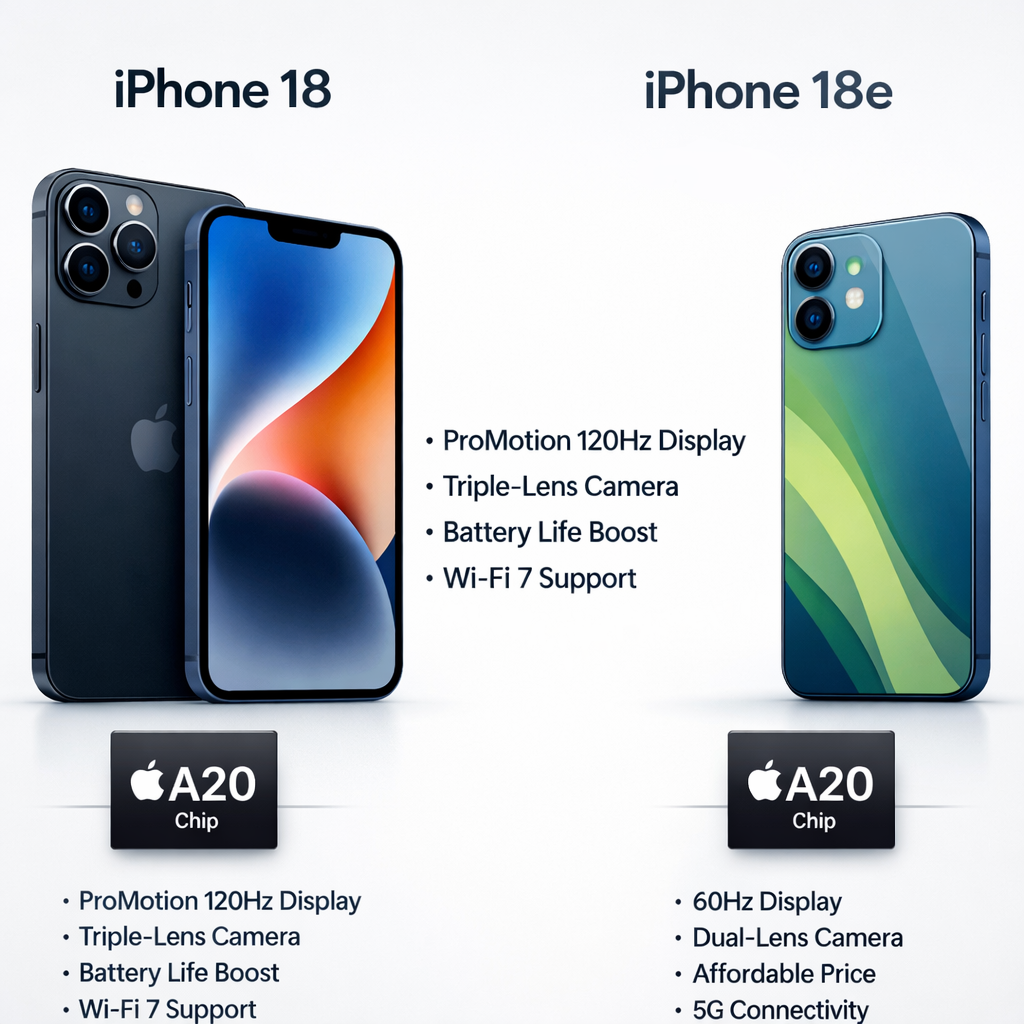
Apple is planning to release its standard iPhone 18 and the lower-cost iPhone 18e in spring 2027. Both models will be powered by the new A20 chip, according to the latest reports. This aligns with recent rumors that have predicted a split launch schedule for Apple’s upcoming iPhone lineup, with high-end models arriving in late 2026 and more affordable versions following in the spring.
What is Known So Far
The 18e is expected to retain several key features from its predecessors: a 6.12-inch OLED panel built with LTPS technology, a 60Hz refresh rate (meaning no ProMotion or Always-On display), and a single 48-megapixel rear camera. One leak suggests the front camera may be bumped to 24MP, a possible upgrade over recent entry models. The standard iPhone 18 is rumored to have a more advanced display, potentially including ProMotion 120Hz and LTPO technology.
The A20 chip, expected for both models, is believed to be fabricated using a 2-nanometer process, delivering improvements in performance and energy efficiency compared to the current A19 chip. These improvements should provide smoother graphics, better battery life, and overall enhancements in responsiveness.
Launch Strategy and the Role of iPhone Air 2
Mark Gurman of Bloomberg has reiterated that the standard iPhone 18 and 18e will not be part of the fall 2026 product wave. That season will focus on the Pro models—iPhone 18 Pro, Pro Max—and a foldable iPhone. The more affordable 18 and 18e variants are being pushed to spring 2027, along with the next generation of the iPhone Air (often called iPhone Air 2).
The Air 2 is also expected to gain a second rear camera and improvements in battery life, though details on size and design are still unconfirmed. Apple seems to be positioning it as a lighter, more portable alternative to the standard models, rather than a full upgrade.
No official confirmation from Apple has emerged yet, so all specifications remain subject to change. But the emerging picture gives us the clearest view yet: two tiers of iPhone models, separated by display and camera features, unified by the next-gen chip and staggered release cycle.
What this means:For many consumers, the spring release means waiting longer than usual for mid-range and base iPhone models. Keeping a 60Hz display on the 18e, even with upgraded cameras and chip, may make it less competitive against Android rivals pushing high refresh rates at similar price points. Apple’s strategy seems aimed at reserving premium features for the Pro line, while using the new A20 chip and staggered launches to spread out interest and sales impact across the year.