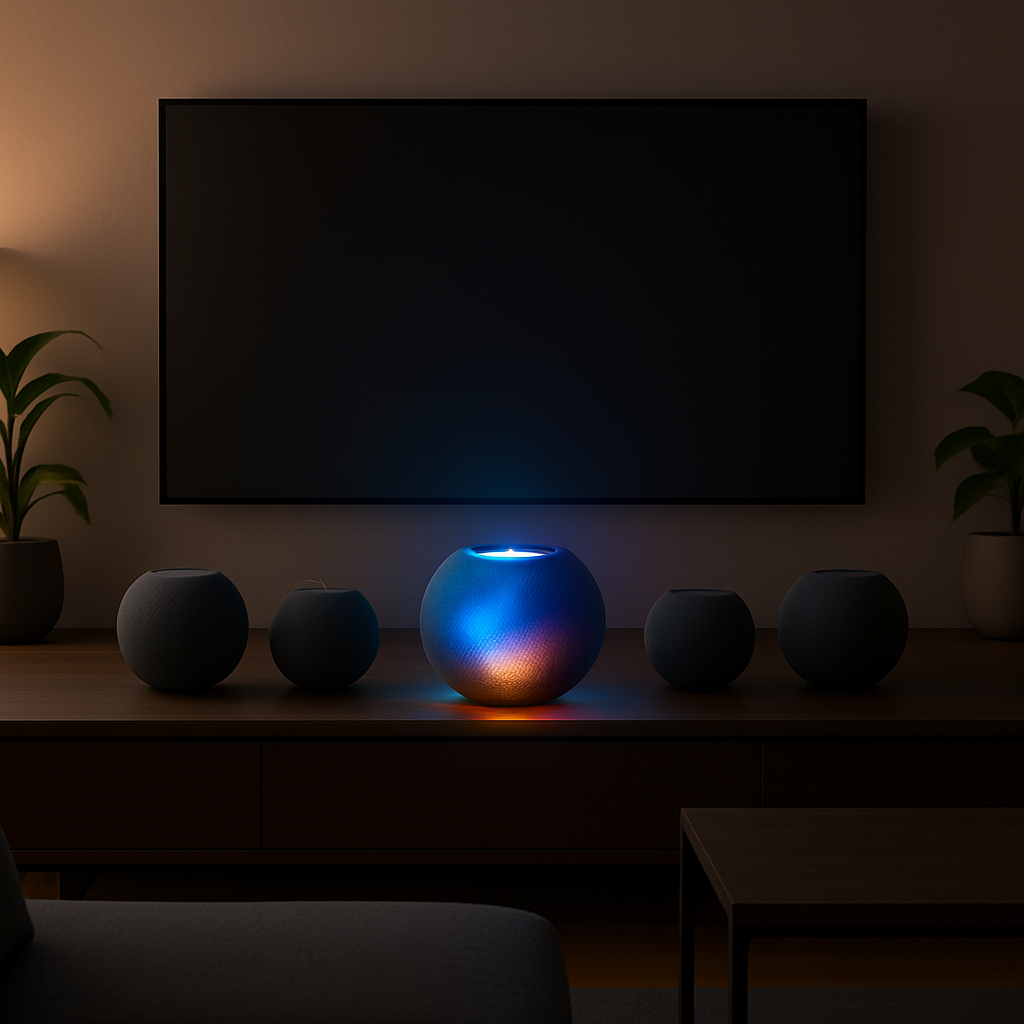
Code in the iOS 27 developer beta reveals Apple is preparing a four-speaker surround sound system composed entirely of HomePod minis, paired with smart home enhancements. These new features promise to reshape how HomePods and Apple TV work together.
Home Theater by the Mini Team
References hidden in firmware confirm that HomePod minis will be able to join together as part of a dedicated “surround system.” One HomePod in this ring can be flagged as ‘‘a speaker in surround system [Y],” distinguishing it from a lone or paired device. When an Apple TV 4K is part of the setup, a mini can forward Siri requests to the TV, expanding its role from passive speaker to active processing node. This implies newer Apple TV 4K hardware may be required, at least for full functionality.
Siri AI and Visual Feedback
Another strand of the code involves the user interface: when Siri AI is engaged, a light animation will play on HomePod minis. This animation activates when the device is touched during active processing—serving as a “touch rejection” indicator rather than showing pre-finished frames. It’s dynamic, rendering in real time, not using static graphics.
Why Now?
Apple has been teasing plans for a four-HomePod mini surround system since September 2026. Recent code dumps strengthen that roadmap, pointing to closer integration between smart home managers, voice control, and media playback. The expanded functionality hints at HomePod minis becoming more essential in Apple’s vision for a fluid home entertainment ecosystem.
These features, especially the surround sound capacity and the Siri AI feedback methods, could make users more likely to invest in multiple HomePod minis. They reflect a shift toward smarter, more interactive ambient devices that don’t just play audio, but serve as hubs for voice, video, and home automation.
What to watch: whether Apple introduces a firmware or hardware requirement for these new features; when the update becomes available to consumers; and how these changes affect audio latency, pairing reliability, and overall user experience in multi-speaker environments.