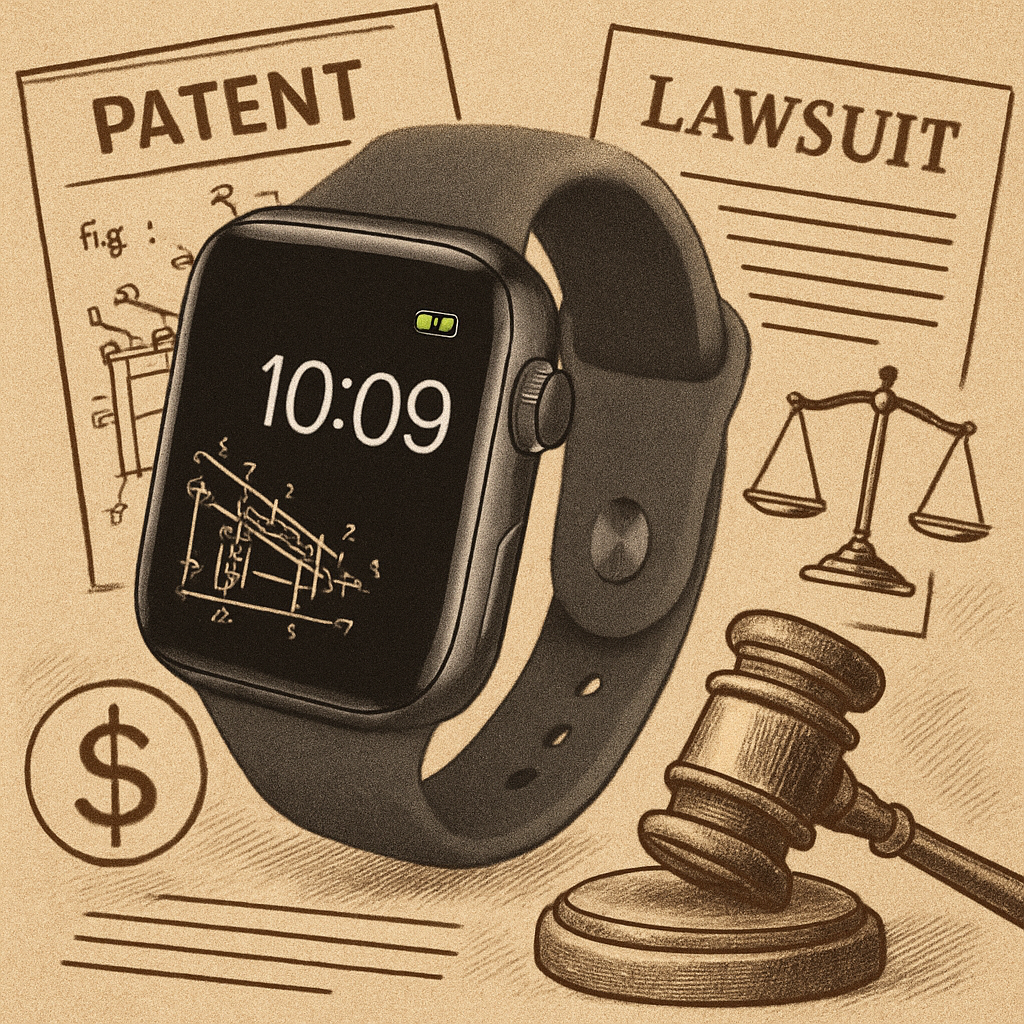
Apple will now pay Masimo approximately $818 million following a recent court ruling that tacks on more than $184 million in interest to an earlier damages award. The added sum stems from a November 2025 verdict in which a federal jury found that features in the Apple Watch—specifically heart rate notifications and workout mode—violated Masimo’s patents. The original damage award stood at $634 million.
Federal Judge James Selina rejected Apple’s contention that accruing interest would unfairly benefit Masimo, dismissing the claim as a misunderstanding of the role interest plays in patent royalty compensation. The judge referenced Supreme Court guidance which holds that interest from the period when royalty payments should have occurred simply restores the patent holder to what they were entitled to.
Under his ruling, Apple must pay Masimo interest based on Masimo’s own borrowing rate, compounding from the time the infringement began. Masimo had pushed for a 7% interest rate, which would have raised the total interest owed to about $243 million—a jump of nearly $59 million over what the judge ordered. Ultimately, Apple’s total financial obligation now stands at $818 million after accounting for the interest.
Long legal history behind the dispute
The legal clash between Apple and Masimo dates back to 2020, when Masimo first alleged that Apple infringed on ten patents and stole trade secrets by hiring individuals from its company. In 2021, Masimo filed additional suits claiming the Apple Watch Series 6 violated its patents related to blood oxygen measurement technology.
By late 2023, a U.S. International Trade Commission (ITC) ruling threatened to stop Apple from selling the Apple Watch in the U.S., unless it stripped out the blood oxygen sensing feature. Apple complied via software changes, and the feature was reintroduced later.
The initial monetary judgment came in November 2025, and Apple’s efforts to appeal that verdict were rejected by April 2026. Apple also sought to overturn a U.S. District Court decision concerning Masimo’s challenge to the ITC’s narrow ban, but that complaint was dismissed with prejudice.
Why the interest rate matters
Choosing Masimo’s borrowing rate instead of a fixed 7% likely saved Apple tens of millions in added interest. While a 7% rate would have pushed the interest component to nearly $243 million, the rate the judge selected results in about $184 million, a significant but smaller sum.
This ruling underscores a broader principle in patent infringement cases: interest is not punitive, but remedial—intended to ensure the patent holder receives full restitution for financial harm during the period of infringement.
What this means moving forward: Apple’s ordered payout reflects not just the cost of patent infringement, but also the financial principle that delays in compensating patent holders should accrue interest. With the total now $818 million, Apple must account for this in its financial planning and legal risk management. Stakeholders will be watching whether this ruling sets a stronger precedent for future patent suits where similar interest calculations apply. Companies facing patent infringement claims should closely monitor how interest is assessed—rates, compounding, and timing can shift the stakes dramatically.