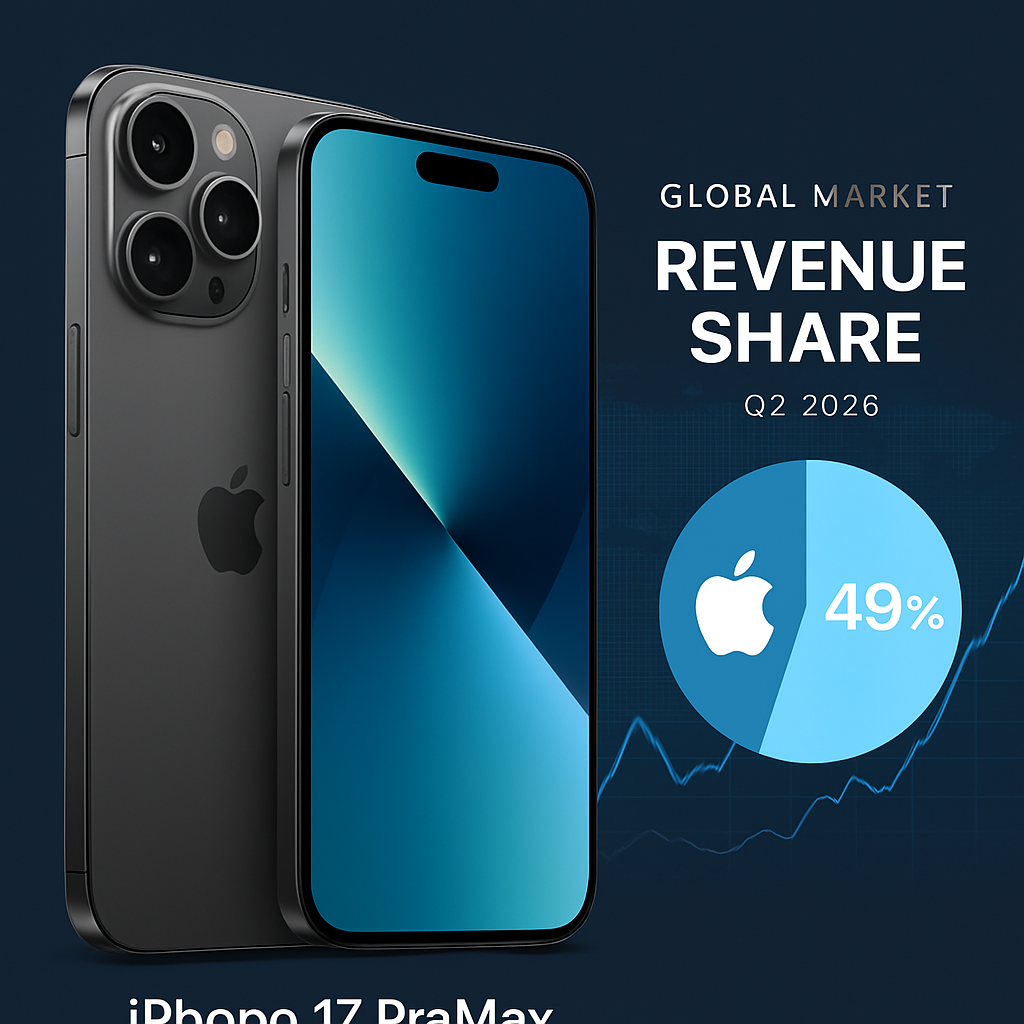
In the second quarter of 2026, Apple achieved a significant milestone by securing 49% of global smartphone revenue, marking its highest-ever share for this period. This accomplishment comes amid a general decline in smartphone shipments across the industry.
According to recent data, Apple’s revenue surged by 22% year-over-year during this quarter. The company’s average selling price (ASP) for iPhones increased to $946, up from $879 in the same quarter the previous year. This growth was primarily driven by sustained demand for the iPhone 17 series, especially the base iPhone 17 and the iPhone 17 Pro Max models.
In terms of shipment share, Apple reached 21% in Q2 2026, an increase from 17% in Q2 2025. Despite this growth, Apple remained in second place behind Samsung, which held a 23% share of global shipments. Other major brands experienced declines in their shipment shares, with Xiaomi facing the most significant drop from 14% to 11%, corresponding to a 26% decrease in unit shipments year-over-year.
The broader smartphone market faced challenges due to a global memory shortage, leading many manufacturers to raise prices in response to increased component costs and supply constraints. Apple, however, managed to keep iPhone pricing relatively stable during this period, showcasing its ability to absorb rising costs and maintain a competitive edge. This pricing strategy contributed to Apple’s growth in both value and volume, even as the overall market contracted. Notably, regions such as China, Europe, and emerging markets stood out as strong performers for Apple, as stable pricing enhanced the brand’s value proposition amidst widespread price increases among Android competitors.
Looking ahead, Apple has indicated that supply constraints are expected to intensify in the upcoming quarter, particularly affecting the iPhone, iPad, and Mac product lines. This projection suggests that while Apple has navigated recent challenges effectively, it may face increased pressures in the near future.
Apple’s record-breaking performance in Q2 2026 underscores the company’s resilience and strategic prowess in a fluctuating market. By maintaining stable pricing and capitalizing on strong demand for its latest iPhone models, Apple has not only bolstered its revenue but also strengthened its position against competitors. However, with anticipated supply constraints on the horizon, it will be crucial to monitor how Apple adapts its strategies to sustain growth and meet consumer demand in the coming quarters.