Hospitals’ increasing use of AI-assisted medical coding is inflating insurance claims, adding an estimated $942 million to health-care costs over two years with little evidence of corresponding changes in patient care. That’s according to a recent analysis by the Blue Cross Blue Shield Association (BCBSA), which found the rise is closely linked to how hospitals document diagnoses—not how they treat them.
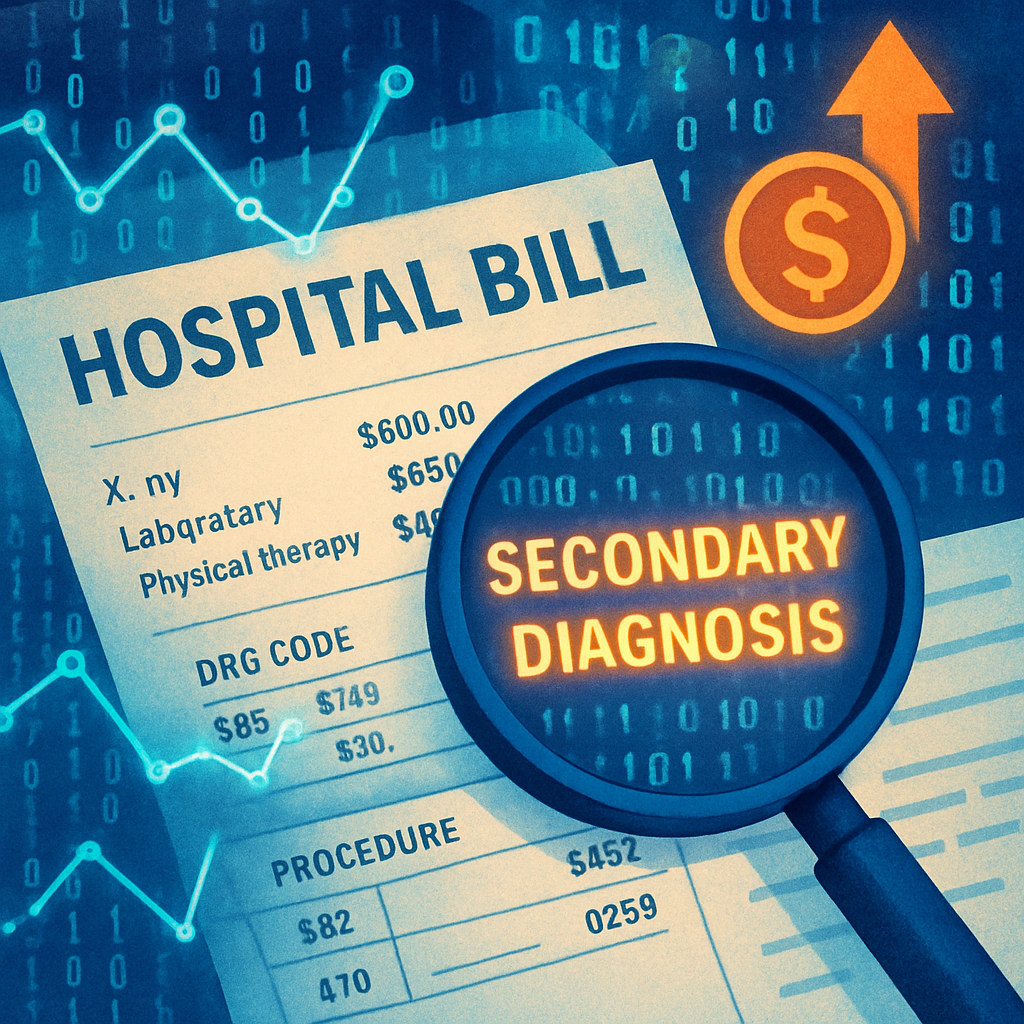
BCBSA’s review of inpatient claims data from 2023-2025 reveals that hospital systems have been classifying more admissions as “medically complex,” even as the actual level of treatment (tests ordered, procedures performed, length of stay) remained mostly stable. Importantly, AI coding tools appear central to this shift—over 60% of hospitals now employ them to scan labs, doctors’ notes, and other records to identify secondary diagnoses that enable higher billing categories.
Key Numbers Behind the Trend
From early 2023 to late 2025, the proportion of inpatient stays coded as medically complex rose from about 37% to 40%. This change translated into the nearly $942 million in additional costs borne by BCBS plans. Roughly $653 million of that came from more than 55,000 hospital stays where secondary diagnoses bumped cases into higher-reimbursement diagnosis-related groups (DRGs)—on average yielding about $11,000 extra per “excess complex case.”
These shifts weren’t driven by more patients receiving tougher treatments. In the major bowel surgery DRG examined, for example, claims tagged at the highest complexity increased significantly—from roughly 10.2% to 22.7%—while non-complex cases fell. Yet metrics such as ICU use, transfusion rates, reoperations, and median hospital stays showed no matching escalation in treatment intensity.
What’s Fueling the Disconnect?
BCBSA argues that AI coding tools enable hospitals to find diagnoses—often secondary or comorbid conditions—that may previously have been under-documented. These tools scan lab values, physician notes, and medical records to flag conditions that can trigger higher billable codes. In many cases, these secondary diagnoses—derived even from single lab results—push claims into more severe DRG layers.
While hospitals defend their practices as catching up on legitimately missed diagnoses—especially as coding standards evolve—insurers caution that reimbursement systems in place reward documentation rather than actual patient acuity or resource use when AI tools are involved. This creates incentives for what some call “coding intensity,” a shift in billing behavior that increases costs without clear clinical gains.
BCBSA’s reports acknowledge limitations: they rely on de-identified claims rather than full clinical records, which makes it harder to definitively assess whether patients are truly sicker or just coded as such. But in multiple DRG categories, hospitals with the biggest jumps in complex coding had similar or even lower treatment intensity relative to peers.
The financial pressure of these practices flows downstream—BCBS says the higher costs are contributing to rising insurance premiums, patient out-of-pocket expenses, and broader healthcare inflation. The $942 million figure covers only the portion of cost growth that appears disconnected from care changes.
AI coding tools are still relatively new in hospital revenue cycles. As of mid-2026, more than 63% of health systems reported using them in admissions or claims workflows. Many hospital revenue cycle leaders see them as efficiency tools—streamlining documentation and reducing missed reimbursement opportunities. Insurers see something different.
Simultaneously, disagreements continue over whether increased complexity reflects sicker patients, or just more diligent documentation aided by AI. Hospitals point out that evolving patient demographics and changing care settings may partly explain shifts in coded complexity. Insurers want proof in treatment data.
What this means going forward is that industry stakeholders will likely push for stronger oversight of AI-assisted coding. Potential changes include audits that link diagnoses to clinical records, clearer regulatory standards for when and how diagnoses can be coded, and adjustments to reimbursement methods to reward care delivered, not just diagnoses documented.
BCBSA plans more studies in this area, including analyses of outpatient care and broader DRG categories. Insurers are especially focused on capturing where coding practices, AI tools, and billing incentives misalign.
For patients, the key takeaway: higher-severity billing doesn’t always mean more/severe treatment. Reviewing billing statements, asking for explanations, and verifying medical records may become increasingly important as this billing shift accelerates.
Analytical Takeaway: The trend uncovered by BCBSA underscores a growing risk in healthcare’s AI adoption—one where the ability to document more thoroughly via AI may outpace system capacity to link that documentation to actual clinical value. As AI tools become more embedded in hospital back-ends, the danger isn’t just skewed claims—it’s misaligned incentives that reward coding over care. Regulators, payers, and providers face critical decisions: either adapt payment models to emphasize outcomes, enforce stronger inspection of diagnostic practices, or accept that AI will continue to inflate cost without improving care.