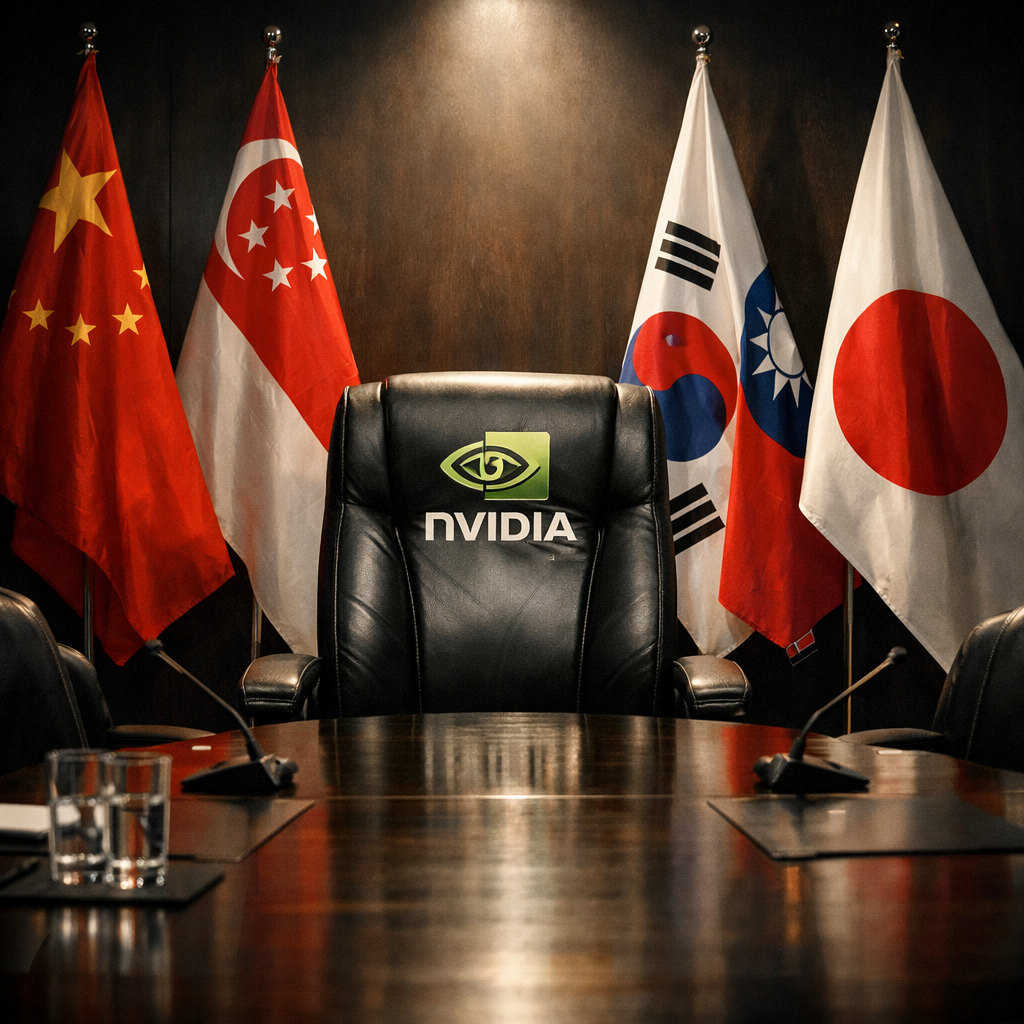
Nvidia’s sudden CEO departure has stirred concern and prompts a set of responses from governments across Asia. On November 8, Nvidia’s board authorized an independent inquiry into allegations that former CEO Jensen Huang was involved in a Chinese spy scheme tied to Alice Huang, a former exec at Singapore’s Megaspeed. Within days, officials in several Asian countries moved to reassure partners, probe potential fallout, and defend national interests.
China and Export Risk
China’s Ministry of Foreign Affairs dismissed any link between Alice Huang and espionage as baseless, calling the charge a smear against Beijing. Authorities also protested export restrictions that hamper global supply chains, and denied knowledge of any ties between alleged restricted Nvidia chips and a Shanghai data center associated with Alice Huang. Meanwhile, over $3 billion in Chinese AI computing initiatives could be jeopardized—some of them tied to Nvidia’s restricted chips, which are already hard to procure due to tight U.S. export controls.
Responses from Singapore, South Korea, Taiwan, and Japan
Singaporean investigators, who seized Alice Huang’s passport in mid-2025 amid allegations the company misdeclared shipments, later released it after finding insufficient evidence for criminal charges. However, they determined she had provided misleading information about her role at Megaspeed, issuing a warning and barring her from re-entering Singapore. That probe—extending to Megaspeed and six other people—remains active.
South Korea moved rapidly to stabilize its AI ecosystem: the government confirmed Nvidia is still poised to deliver 260,000 high-end GPUs and pledged to continue collaborating on AI projects. Its Science Ministry convened an emergency meeting to evaluate potential consequences of Huang’s departure on national AI ambitions.
In Taiwan, infrastructure plans tied to Nvidia also seemed intact. Though Huang’s exit drew attention, officials judged the global AI market unlikely to shift significantly. They confirmed a project to build Nvidia’s overseas headquarters in Taipei is proceeding as contracted, and promised continued support.
Japan’s industry authorities said they would keep a close eye on Nvidia’s next moves, describing the company as central to Japan’s semiconductor and AI sectors. Officials acknowledged it was early to assess how much Huang’s departure will impact the industry, but emphasized Japan’s commitment to supply stability.
Nvidia’s influence across Asia runs deep: partners in China, Taiwan, South Korea, and Singapore contribute essential services in memory chips, compute power, server infrastructure and strategic AI deployment. The revelations triggering Huang’s resignation—personal misconduct, espionage concerns, and formal investigations—highlight the fragile intersection of corporate leadership, national security, and global tech supply chains.
Why It Matters: Asia is a strategic ground zero for the AI arms race, and Nvidia is a linchpin. As nations confront uncertainty, export policy, supply chain reliability, and government-industry trust are all on the line. What happens with Nvidia—from leadership transition to investigation outcomes—could reshape AI geopolitics for years. Watch for how export controls are enforced, which projects get delayed or cancelled, and who emerges to lead Nvidia globally—and how Asia adapts.