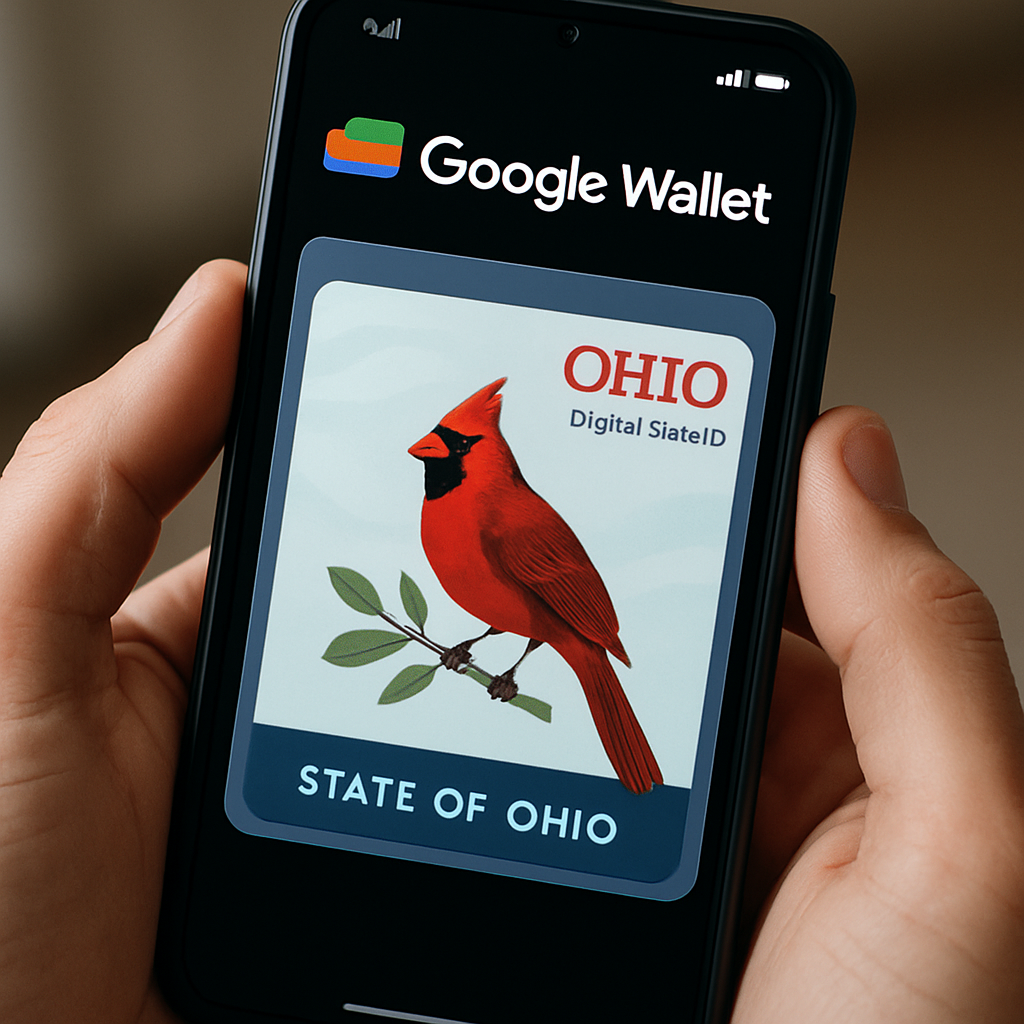
Google Wallet on Android now supports Ohio state IDs, marking its 11th state ID or driver’s license integration and the first new addition in 10 months. This launch allows Ohio residents to add their physical state ID or driver’s license to Google Wallet as a digital option.
To enable the digital ID, users should open Google Wallet and select the “plus” icon beside “View more.” From there, under “IDs & personal info,” they can tap “Driver’s license or state ID” and find Ohio listed among the supported jurisdictions. Existing states include Arizona, Arkansas, California, Colorado, Georgia, Iowa, Maryland, Montana, New Mexico, North Dakota, and the territory of Puerto Rico.
How It Works
Setting up an Ohio digital ID involves taking photos of both the front and back of the physical card and recording a short facial video for verification by the Ohio Bureau of Motor Vehicles. Once submitted, this review typically takes a few minutes, followed by an email notification confirming when the digital ID is approved.
After approval, the digital ID appears with distinctive design features—most notably Ohio’s state bird, the Northern Cardinal, on the card face. Users can tap “Activity history” to see how the digital ID has been used, while “Driver’s License information” reveals details like license number, expiration date, address, and more.
Security, Usage, and Limitations
Digital IDs in Google Wallet work using NFC and QR code scanning. Some airports already accept them through the TSA. However, they’re not a complete substitute for the physical card—Ohio still requires individuals to carry the actual ID when necessary.
Device requirements include Android 8 or newer, a screen lock, and enabled Bluetooth and Nearby Devices. Since the digital ID is treated as a private pass, it lives only on the user’s single device and isn’t synced to the cloud. It can also be deleted manually or removed remotely via the user’s Google Account.
This latest addition brings Google Wallet’s total supported state IDs/driver’s licenses up to 11. The ramp-up highlights how digital identity is becoming more commonplace, although progress has been measured: nearly a full year passed since the last state was added.
What this means is clear: Ohioans now have easier access to a secure digital version of their state ID, but the legal requirement to carry the physical card remains in place. As more states adopt digital IDs, we’ll need to watch how adoption, legal acceptance, and security evolve. Also essential to monitor: how quickly remaining states enable support—and whether users feel comfortable relying more on the digital format.