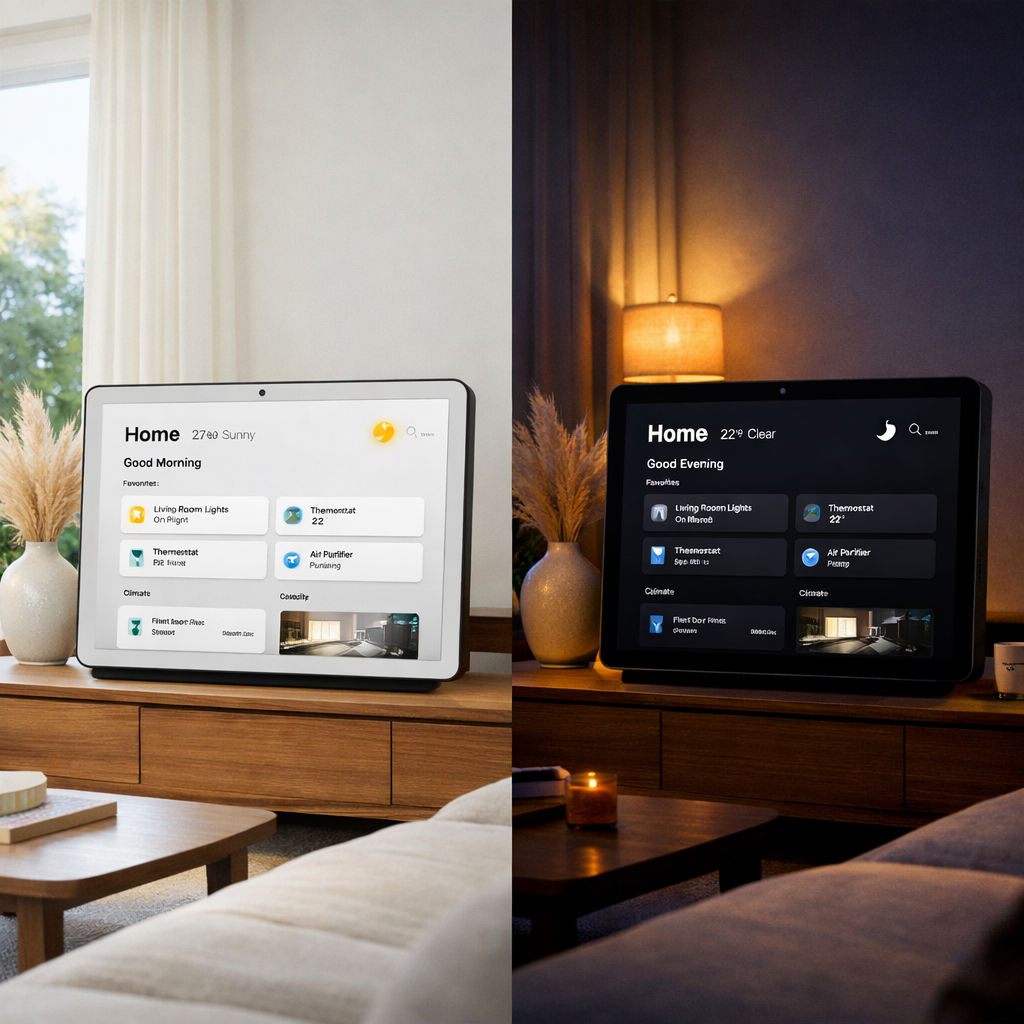
Apple’s freshly launched HomeView display ships with a novel dark mode variant that many users wish would become standard across iPhones, iPads, and Macs. Dubbed Ambient Dark Mode, this mode expands on the usual automatic dark mode options—such as sunset-to-sunrise or a custom schedule—by introducing light sensor–based switching depending on environmental lighting. In short: it detects ambient brightness and toggles between light and dark modes accordingly.
What Ambient Dark Mode Adds
Currently, Apple platforms like iOS, iPadOS, and macOS allow dark mode to be enabled either permanently, by a fixed schedule, or from sunset to sunrise. The new display changes that. With its ambient mode enabled within display settings, the device uses sensors to monitor the room’s lighting and adjust the UI accordingly—light mode when it’s bright, and dark mode when it’s dim or dark. This means no more forcing dark mode at midday just because the sun is down, or waking up to harsh screen brightness while curtains are still drawn.
Why It Matters Beyond HomeView
A dark mode tied to the environment could solve long-standing usability friction. If you’re using your Mac late at night with the lights on, or pulling up your iPhone indoors before dawn, current modes sometimes misfire—either blinding you or keeping things overly dim. Ambient Dark Mode addresses that. Since HomeView is the first Apple device to offer it, there’s a hope that it’ll roll out in OS 28 to Apple’s mobile and desktop platforms.
Beyond comfort, this mode could also have implications for energy use and display wear, especially for OLED screens that take power savings from darker pixels. Adaptive dark modes may lead to broader adoption of sensor-based UI adjustments, something users have requested for years but which previously wasn’t supported.
Of course, there are design and privacy considerations. Light sensors must be accurate and fast enough to avoid flicker or delayed transitions. Users may also want overrides to prevent dark mode in specific contexts. Apple will need UX polish and API support to keep this smooth.
This could be a turning point. If Ambient Dark Mode comes to iPhones, iPads, and Macs with the next OS update, it reflects Apple acknowledging that environment matters—both for usability and user wellbeing. What to watch for: development betas of OS 28 that include this feature, system-wide settings for ambient light sensing, and how third-party apps adapt to dynamic theme shifts. The adoption of this across devices would show Apple’s evolving take on dark mode isn’t just aesthetic—it’s context aware.