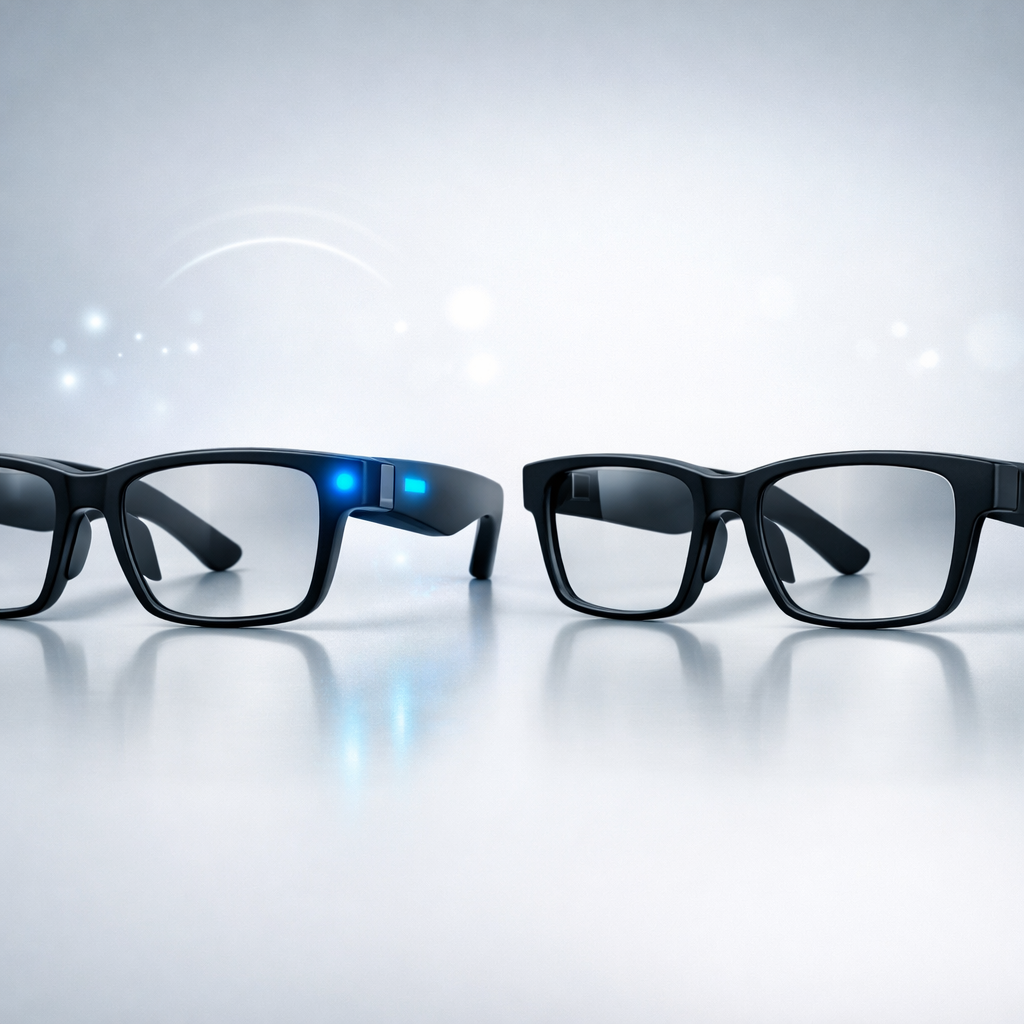
Google’s recently unveiled “Intelligent Eyewear” line — smart glasses built on its Android XR platform in collaboration with Samsung, Warby Parker, and Gentle Monster — aims to reset expectations around wearable cameras. The company is openly trying to correct course after high-profile backlash toward Meta’s Ray-Ban smart glasses, which many see as failing basic privacy norms.
The Stakes Are High
Smart glasses already carry a stigma: concerns over unmarked recording, facial recognition policies, and privacy violations have made many wary. Meta has often been at the center of those worries — its products have been labeled evasive of transparency, and public opinion has turned harsh amid reports of hidden sensors and surveillance-flirting features. Google isn’t ignoring that legacy. It’s trying instead to position its eyewear as more ethical, more clear, more responsible.
Google’s Privacy-First Design Choices
Indicator lights will visibly signal when the glasses are recording, and the design includes tamper detection — if someone blocks the LED, recording stops entirely. Google also promises that whenever users ask Gemini (Google’s assistant) to “look” at something, visual data will not be stored in Gemini History, won’t be used to train AI models, and won’t be used for ad targeting. In processing visuals, the system will automatically redact faces of people around the wearer before analysis—offering protection to bystanders. All these measures are a direct response to the privacy complaints that have dogged earlier smart eyewear.
On the hardware front, the first models will be released under established eyeglass brands — Gentle Monster and Warby Parker — and include frames that mimic regular eyewear styles. The goal is to make the device visually familiar while embedding 12MP cameras, open-ear speakers, and multiple microphones. The included battery is claimed to last approximately 9 hours per charge, with a case that can recharge the glasses multiple times. Preorders are already live, with sales officially beginning in December.
But Meta’s Shadow Looms Large
No product exists in a vacuum. In interviews and podcast discussions, observers noted that Meta’s handling of smart glasses set the bar for what not to do: muddy privacy policies, insufficient indicators, and features that raised community concerns over consent. Users and experts alike have expressed skepticism, grumbling about what they call “pervert glasses” — a nickname born of distrust. Google has openly noted this reputation and designed parts of its eyewear roadmap specifically to avoid repeating Meta’s worst errors.
Even so, there are lingering doubts. An indicator light helps, sure — but in public spaces, with motion and distractions, will people notice? Will bystanders feel their privacy is respected? Is Google’s promise about data usage verifiable? These concerns aren’t just technical; they touch on what feels socially acceptable. As much as engineering matters, so does transparency and user trust.
What to watch for: how these glasses perform in real-world use, not just polished demonstrations. Do the privacy features hold up under scrutiny? Will governments or regulatory agencies intervene, as some have with Meta’s devices? And perhaps most importantly, will consumers feel confident enough to actually wear them?
Google’s Intelligent Eyewear isn’t just another wearable — it’s a test. A test of whether the company can reverse years of public mistrust, position itself as the smart choice in wearable tech, and deliver on promises of intelligent, stylish, and responsible use.
Analysis: If Google succeeds, it may usher in a new era of wearable AI where trust is built in by design. If it fails, it risks reinforcing the same fears that chase smart glasses into obscurity. The truth will come with time, adoption, and, yes — consistency.