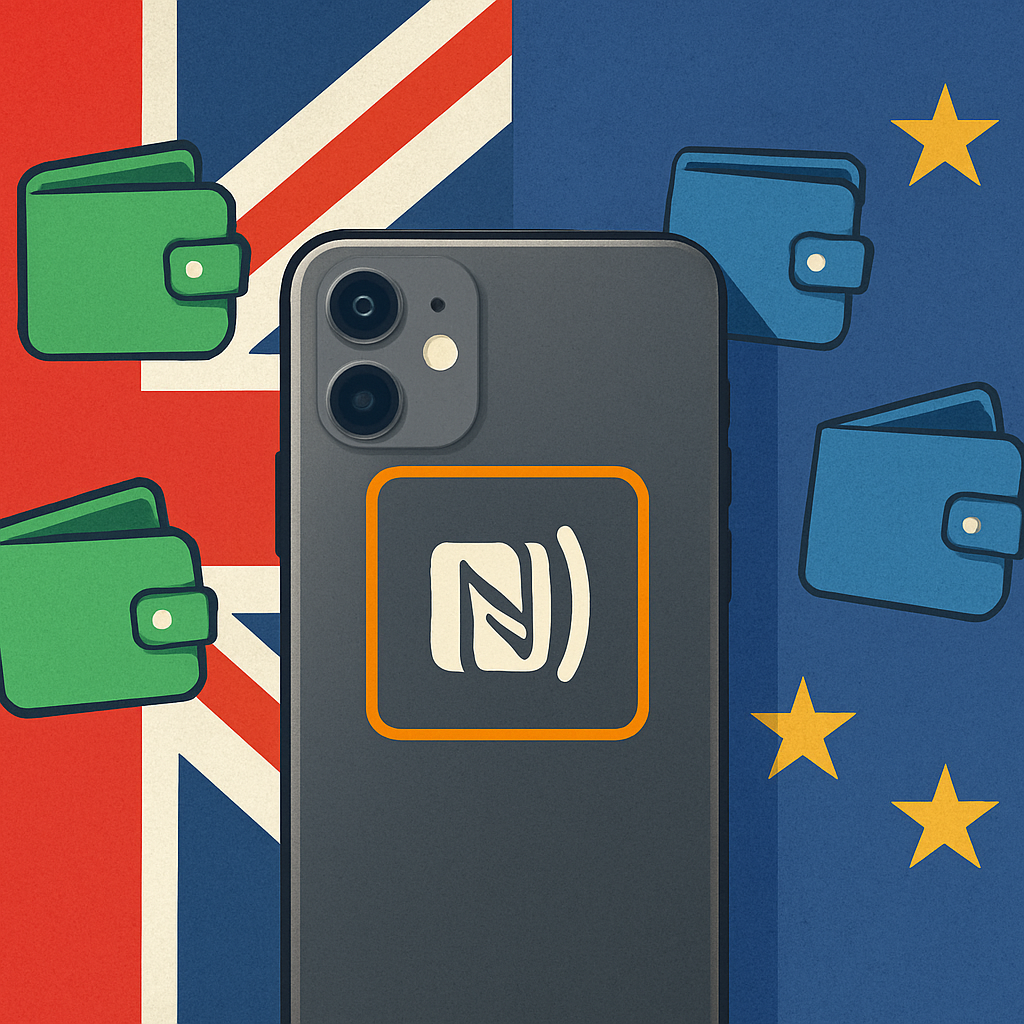
The UK’s Competition and Markets Authority (CMA) has criticized Apple’s recent agreement to allow third-party access to the NFC chip in iPhones under EU rules, saying the concessions fall short—especially for innovation in the UK. While Apple has agreed to open up NFC access across Europe, the CMA argues the firm’s proposed terms would still burden developers with high fees, strict conditions, and technical barriers. The agency is now pressing for broader, cost-free access under more generous licensing arrangements.
What Apple Has Promised—and What the UK Wants
Under changes driven by recent EU regulation, Apple is set to permit developers to build alternative contactless systems—such as digital wallets, transit passes, travel tickets, and digital IDs—on its iPhones. Nevertheless, the CMA says Apple’s terms, such as licensing fees and tight specifications, are deterring UK-based developers. Unlike Europe, no competitor has emerged to challenge Apple Wallet in the UK, whereas several have already launched in EU countries like Norway.
One example cited is Vipps, a Norwegian payment system that has successfully introduced a Wallet alternative in 2024. In contrast, UK firms still cannot offer rival solutions under Apple’s terms, according to the CMA, which sees this as evidence of significant barriers to entry in the UK market.
Security, Developer Terms & UK Decision Timeline
Apple has pushed back against the CMA’s criticism, saying that loosening its proposed rules would undermine security and privacy protections afforded to users. In Apple’s view, the restrictions are necessary to guard against fraud, maintain data privacy, and ensure system integrity.
The CMA has begun a formal consultation on this topic, seeking public input through November 17, 2026. After gathering feedback, the agency intends to issue a decision shortly following the end of the consultation period.
Sarah Cardell, Chief Executive of the CMA, has emphasized that costs, contractual restrictions, and technical obstacles are holding UK firms back. She states that removing these barriers will support homegrown developers seeking to build out services like payment apps, digital IDs, and other Wallet-like offerings.
While Apple has agreed to comply with EU mandates, the CMA is making clear that merely aligning with those standards won’t be enough. They want parity in terms, so UK developers aren’t locked out by licensing overheads or overly complex requirements.
As this debate unfolds, it will be vital to watch how Apple responds to the CMA’s draft proposals and whether it adjusts its terms to address concerns around affordability, openness, and fairness for UK developers.
Why It Matters & What Comes Next
Opening NFC access on iPhones has been a major demand among European regulators, especially under new digital markets rules meant to foster competition in mobile platforms. For users and innovators, it promises more choice: multiple wallets, transit solutions, or ID tools can compete instead of Apple’s system dominating. For regulators, balancing safety and openness remains the key tension.
In the UK’s case, failing to press for terms that match or exceed those in the EU could leave British businesses at a competitive disadvantage—either unable to build alternative products or forced into costly licensing deals. The CMA has made clear that the current proposals miss the mark. What businesses will be watching now is whether Apple scales back fees, eases technical constraints, and aligns its UK licensing policy more tightly with the broader intent of the EU rules.