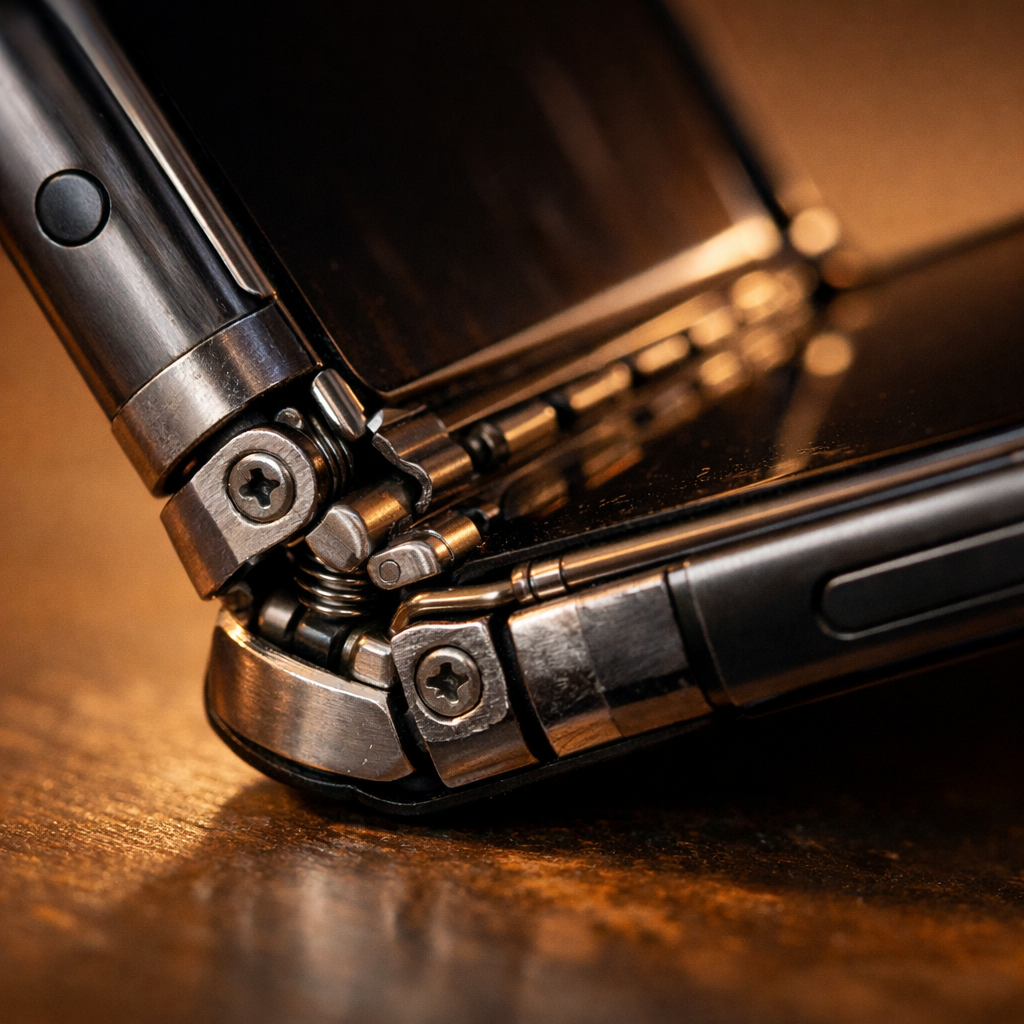
Apple’s latest foldable, the iPhone Duo, has officially been put to the test—and after more than 440,000 open-close cycles, it still works.
Rigged for Impact
About three weeks ago, a testing platform dubbed “Fold-A-Phone” began repeatedly flexing the iPhone Duo’s hinge in a lab environment. That’s over 440,300 folds in total—enough, if you closed and opened your phone around 100 times daily, to simulate over 12 years of usage. And yet, the phone hasn’t failed in the way most users fear.
Function vs. Feel
Even after all that folding, the Duo still opens to approximately 90–95% of its original angle when used on the rig. Manually opening it gets you to full angle, though it no longer feels as crisp. Around the 390,000-fold mark, testers noted a weakened snap when opening, and the hinge itself developed a looser feel. Still, display functionality—at most angles—and all sensors passed muster. There was no loss of display power, sensor malfunction, or blackout, any of which would count as critical failures in the test.
That said, flatness—a hinge’s ability to sit perfectly open—deteriorated according to the tester. But by the test’s strict criteria, that alone doesn’t signal a breakdown.
So where does “breaking” land? Not quite at 440,300 folds. There’s nothing visibly catastrophic yet—no dead pixels, no sensor issues, just a hinge that doesn’t snap like it once did.
What This Means & What Comes Next
For anyone curious about the durability of foldables under long-term strain, this test gives encouraging data. The iPhone Duo clearly isn’t built for decorative flimsiness—its hinge can endure over a decade’s worth of folds before losing some fidelity in its mechanism.
The company behind the test has every intention of pushing further. More folds are planned to find the threshold where essential functionality finally degrades—if indeed it ever does under such stress.
Why this matters: hinges are a long-running concern with foldables. Users wonder: how long until creaks, looseness, or even total failure show up? This test suggests those issues are distant—if you use your foldable diligently, you’ve got a long runway before worrying.
What to watch: future fold counts from this test, comparisons with other foldables in similar stress experiments, and whether changes in hinge design for upcoming models mitigate the “snappiness” loss over time.