Nvidia, long celebrated for its dominance in the AI hardware sector, is currently navigating a period of significant market challenges. Despite continued revenue growth, the company’s stock has declined by 15% since its peak in May, reflecting investor concerns over shifting industry dynamics.
Historically, Nvidia’s GPUs have been the backbone of AI research and development, thanks to innovations like the CUDA programming platform and rapid advancements in GPU technology. However, the landscape is evolving. The once-critical GPU shortage has eased, and attention has shifted toward memory components, now identified as the primary bottleneck in data centers.
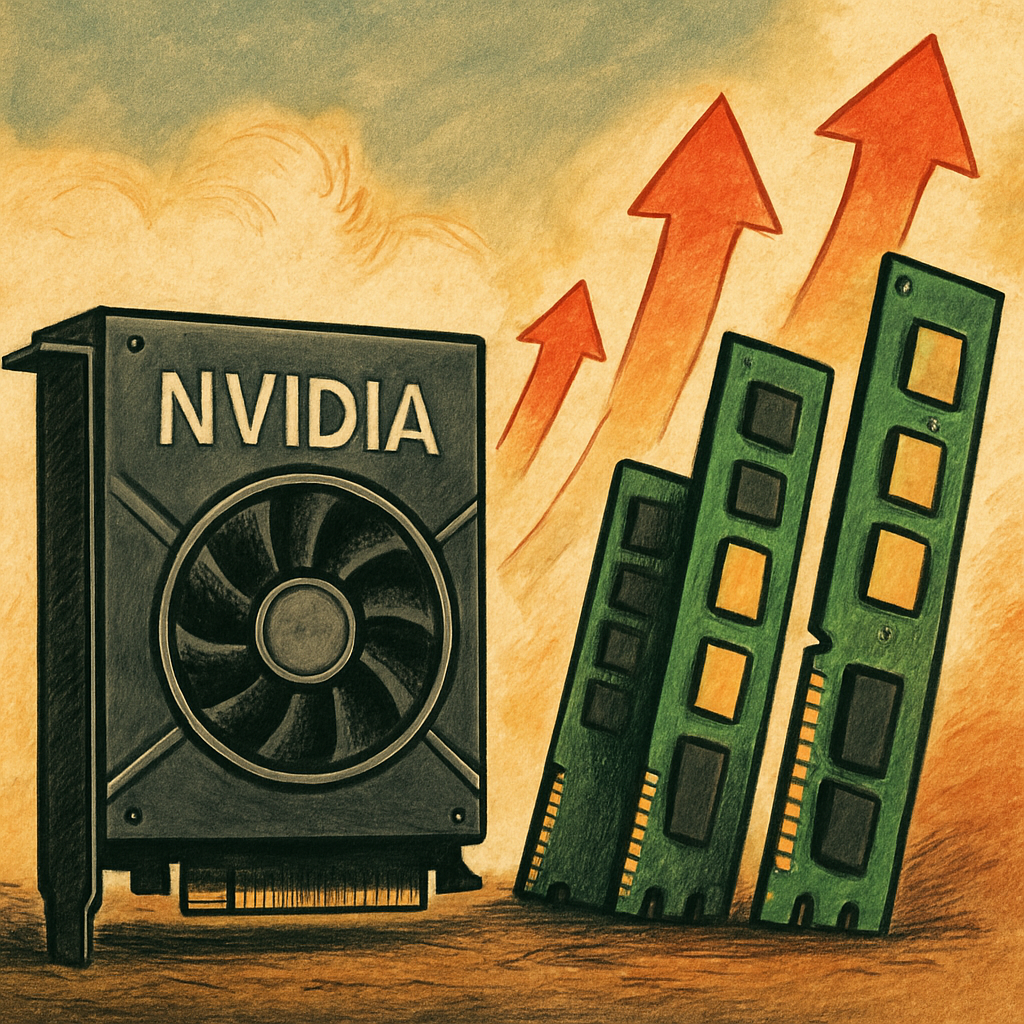
Companies like Micron, specializing in high-bandwidth memory chips essential for efficient data processing, have seen their stock values nearly triple. This surge is attributed to the escalating demand for memory, outpacing supply and leading to a tenfold increase in DRAM prices over the past year.
Conversely, the cost of GPU compute time has decreased. For instance, the hourly rate for Nvidia’s H100 GPU has dropped from approximately $3.20 in May to lower rates, indicating a shift in market demand.
Industry experts suggest that this trend stems from major tech companies like Google, Amazon, and Microsoft investing heavily in their own AI hardware solutions, reducing reliance on Nvidia’s offerings. This strategic shift has intensified competition and altered the dynamics of the AI hardware market.
In response, Nvidia has adjusted its strategies. The company has scaled back its DGX Cloud platform, initially aimed at providing direct-to-enterprise AI cloud services, due to limited adoption and competition with major cloud providers. Instead, Nvidia is focusing on partnerships and supporting cloud GPU providers through platforms like DGX Cloud Lepton, connecting developers with available GPUs from various partners.
These developments underscore the rapidly changing nature of the AI hardware industry. Nvidia’s ability to adapt to these shifts, particularly the increasing importance of memory components and the evolving strategies of major tech companies, will be crucial in maintaining its leadership position in the market.