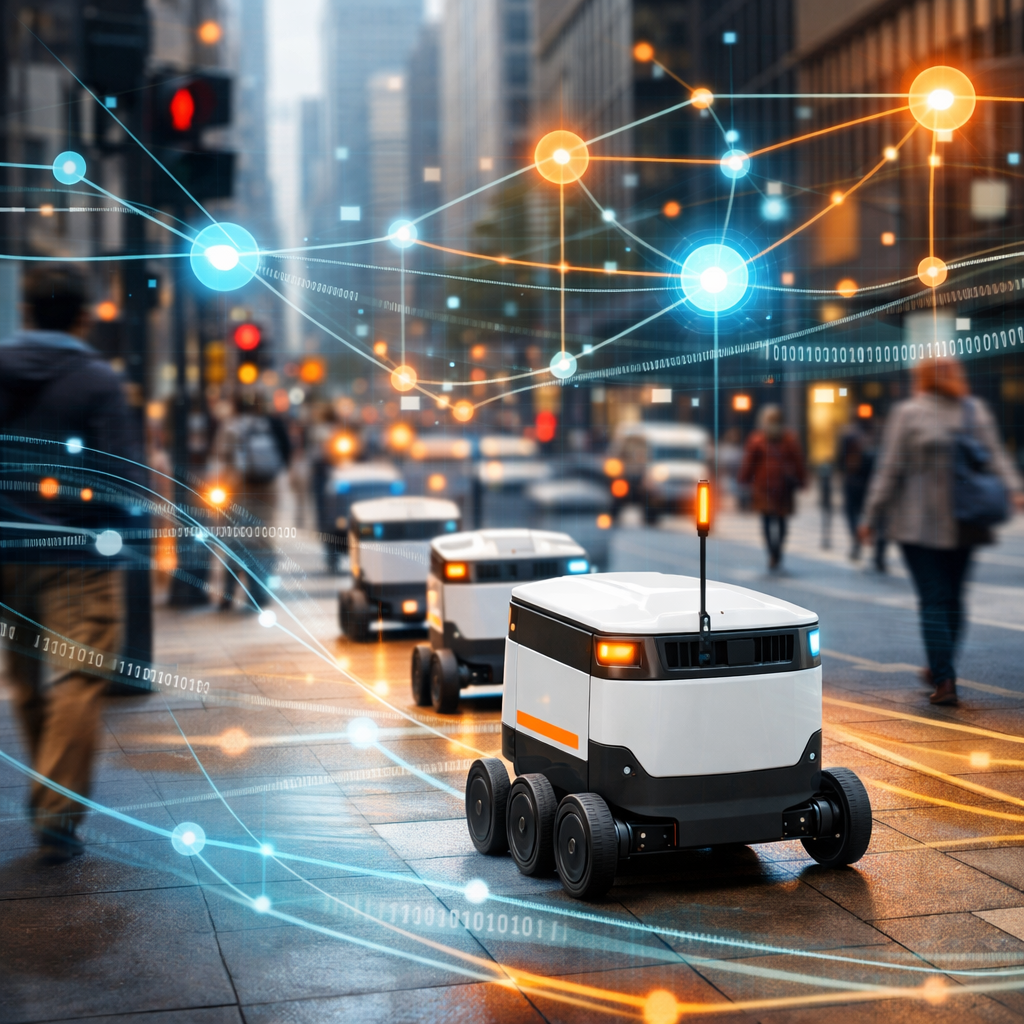
Serve Robotics, known for its self-driving sidewalk delivery bots, is stepping out of pure operations and into platform territory. The company has introduced Physical AI Services, a new business line aimed at offering its robotic connectivity and data tools to others building autonomous machines. Rather than only running its own robot fleet, Serve now wants to be the infrastructure backbone for robot builders across industries.
From Startup Roots to Platform Ambitions
Founded from Uber’s acquisition of Postmates in 2021 and publicly listed in 2024, Serve has been operating delivery robots in both public sidewalks and hospital settings (via its acquisition of Diligent Robotics). Its founder and CEO, Ai Kashani, explains that those operations have laid the foundation—not to be abandoned—but to be repurposed in a broader role. By developing and managing its own fleet, Serve has accrued the real-world expertise and technical assets required to build infrastructure for robotics at large.
Physical AI Services: Tools, Not Bots
Serve’s platform will offer three core products under the Physical AI Services umbrella. First is Serve Link, which connects robots to remote AI systems in data centers. The idea is to offload computing demands from onboard systems and allow robots to tap into more robust AI capabilities without carrying full compute stacks locally. Such connectivity must remain reliable over fluctuating networks—a problem Serve says its system can handle.
The second is a data curator tool designed to help clients sift through enormous quantities of robot-generated data, surface rare edge cases, then feed them back into training pipelines to enhance AI robustness. The third offering is a foundation-model data catalog, built on Serve’s own fleet of sidewalk robots. This catalog provides labeled real-world insight into cluttered human environments, which can inform AI systems trying to interpret those same spaces.
Already, Serve has onboard customers like Bedrock Robotics—a company specializing in autonomous systems for construction equipment—and is collaborating with T-Mobile to push AI computation closer to where robots operate. These partnerships point toward a growing recognition that robot makers need infrastructure like data tools and connectivity, not just hardware brains.
Why It Matters
Serve’s move reflects a broader shift in robotics: the migration from building standalone robots toward enabling an ecosystem of intelligent machines powered by shared platforms and data. Much like Amazon Web Services enabled new business models by offering cloud infrastructure, Serve’s platform ambitions could help accelerate innovation wherever robots are deployed—farms, factories, hospitals, or warehouses. The playbook isn’t new, but robotics has often been held back by fragmented stacks and weak connectivity. Serve’s full-stack experience gives it an advantage many startups lack.
This strategy also diversifies Serve’s business away from the operational risks of delivering goods, especially since it has recently been expanding its sidewalk delivery services through partners beyond Uber, including DoorDash and Wonder. The platform model could offer steadier margins and a chance to scale across different robot use cases without building every robot itself.
What to watch: whether Serve can maintain reliability across varied network conditions, scale its data tools in ways that protect privacy and allow clients to customize them, and how competitors—both startups and larger robotics, AI, or cloud giants—respond. If Serve succeeds, the robotics industry may see a stronger foundation for intelligent machines in messy human environments.