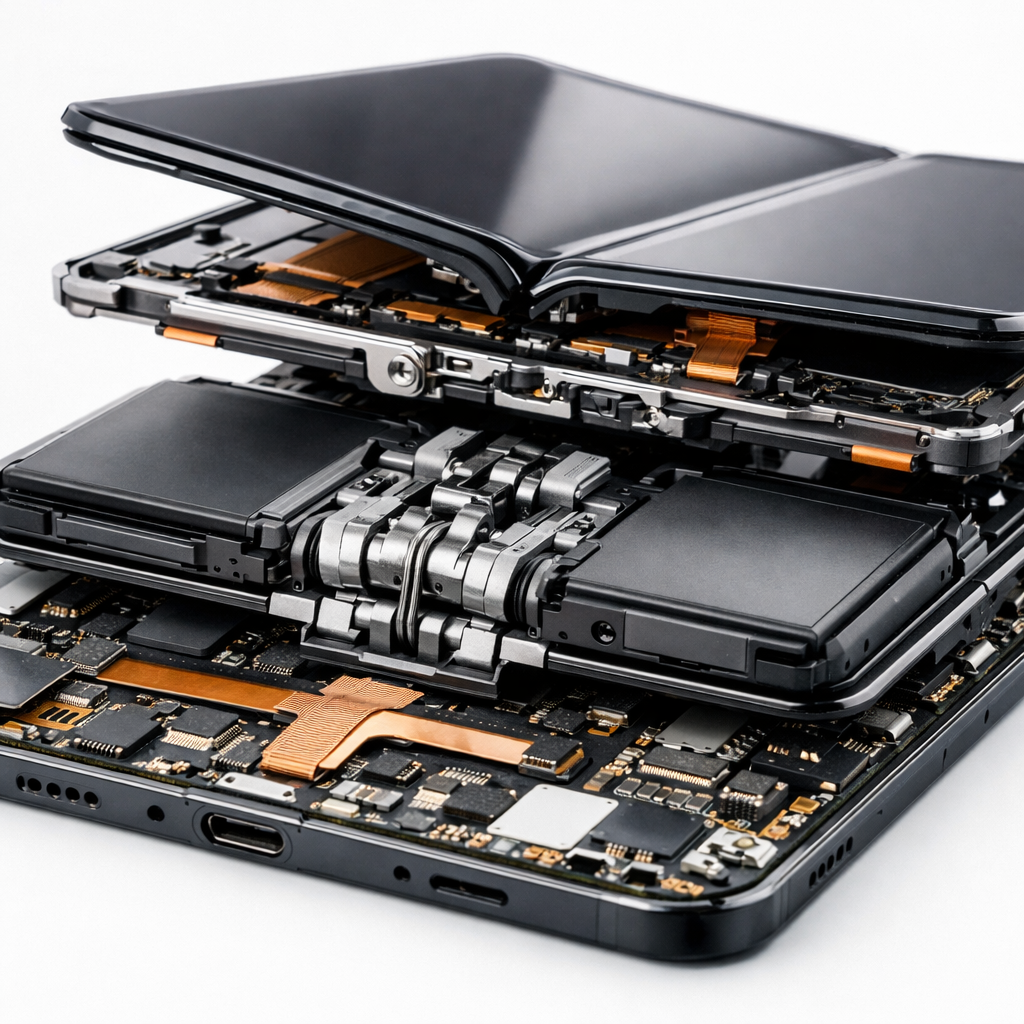
Apple’s new iPhone Duo has drawn attention for its repairability after a teardown by a repair expert revealed it outperforms all previous foldables in ease of repair—yet it still earns only a middling score of 5 out of 10 in overall repairability. While it represents Apple’s best effort yet in this category, the sacrifices involved mean it’s far from perfect.
What Apple got right
One of the standout elements in the iPhone Duo is the top display layer, which can be replaced much more readily than in past foldable designs. Earlier foldables, especially from Samsung, often misled users into peeling away what seemed like a packaging film but ended up damaging the screen. In contrast, Apple not only made this layer easier to replace but also set the replacement cost at just $19—significantly cheaper than replacing the whole screen assembly. In addition, the Duo’s dual batteries are designed for easy removal, which marks progress over previous models that integrated battery components deeply and made replacements especially laborious.
Other positives: the trim around the inner display detaches cleanly, without the crumbling or brittleness seen in comparable devices like the Galaxy Z Fold8. The motherboard in the Duo is flatter and more accessible, meaning technicians can reach many internal parts without dismantling the entire device. This contrasts sharply with many iPhones, which often require removing multiple modules just to reach a single failing component.
The lingering flaws and weak spots
Despite these improvements, Apple has kept extensive adhesive within the body of the Duo, especially around the inner screen. Repairers warn this means fixing that display remains tedious and delicate. The inner screen itself is a complex assembly—made up of ten layers, with an accordion-like cable linking the two halves—making it a probable weak point, especially where the hinge bears loads or passes through the assembly.
Hinge durability remains a concern. Though its design avoids needing to open both halves to disconnect the display—an advantage over some models—failure risk concentrates around the hinge, particularly at the area where the display cable routes through. Analysts suggest that a center support bar may not engage enough, causing stress or misalignment. Also, while the Duo carries an IP68 rating (uncommon among foldables), dust ingress tests still found particles making their way into the hinge, affecting tactile smoothness.
Repair prospects and a cautious thumbs-up
The Duo’s repair score of 5/10 makes it the most easily fixed foldable yet according to teardown experts. But this comes with a caveat: full repairability depends on whether Apple will make replacement parts widely available through its self-service repair program. Until then, costly service and diagnostics may still loom large. For many users, carrying AppleCare coverage could be essential to avoid high repair bills or reliability headaches.
Repair firms also caution that some critical fixes—especially those involving the hinge or inner screen—will still demand precision and patience. It’s not just a matter of opening the phone; it’s about avoiding collateral damage to the delicate layers and structure inside.
This model marks Apple’s best step yet toward foldable repairability. But “best so far” is still relative: the enhancements are meaningful, yet decisive weak points remain. As foldables gain traction, consumers and repair advocates alike will be watching whether Apple follows through—not just in marketing repairability, but in supporting actual fixes with affordable parts and manageable procedures.