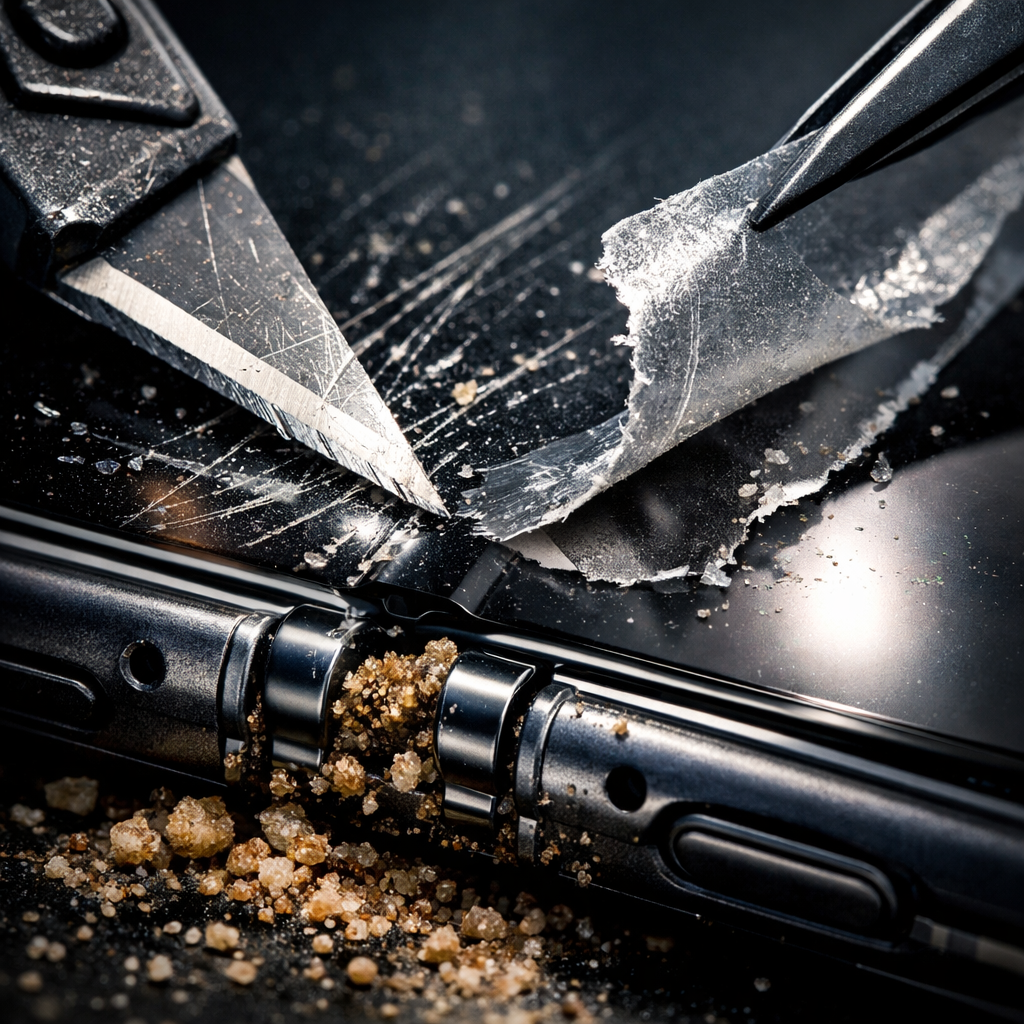
The first major durability teardown of the new iPhone Duo confirms serious vulnerabilities—and provides a cautionary tale for owners who expect rugged endurance. The device was put through a battery of abuse including scratches, hinge stress, and even removing the display’s proprietary nanotexture layer, yielding revealing results.
Scratch Resistance and the Nanotexture Layer
Right off the bat, the inner display showed visible scratches at just level 2 hardness on the Mohs scale. Even fingernails could produce deeper grooves, clearly exposing the screen beneath the surface. However, when the screen was active, the nanotexture finish did an excellent job of obscuring most of the damage—scratches and grooves were mostly invisible in that mode.
As durability tests progressed, the tester carefully peeled off the nanotexture layer despite warnings that doing so could damage the panel underneath. Without it, the display reflected far more glare—but colors came alive in a way that some found preferable. The crease formed in the fold and existing scratches became distinctly more noticeable in the display-off state.
Dust, Hinge Stress, and Structural Wear
Although the Duo is rated IP68 for dust and water resistance—implying full dust protection—even extreme conditions demonstrate limitations. Rubbing enough sand through the hinge caused it to trap particles to such an extent that the device would no longer fold shut properly, challenging the real-world effectiveness of its sealing.
Applying excessive force to bend the hinge backwards resulted in damage to the screen, including cracks that mirror those seen in previous reporting on similar hinge-related failures. Those findings raise concerns for anyone who treats foldables as rugged gear.
Visual Trade-Offs
With the nanotexture layer intact, the iPhone Duo appears markedly matte—less shiny, more muted—but far better at hiding flaws under use. Once removed, glare returns in force and the image feels much more vivid when viewed off—but with a steeper aesthetic price in reflected light and visible wear.
These stress tests are mostly for entertainment, but they do spotlight how the Duo handles extreme conditions. Results suggest that care is needed, especially in environments with grit, pressure on the hinge, or for users who prize flawless looks over rugged use.
What this means: The iPhone Duo’s introduction of a nanotexture display is innovative, and it delivers when it comes to hiding wear during normal use—but its vulnerabilities are exposed under stress. If you’re using this device in challenging settings—beaches, workshops, or anywhere with grit and chance of bending—expect the finish to fade, the hinge to struggle, and the display to suffer if the nanotexture layer is removed. Moving forward, Apple may need to rethink how it balances aesthetics and durability—especially if Duo aims to compete in the rough-and-tumble world of foldables where strength matters just as much as style.