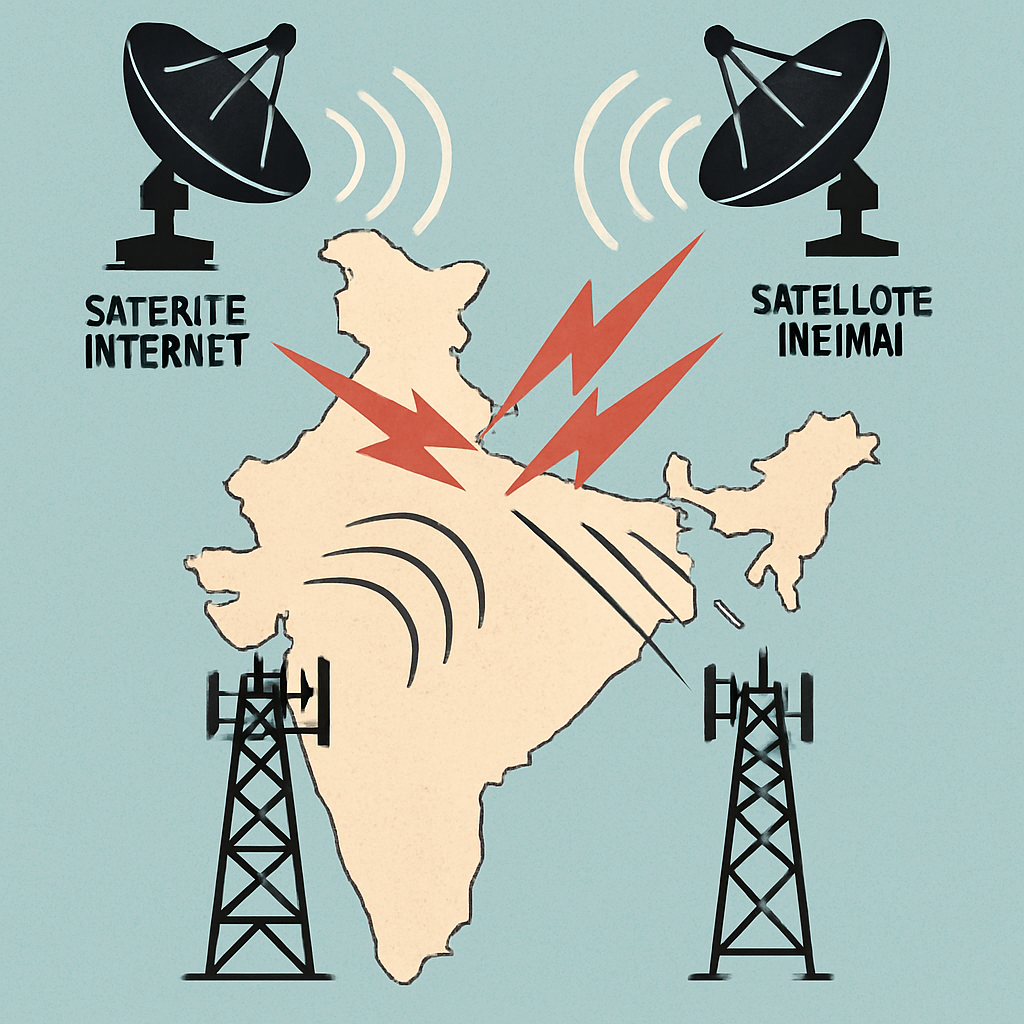
SpaceX’s Starlink is in the crosshairs of a brewing dispute with India’s government after Elon Musk accused the country’s telecom players of obstructing its entry into the market. India rejected those accusations, insisting its licensing process for satellite internet firms remains “fair and non-discriminatory.”
What Sparked the Controversy
Musk recently claimed that unnamed “oligarchs” were intentionally blocking Starlink’s launch to protect their own monopolistic control, describing the alleged interference as a “crime against the people of India.” The SpaceX CEO offered no concrete evidence, but emphasized how Starlink could deliver affordable high-speed internet to underserved populations across India.
In response, India’s Ministry of Communications released a statement clarifying that all satellite operators—including Starlink and two others—are in roughly the same stage under the country’s regulatory framework. Each is subject to security checks before gaining access to spectrum, which is needed to transmit signals from space.
The State of Starlink’s India Push
Starlink has been trying to establish operations in India for over five years. Though it has secured several regulatory approvals and forged partnerships with major telecom firms—Reliance Jio and Bharti Airtel—it has yet to launch commercial services. In late 2025, the company appointed Prabhakar Jayakumar, formerly with Payoneer, to head its Indian operations.
Part of the holdup stems from licensing missteps: in 2021, Starlink began taking preorders but was forced to refund customers in 2022 after being chastised by the government for offering its service without complete licensing. On spectrum allocation, Starlink pushed for administrative assignment, while Jio argued in favor of auctions—which could have driven up costs. Ultimately, India sided with Starlink’s preference, adopting administrative spectrum assignment.
Meanwhile, the two dominant telcos in India are also rolling out their own satellite internet efforts—Jio in collaboration with SES, and Airtel partnering with Eutelsat OneWeb—even as they’ve agreed to help distribute Starlink services once available. Starlink itself has built over 20 gateway stations and deployed hundreds of antennas, aligning with India’s demands for security, data sovereignty, and regulatory compliance.
While no launch date has been confirmed, Starlink recently launched its satellite-to‐phone mobile service in neighboring Bangladesh—demonstrating continued momentum in the region.
Why it Matters: India represents one of the world’s largest untapped internet markets, with over a billion subscribers and a government focused on universal connectivity. Starlink’s entry could reshape the relationship between space-based internet providers and terrestrial telecom incumbents.
What to Watch: Monitor whether Starlink receives final spectrum allocation, how its security assessments evolve, and how the telcos’ own satellite plans proceed. The balance of power between satellite operators, licenses, and legacy telecom companies in India will be critical for access, pricing, and competition moving forward.