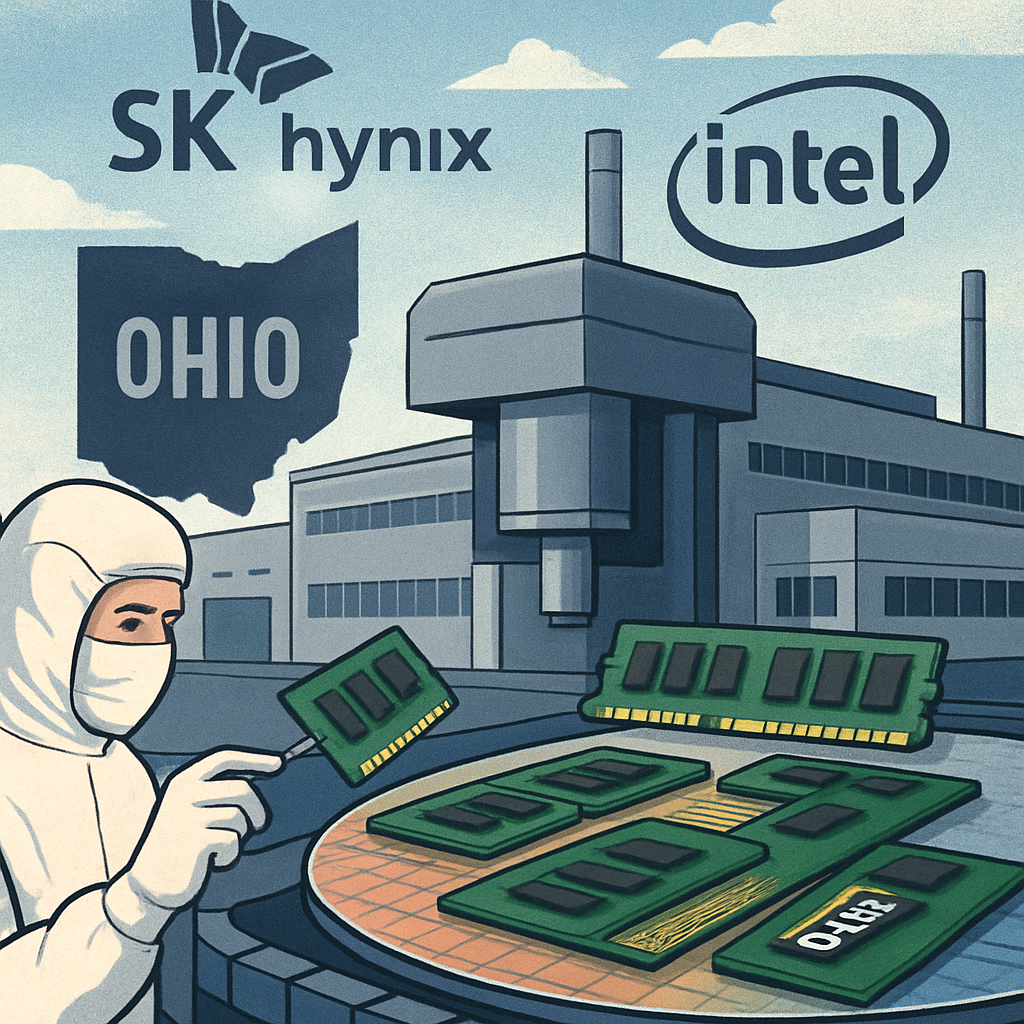
Apple could be on the cusp of sourcing memory chips made in the United States for the first time. SK Hynix, which supplies both DRAM and NAND flash memory for Apple devices, is reportedly in discussions with Intel to manufacture these chips at Intel’s planned facility in Ohio. If the deal advances, parts of that plant would be leased to SK Hynix to produce memory chips on U.S. soil.
Why This Matters
Today, Apple already builds some processors in U.S. factories, but those are generally for older or less advanced devices. The cutting-edge chipmaking tech—especially advanced node processes—is still largely concentrated overseas due to restrictions and expertise controlled by companies like TSMC. Memory chips (both DRAM and flash) use more standard, widely available processes, making them viable candidates for U.S. production. This potential shift would mark a significant expansion in what’s manufactured domestically.
Potential and Challenges
The current discussions are early-stage—nothing has been finalized yet. SK Hynix has confirmed its supplier role for Apple devices, while Intel is continuing plans to build out its Ohio chipmaking facility regardless. But SK Hynix and Intel are exploring the possibility of leasing space within that Ohio plant to manufacture memory.
However, there could be diplomatic complications. The South Korean government may object to some aspects of the arrangement over concerns tied to exporting chipmaking technologies, particularly given precedents set by Taiwan. That could affect what processes or equipment are allowed.
The move would align with broader trends: many in the global tech and policy world have pushed for more domestic semiconductor production in recent years. These efforts revolve around supply chain security, geopolitical risk, and the resilience of tech ecosystems. Getting SK Hynix to build memory in the U.S. would represent a milestone in those efforts.
This would also be a strategic win for Apple. Producing memory domestically could reduce long shipping chains, exposure to cross-border trade risks, and reliance on foreign fabrication sites. But it’s not a simple switch—equipment, labor, supply chain logistics, and regulatory issues will all play a role in how much of the memory supply chain can realistically shift stateside.
Bottom line: if SK Hynix and Intel pull off this U.S.-based memory production, it would mark the first time memory chips for Apple devices are made domestically. But obstacles—government restrictions, tech transfer concerns, and economic logistics—remain. It’s one to watch for what it says about the shifting landscape of global semiconductor manufacturing.