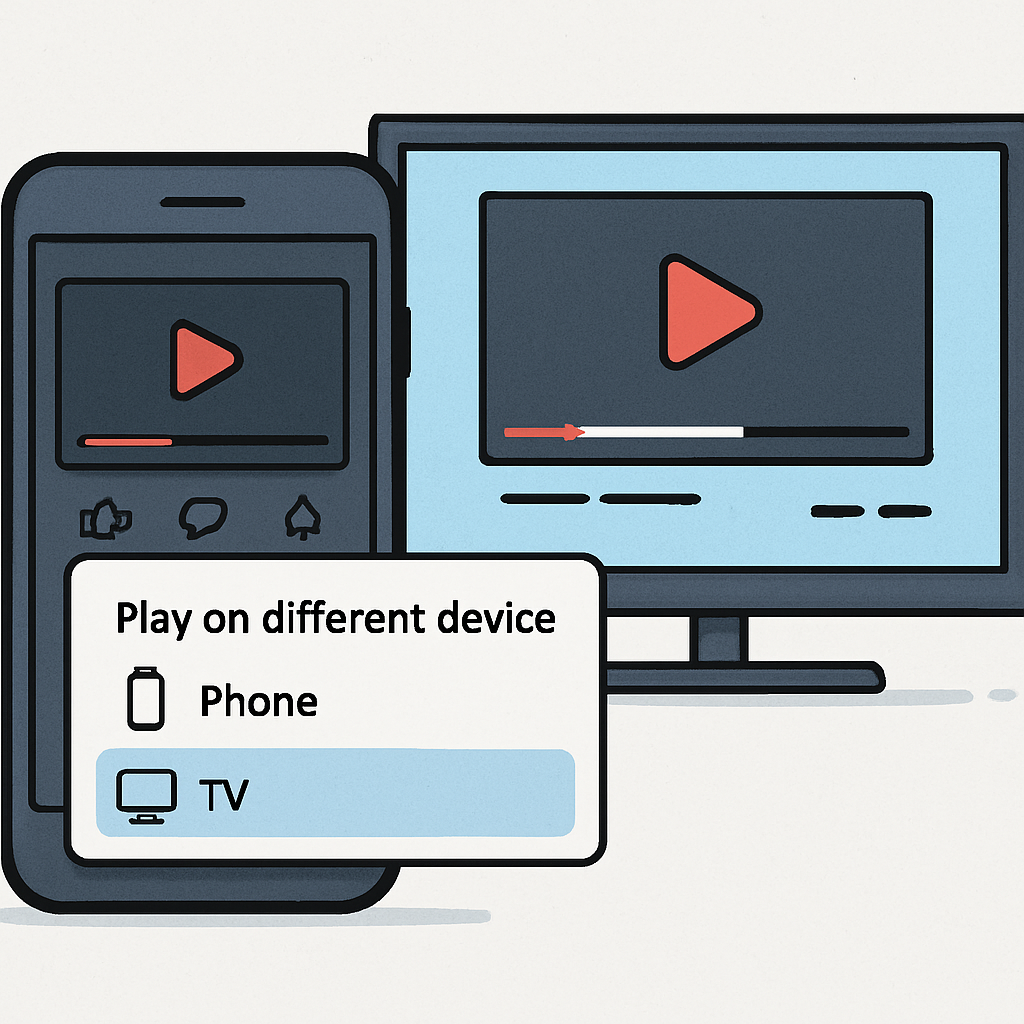
YouTube is rolling out major changes to how its mobile app interacts with televisions, moving away from reliance on shared Wi-Fi and leaning into account-based controls to simplify casting. The overhaul, which has been in testing earlier this year, is now beginning its rollout. These updates reshape everything from how you initiate casting to what your TV companion device can do during playback.
Major Changes to App-to-TV Connections
One of the biggest shifts in this update is that both your phone and TV need only share the same YouTube account—they no longer need to be on the same Wi-Fi network. That makes it easier to cast across network boundaries. Also new: the traditional Cast icon is being replaced (or rebranded) with a more generic companion device indicator.
While casting, users will now be able to like videos, subscribe to channels, and leave comments—even as the video plays in the background. On top of that, there’s now a “Play on different device” option nested in every video’s menu on the homepage, allowing you to send content to your TV without first launching it on your phone.
Another convenience: watching Shorts on your phone while a full-length video plays on your television is now supported, so you don’t have to stop one to start the other.
Trade-Offs & What’s Unclear
The revamp does come with caveats. The move toward account-based pairing may limit some traditional casting workflows—especially when people want to cast to a TV without using a shared account. It’s not yet confirmed whether classic Wi-Fi casting remains fully supported, which raises questions for communal or social viewing scenarios.
Some users find simultaneous control during background casting to be overwhelming—e.g., managing Shorts on your phone while watching something else on the TV—but many will appreciate the enhanced multitasking. As for when everyone will see these features: YouTube hasn’t shared a firm global rollout schedule, but everything suggests the changes will arrive on mobile apps soon.
YouTube’s casting system has been central to its TV presence for well over a decade, tied closely to Google’s Cast protocol. These updates reflect a shift toward making second-screen use more seamless and less dependent on physical network setups.
For everyday users, this redesign means casting from phone to TV will become smoother—particularly in more disparate setups like hotels, different rooms, or when company guests want to cast without joining your Wi-Fi. But for larger, multi-user viewing environments, the lack of clarity around Wi-Fi casting support could pose friction. It’s a balancing act between convenience and sharing control. Watch for how these changes shape communal streaming setups—and whether pushback prompts tweaks or reversions. YouTube’s moves here could alter expectations for how casting works across devices for good.