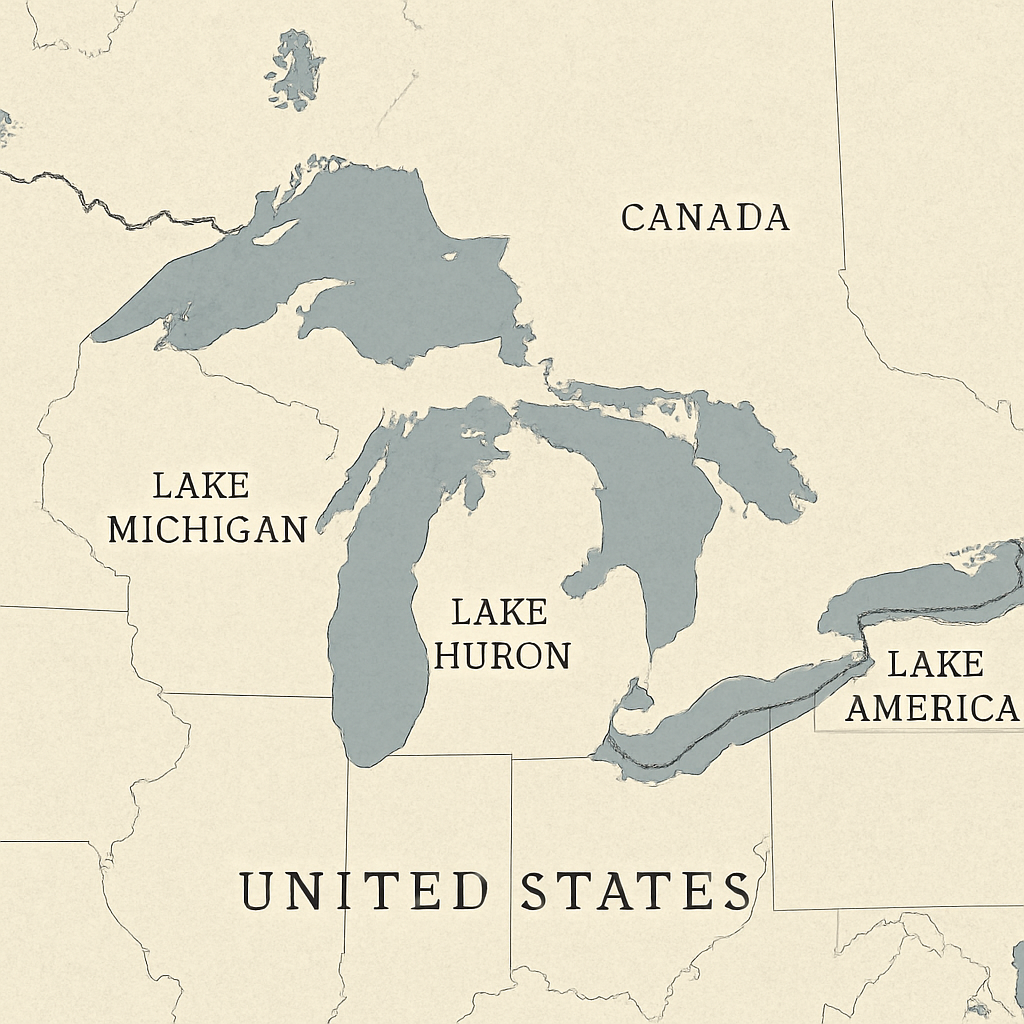
Apple has implemented a sweeping name change in Apple Maps across the United States—what’s been known as Lake Ontario is now labeled “Lake America.” The update follows a directive from former President Trump issued last week that targets geographic names amid a fresh trade clash with Canada. Users inside the U.S. will see the name changed, while Canadian users still see “Lake Ontario,” and those elsewhere worldwide may encounter both versions.
This move mirrors the action Google Maps took a few days earlier, switching to “Lake America” domestically. That company cited U.S. policy: it uses the names listed in the Geographic Names Information System (GNIS), the official U.S. database for place naming. Apple appears to have followed suit after a direct conversation initiated by Trump and then-Interior Secretary Doug Burgum. Burgum later confirmed that Trump had personally asked Apple to make the change.
Pushback and Mixed Implementation
Not all mapping services are going along. MapQuest has explicitly rejected the renaming order, refusing to change “Lake Ontario” to “Lake America,” which has triggered a notable rise in its download metrics. Meanwhile, within Apple Maps itself, the rollout is uneven—some users in the U.S. are already seeing “Lake America,” others still see the original name. The new label has also been adopted in some international instances, depending on the user’s location.
This isn’t Apple’s first rodeo with politically driven renaming. Last year, when Trump ordered the Gulf of Mexico to be renamed “Gulf of America,” Apple also updated Apple Maps accordingly. GNIS policies appear to serve as the legal or regulatory backbone enabling such changes—placing responsibility on the U.S. government to modify official naming conventions, which then cascade into map providers.
This all stems from Trump’s most recent order in the ongoing trade dispute with Canada. The directive ordered several geographic names near the U.S.–Canadian border to be altered. Lake Ontario—one of the Great Lakes that spans both countries—was central to that order. The change signals a broader push on territorial branding amid trade tensions.
While the name shift might seem symbolic, mapping apps are key in daily navigation for millions. What appears on Maps reflects perceived authority—and when it changes, it can lead to confusion in travel, education, and cross-border communication. Officially updating GNIS entries provides legal cover, but coordination across map providers remains uneven.
What this means: Apple’s alignment with U.S. policy underscores how tech platforms can become immediate instruments of state-level directives. Users may see more alterations like this if naming disputes continue. Internationally, such changes risk unsettling long-established geographical identities, and map firms may increasingly face pressure—regulatory, political, or public—to choose sides. Watch for how major services like Google, Apple, and MapQuest handle future orders, and how they balance legal compliance with user expectations and international norms.