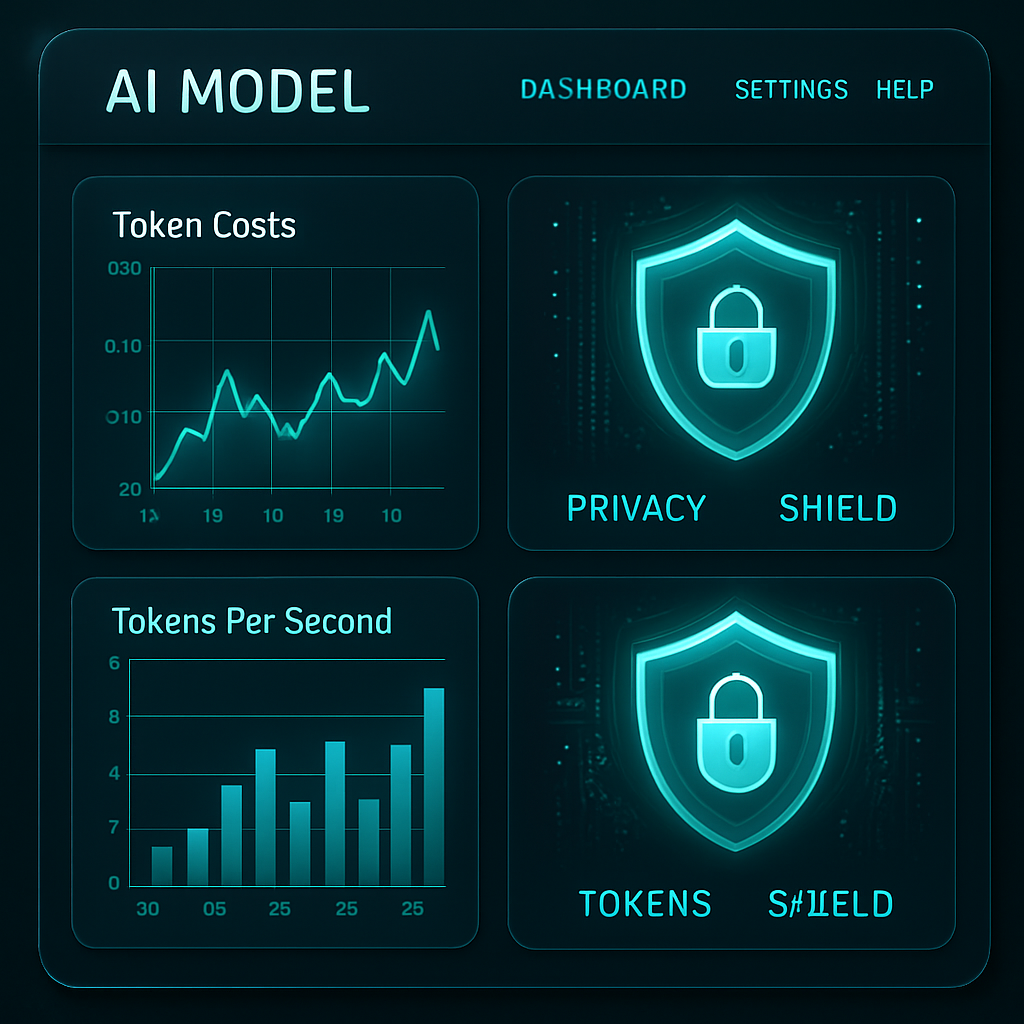
Anthropic has rolled out Fable 5.1 and Mythos 5.1, upgraded versions of its leading AI models designed to be more affordable and slightly less restrictive. Fable 5.1, the unrestricted edition, is now broadly available via the API and cloud platforms. Mythos 5.1, equipped with stronger safeguards, remains limited to vetted partners focused on cybersecurity and life sciences. Both models bring improved performance, reduced token costs in certain operations, and enhanced privacy control options.
What’s New in Pricing & Performance
The input and output token rates for Fable 5.1 and Mythos 5.1 are set at $10 per million for inputs, and $50 per million for outputs. However, one of the biggest savings comes from cache reads: what were once costlier cache operations are now priced at $0.25 per million tokens — a 75% drop. That means workflows heavy in context reuse, tool chaining, or agentic tasks could see cost reductions of 25% to 45% depending on usage.
Both models support extremely long context windows (up to 1 million tokens) and can generate outputs up to 128,000 tokens in a single interaction. They’re particularly well-suited for complex reasoning, extended coding projects, research tasks involving documents, spreadsheets or slides, or work where long horizon agentic behavior is required. Roughly speaking, Fable 5.1 is for more general unrestricted usage; Mythos 5.1 includes more capacity in dual-use domains but comes with additional restrictions.
Data Retention, Safeguards & Privacy Options
An important change is the expansion of Zero Data Retention (ZDR) arrangements, allowing eligible enterprise API customers to ensure prompts and outputs aren’t stored long term — with most content deleted immediately post-response. The exception: covered models (such as Mythos-class models) retain prompts and outputs for 30 days for safety monitoring. Enterprises can also opt for the new “Enterprise Frontier Safeguards” program, which enables clients to run Anthropic models on their own infrastructure and have greater control over how misuse review occurs.
Anthropic’s system card for the new models shows Mythos 5.1 carries a slightly higher risk of misaligned behavior compared to Opus 5 — for example, it may accept unverifiable claims of authorization more easily — but is less prone than previous Mythos or Claude Sonnet 5 models to hallucinating inputs, breaking explicit constraints, or failing to comply. These are nuanced trade-offs between capabilities and safety.
Performance benchmarks reflect meaningful gains. For instance, on “Terminal-Bench 4.0” CLI-based coding evaluations and “Humanity’s Last Exam” reasoning tests, the new models show noticeable improvement over their predecessors. In addition, Anthropic released scientific findings developed with these models ahead of launch — among them a custom GPU optimization and a high-resolution map of Venus assembled from existing imagery.
In terms of availability, Fable 5.1 is fully available today. Mythos 5.1 remains confined to organizations approved under Anthropic’s trusted access programs (such as those engaged in cybersecurity or bioscience research). Businesses seeking tighter privacy guarantees, like HIPAA compliance or custom retention policies, will find options within the Enterprise plan.
What This Means
With this release, Anthropic is making a clear play for balancing power, flexibility, and trust. The cheaper cache reads give serious efficiency gains for developers building high-context applications — think agents or long-form analysis. Privacy innovations like ZDR and enterprise-level safeguards reflect growing demand from customers in regulated industries. But Mythos 5.1’s restricted access is a reminder that with powerful models come real risks. Going forward, success will hinge on how well Anthropic and its competitors navigate utility vs safety — and how much control customers expect over their data.