NASA’s Artemis II Mission Demonstrates Scalable Space-to-Earth Laser Communications
In a groundbreaking achievement, NASA’s Artemis II mission has successfully demonstrated the viability of high-throughput laser communications between space and Earth. This mission, which sent four astronauts to orbit the Moon, utilized advanced laser systems to transmit high-definition images back to Earth, marking a significant milestone in space communication technology.
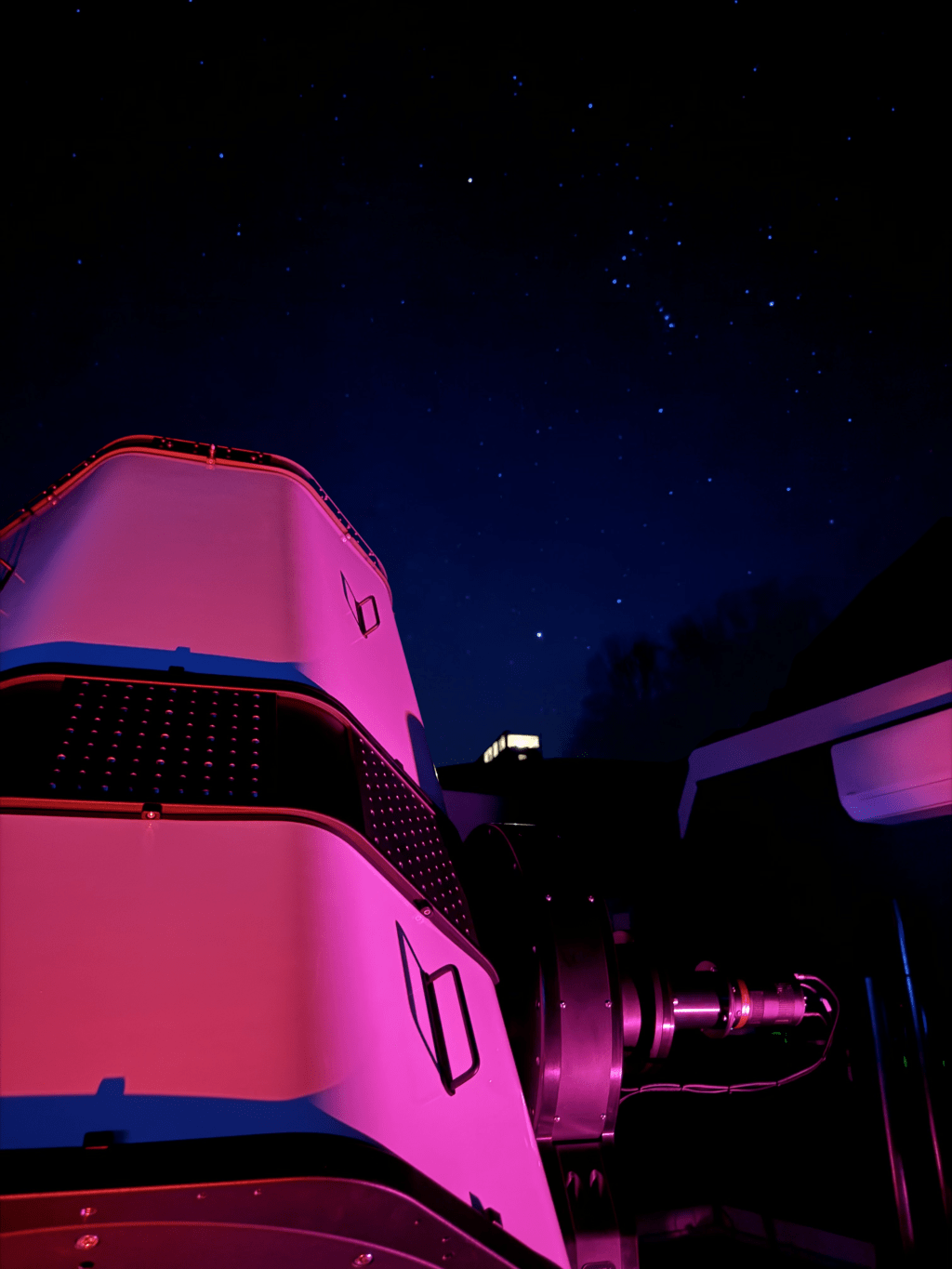
A notable aspect of this mission was the involvement of a cost-effective ground terminal developed by Observable Space and Quantum Opus. Operated by the Australian National University, this terminal received data from the Orion spacecraft at an impressive rate of 260 megabits per second. This achievement underscores the potential for establishing high-bandwidth connections between Earth and space without incurring exorbitant costs.
The terminal’s success can be attributed to Observable Space’s specialized software and telescope, which effectively captured and locked onto the Orion’s transmissions. Additionally, Quantum Opus contributed a photonic sensor that efficiently decoded the incoming data. Remarkably, the entire terminal was developed for under $5 million, a stark contrast to traditional solutions that often require tens of millions of dollars.
NASA has been exploring deep space laser communications for several years. Previous demonstrations included establishing data links with spacecraft situated 218 million miles from Earth en route to asteroids. However, the Artemis II mission represents the most comprehensive demonstration to date. Primary receivers located in California and New Mexico, along with the experimental terminal in Australia, successfully collected 4K video footage from the lunar orbit, showcasing the robustness and scalability of laser communication technology.
Laser communications offer significantly higher data throughput compared to traditional radio frequency transmissions, which have been the standard for space communications. However, lasers are susceptible to disruptions caused by cloudy weather and require a direct line of sight to their target. This necessitates strategically positioned reception sites around the globe to ensure consistent and reliable data transmission.
Josh Cassada, a former U.S. astronaut and co-founder of Quantum Opus, highlighted the strategic importance of the Australian terminal. He noted that Australia was the first continent to appear in the initial Earthrise photo captured by the Artemis II astronauts, emphasizing the country’s pivotal role in this mission.
Dan Roelker, CEO of Observable Space, expressed confidence in the scalability of space-to-Earth laser downlinks. While laser technology is already prevalent in satellite-to-satellite communications, its application for transmitting data back to Earth has been limited due to high costs. Roelker envisions a global network of cost-effective terminals capable of receiving data from various satellites, thereby revolutionizing space communication infrastructure.
Roelker stated, We can scale this over the next year or more, indicating the company’s commitment to expanding this technology. He also mentioned potential collaborations with ground station service providers and large satellite constellation operators to further develop and deploy this innovative communication system.
The success of the Artemis II mission in demonstrating scalable laser communications marks a significant advancement in space technology. It paves the way for more efficient and cost-effective data transmission methods, which are crucial for future deep space missions and the establishment of a sustainable human presence beyond Earth.