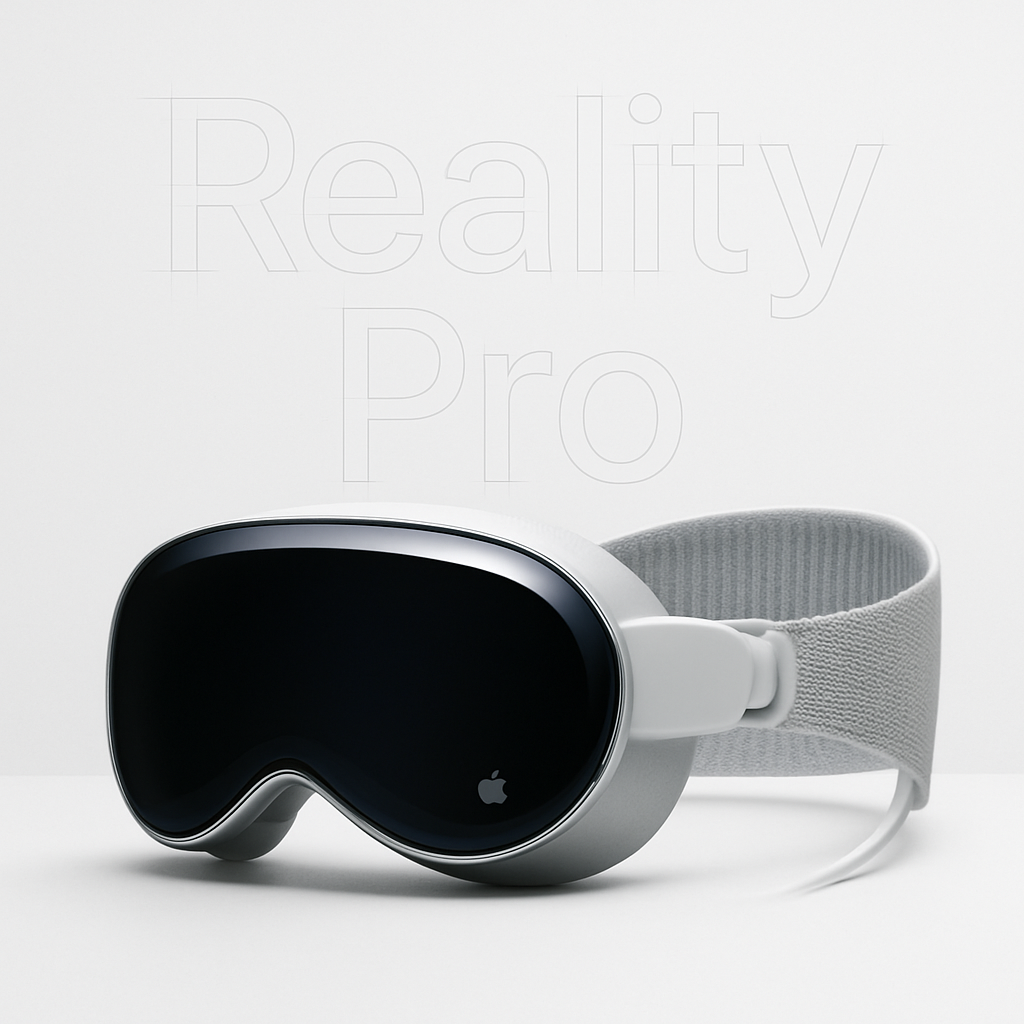
Apple’s Vision Pro headset was nearly launched under a different name. Internal files reportedly referred to the product as “Reality Pro” for much of its development cycle before ultimately arriving on the market under its current branding. The insight comes from tipster Kosutami, who flagged persistent internal strings like “realityprorealityosdev” that reflect the early alias. ([macrumors.com](https://www.macrumors.com/2026/08/22/vision-pro-was-almost-called-reality-pro/))
Though this act of renaming isn’t new knowledge, recent confirmation strengthens earlier reports. Back in September 2022, industry insiders suggested the headset would be called “Apple Reality Pro.” Around that same time—in August 2022—trademark filings appeared for names including “Reality One,” “Reality Pro,” and “Reality Processor,” submitted via a shell company, Immersive Health Solutions LLC, a strategy Apple has used to obscure pre-launch branding moves. ([macrumors.com](https://www.macrumors.com/2026/08/22/vision-pro-was-almost-called-reality-pro/))
The naming evolution also extended to Apple’s software. Earlier trademark applications—for “realityOS” in December 2021, for example—arrived after developers had already spotted references to realityOS in internal Apple software and App Store upload logs. In the following months, filings popped up for variants like “xrOS,” “xrProOS,” “realityproOS,” and “realOS.” All of these appear to have been part of Apple’s search for a coherent identity for its spatial computing ecosystem. ([macrumors.com](https://www.macrumors.com/2026/08/22/vision-pro-was-almost-called-reality-pro/))
Final Naming Shift and Market Realities
Despite the early momentum behind the “Reality” branding, Apple introduced its headset in June 2023 as Vision Pro during WWDC, along with its operating system, visionOS. The switch from “Reality” to “Vision” took place late in the device’s development, but some legacy naming strings lived on in internal builds. ([macrumors.com](https://www.macrumors.com/2026/08/22/vision-pro-was-almost-called-reality-pro/))
The legacy of “Reality Pro” hasn’t been quietly discarded, though. Apple retains trademarks for “Reality Pro” and “Reality One,” which could provide flexibility in markets where “Vision Pro” is unavailable—namely China, where Huawei holds a license to the Vision Pro name until 2031. Using alternate branding in such territories might become a practical workaround. ([macrumors.com](https://www.macrumors.com/2026/08/22/vision-pro-was-almost-called-reality-pro/))
On the commercial front, Vision Pro launched in the U.S. in February 2024, priced at $3,499. Since then, Apple appears to have scaled back its ambitions for VR/AR hardware. It recently laid off roughly 100 employees from its Vision Products Group, shut down its immersive video and gaming teams for Vision Pro, and canceled two anticipated hardware lines: a potential Vision Pro 2 and a budget-friendly “Vision Air.” That pivot reflects a shift in focus toward lighter smart glasses. ([macrumors.com](https://www.macrumors.com/2026/08/22/vision-pro-was-almost-called-reality-pro/))
When insights like this surface, they offer a window into Apple’s strategic thinking—what it considered and what it dropped. Seeing the ‘Reality’ branding stripped down at the last stages suggests either internal feedback or market considerations pushed Apple to a more future-proof choice with Vision. As Apple navigates global trademark constraints and shifting hardware ambitions, how it brands its spatial computing line—especially outside Western markets—will remain a storyline worth watching.