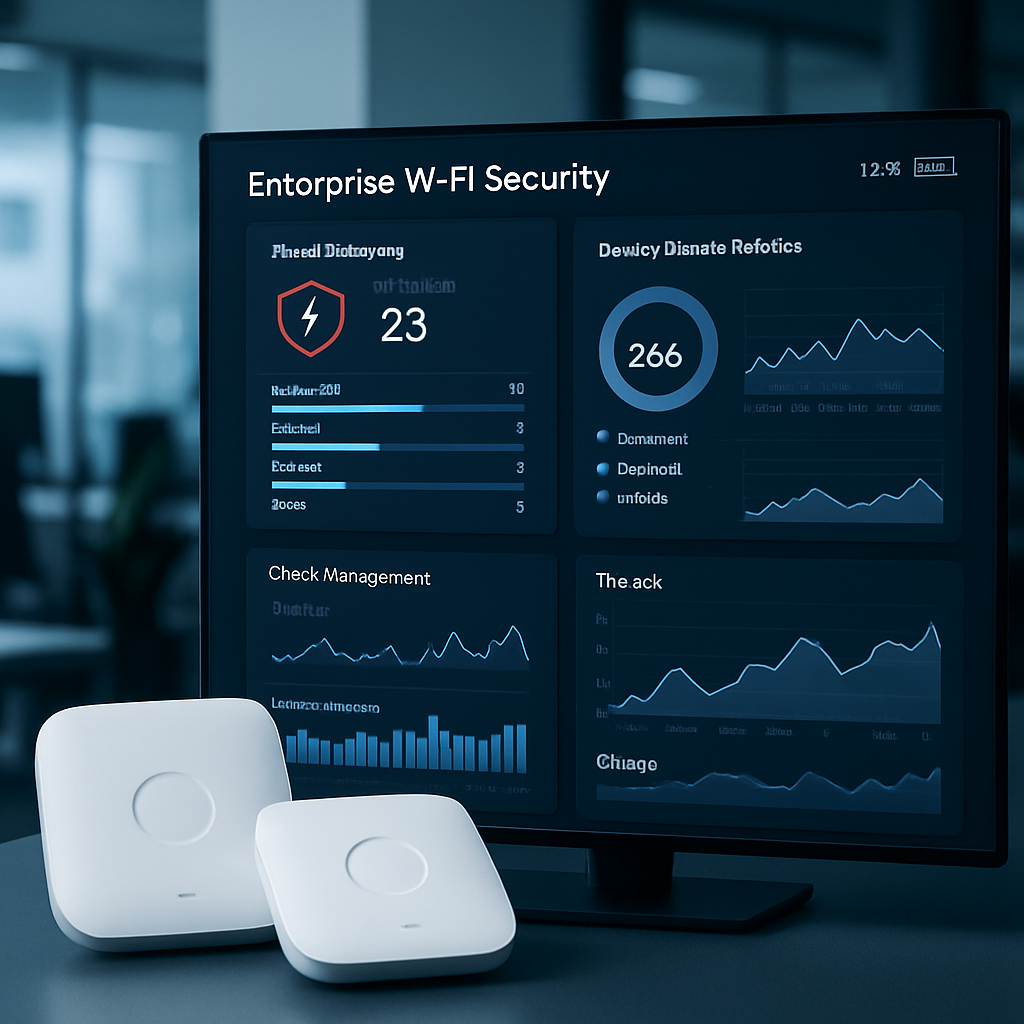
Wireless networks are under more scrutiny than ever. As enterprises()+shift to cloud-managed platforms, zero-trust architectures, and WPA3 encryption, the Wi-Fi defense landscape has evolved dramatically in 2026. Understanding which solutions lead in security depth, scale, and value is essential for organizations facing mounting threats from rogue access points, unsecured IoT devices, and misconfigured guest networks.
How the Best Wi-Fi Security Platforms Were Ranked
This year’s ranking evaluated vendors across five key dimensions: security depth (including WPA3 support, intrusion detection/prevention, and authentication methods), management ease (cloud vs controller, multi-site orchestration, policy consistency), zero-trust alignment (device identity, access control, segmentation), scale and performance (Wi-Fi 6E/7 readiness, high-density environments, reliable roaming), and value (cost of hardware, licensing, total cost of ownership). Top scores reflect both deep technical capability and practical concerns like ease of deployment. Whole platforms were assessed, not just individual features.([cybersecuritynews.com](https://cybersecuritynews.com/best-wireless-wifi-security-solutions/))
The Top Wireless Security Players of 2026
Leading the list are Cisco Meraki and HPE Aruba, tied at the top with an 8.9/10 score. Meraki excels through its intuitive cloud dashboard hosting strong defaults such as WPA3, built-in Rogue Access Point (WIPS) detection (Air Marshal module), and Layer-7 firewall capabilities. Its strength lies in multi-site deployments where centralized policy management is critical.([cybersecuritynews.com](https://cybersecuritynews.com/best-wireless-wifi-security-solutions/)) Aruba dominates security depth, especially in dense, enterprise settings: identity-based dynamic segmentation via ClearPass, robust WIPS, guest and BYOD onboarding, and strong performance in stadiums or university complexes.([cybersecuritynews.com](https://cybersecuritynews.com/best-wireless-wifi-security-solutions/))
Just behind them, Juniper Mist lands at 8.8/10, combining cloud-centric infrastructure and artificial intelligence to streamline operations. Mist’s Marvis virtual assistant surfaces insights and accelerates zero-trust policy application prior to user complaints.([cybersecuritynews.com](https://cybersecuritynews.com/best-wireless-wifi-security-solutions/)) Fortinet offers remarkable value for those already wielding its FortiGate firewall systems—wireless control and traffic filtering happen at the firewall, eliminating extra licensing layers.([cybersecuritynews.com](https://cybersecuritynews.com/best-wireless-wifi-security-solutions/))
Other valuable entries: Nile shines for true zero-trust architecture, isolating devices by default and managing networks via a service model; ideal for those building networks from scratch.([cybersecuritynews.com](https://cybersecuritynews.com/best-wireless-wifi-security-solutions/)) Extreme Networks provides flexibility with hybrid deployment options (cloud, hybrid, on-premises), solid role-based policy, and good value in education or healthcare settings. Arista scores especially high for performance and RF analytics thanks to its legacy of strong wireless intrusion prevention. CommScope (Ruckus) remains competitive in high-density, interference-heavy environments. WatchGuard offers SMBs strong wireless basics with good WIPS, while Ubiquiti UniFi delivers best-in-class value for small deployments though it lacks enterprise feature depth and formal SLAs.([cybersecuritynews.com](https://cybersecuritynews.com/best-wireless-wifi-security-solutions/))
What’s Changed in Wireless Security?
2026 marks the point when WPA3 became the default standard. Wi-Fi 6E and Wi-Fi 7 devices are now certified only if they support WPA3; its new Simultaneous Authentication of Equals (SAE) handshake removes the offline dictionary attack vulnerability afflicting WPA2-Personal.([cybersecuritynews.com](https://cybersecuritynews.com/best-wireless-wifi-security-solutions/)) Deeper still, the zero-trust model has become the defining framework: knowing who’s connecting matters more than the fact of encryption. Network Access Control (NAC), per-device policy, and role-based access are no longer optional.([cybersecuritynews.com](https://cybersecuritynews.com/best-wireless-wifi-security-solutions/)) IoT has forced a rethink: many sensors and cameras can’t support 802.1X or certificates, so vendors now offer alternative mechanisms like Dynamic PSKs, MAC authentication, and identity-based segmentation.([cybersecuritynews.com](https://cybersecuritynews.com/best-wireless-wifi-security-solutions/))
Choosing the Right Solution for Your Needs
Start by auditing your device mix, especially how many require non-standard authentication methods (IoT, contractors, guest users). If many devices can’t do 802.1X, ensure your vendor handles them via Dynamic PSK or NAC solutions. Logistics matter too: do you have centralized staff or site-specific specialists? That should inform whether cloud-managed (e.g., Meraki, Mist, Nile) or controller/hybrid platforms (e.g., Aruba, Extreme) are better fits.([cybersecuritynews.com](https://cybersecuritynews.com/best-wireless-wifi-security-solutions/)) Ensure compliance: deploy WPA3-Enterprise wherever possible; limit transition modes; aim to phase out WPA2-Personal and shared passwords. Finally test roaming and authentication under load—many breach incidents stem from misconfiguration rather than weak protocols.([cybersecuritynews.com](https://cybersecuritynews.com/best-wireless-wifi-security-solutions/))
Here’s where buyers tend to draw the line: if you already use a specific security stack (like FortiGate), integrated wireless may save cost. If regulatory or risk requirements demand formal WIPS, reviewed SLAs, or rigorous identity segmentation, compromise on value may be unavoidable.([cybersecuritynews.com](https://cybersecuritynews.com/best-wireless-wifi-security-solutions/))
Bottom line: Meraki and Aruba vie for the top. Mist is unbeatable where cloud-AI operations and end-user visibility matter. Fortinet offers high value for firewall users. Nile emerges as a compelling option for organizations wanting zero trust inherently. Any investment must be paired with continuous WIPS, WPA3 enforcement, and hardened access control beyond just getting devices on the network.
In a landscape where every device is a potential threat vector, Wi-Fi security is no longer a checkbox—it’s force multiplier. What you pick now will shape your security posture for years. Watch vendor roadmaps for WPA3/Enterprise support, hardware refresh cycles (Wi-Fi 7), and integrations with NAC or identity platforms. Because force in your wireless access layer can make or break the trustworthiness of your network.