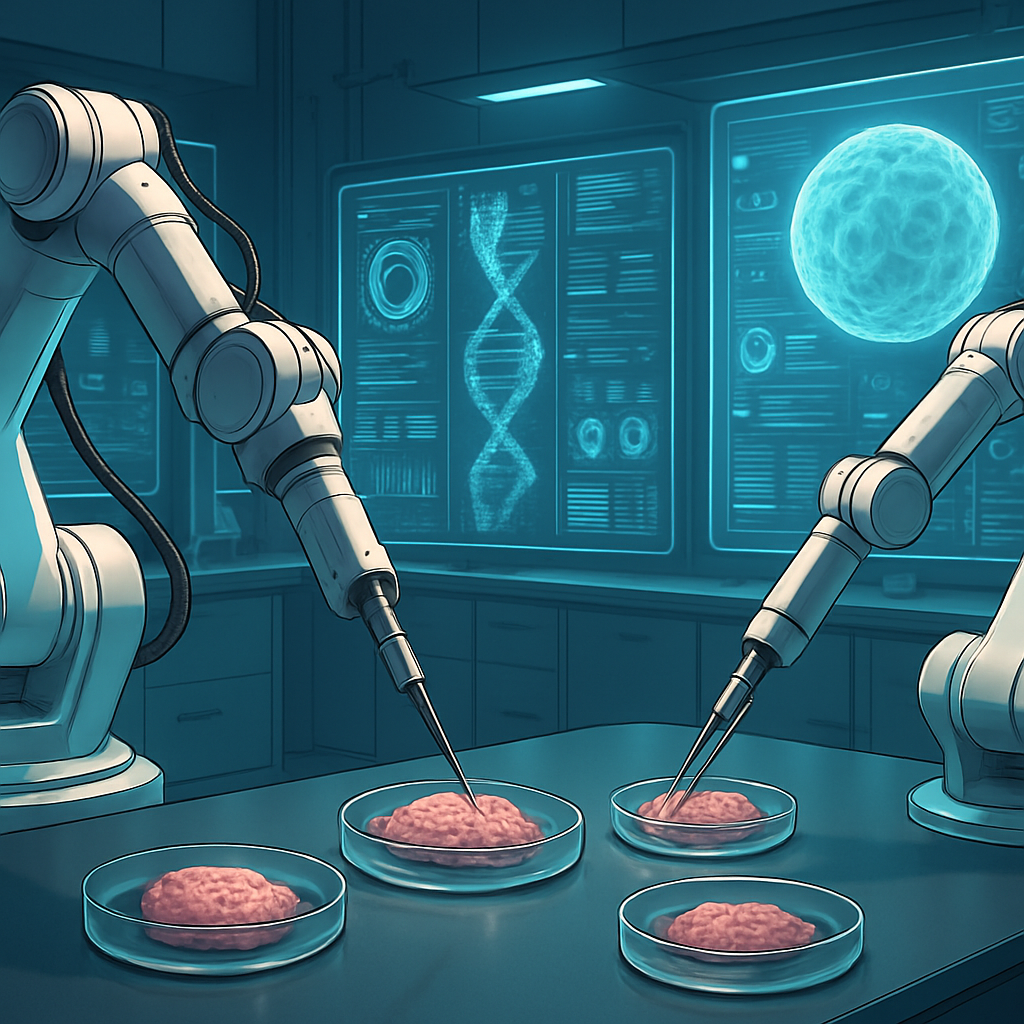
Vivodyne, a biotech startup, is addressing a critical gap in AI-driven drug discovery by developing modular robotic laboratories capable of cultivating 20 types of human tissue. These labs autonomously administer treatments and monitor responses, generating comprehensive biological data that current AI models lack. This approach contrasts with traditional methods that rely heavily on animal testing or isolated cellular studies, which often fail to replicate the complexities of human biology.
Andrei Georgescu, CEO and co-founder of Vivodyne, emphasizes the limitations of existing AI models in drug development, noting that without human-relevant data, these models risk producing treatments effective only in animal models, not humans. This sentiment echoes broader industry concerns about the overhyped promises of AI in curing diseases like cancer, as highlighted by leaders in the field.
Despite significant advancements, such as the development of AlphaFold for protein structure prediction, the translation of AI breakthroughs into effective human treatments remains limited. For instance, Isomorphic Labs, building upon AlphaFold’s foundation, anticipates initiating its first human trials by the end of this year, underscoring the protracted timeline from AI discovery to clinical application.
Vivodyne’s strategy involves creating human tissue models that closely mimic real organ behavior. Their liver cells have demonstrated 94% predictive accuracy in toxicity assessments compared to human trials, airway tissues align with human responses 96% of the time, and their bone marrow models have achieved complete concordance in tests involving 20 chemotherapy drugs.
Established in 2021 as a spin-off from the University of Pennsylvania, Vivodyne has secured nearly $80 million in funding across two rounds led by Khosla Ventures. The company recently inaugurated what it claims to be the world’s largest “human data center” near San Francisco. Georgescu asserts that this facility’s throughput already surpasses that of all animal trials conducted in the United States combined.
The primary objective is to streamline the drug development process by providing more accurate predictions of a drug candidate’s efficacy before entering costly clinical trials, which can require tens of millions of dollars. While specific partnerships remain confidential, Vivodyne reports collaborations with multiple major pharmaceutical companies to enhance the predictability and success rates of clinical trials.
Vivodyne’s innovative approach highlights the necessity of integrating human-relevant data into AI models to improve drug discovery outcomes. By bridging the gap between AI capabilities and the complexities of human biology, Vivodyne aims to accelerate the development of effective treatments and reduce the high failure rates associated with traditional drug development methods.