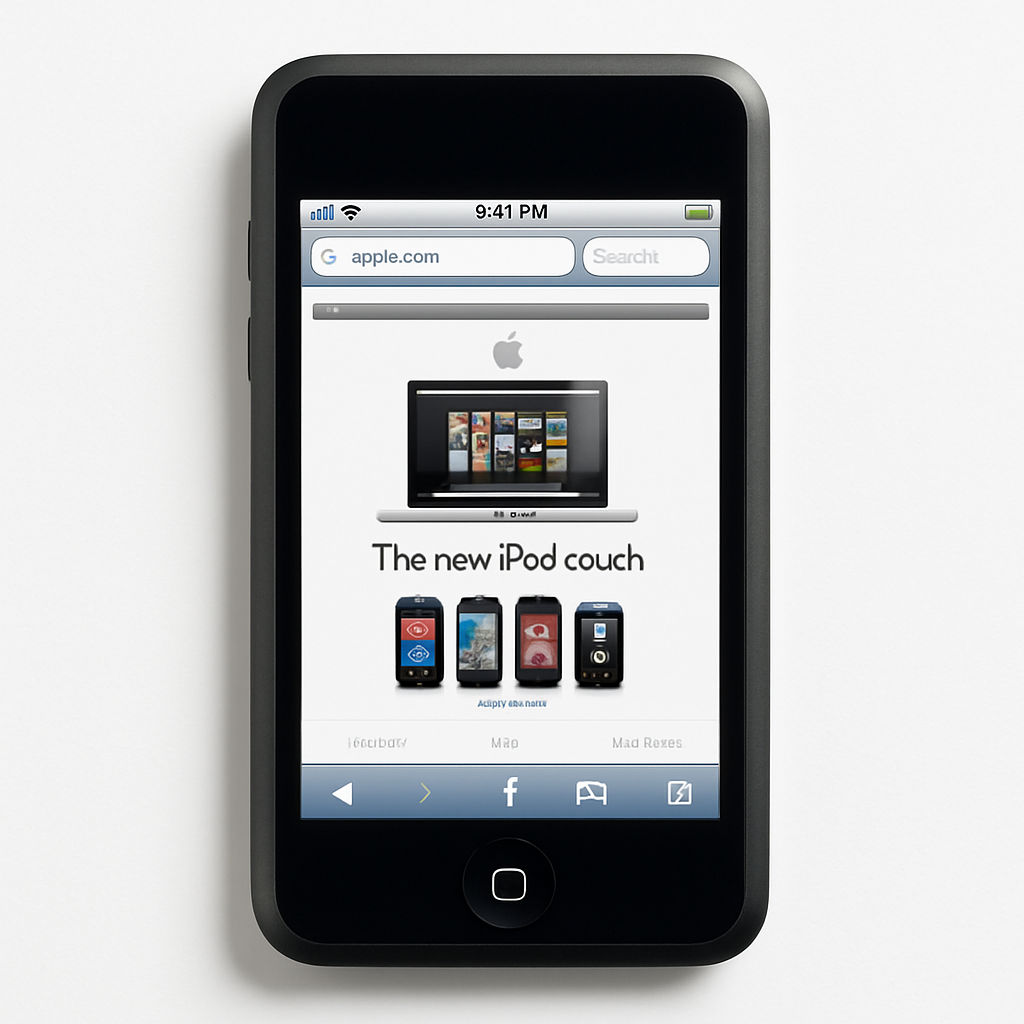
On September 14, 2007, Apple put the original iPod touch on general sale—nine days after unveiling it at the “The Beat Goes On” media event. It marked the first time the iPod lineup got some of the iPhone’s signature features: a multi-touch screen, Wi-Fi connectivity, and the Safari browser. However, it lacked cellular capability and a built-in camera.
The starting price was $299 for the 8GB model and $399 for the 16GB variant. Apple positioned the device as a compact, pocketable way to browse the web and purchase music wirelessly via iTunes’ Wi-Fi Music Store. Over the years, the iPod touch underwent seven generations of updates before Apple officially discontinued it in 2022.
Why It Was a Big Shift
Before the iPod touch, Apple’s music players were focused almost exclusively on audio. Giving the iPod trio (Nano, Shuffle, Classic) touch capability + Wi-Fi + browser turned it into something much closer to a media hub than a simple music player. It bridged the gap between iPods and the freshly announced iPhone—offering some of the smartphone’s best traits without the phone.
The use of Wi-Fi meant users could stream and buy music without tethering to a computer. Safari on iPod touch introduced an untethered web browsing experience unheard of in iPods until that point. Though limited by its lack of cellular and camera, it still redefined what users expected from portable media devices. It didn’t try to be a phone—just a versatile gadget for songs, web, and apps.
From Innovation to Sunset
The iPod touch went through seven full generations, each refining its hardware and software. From better processors, slimmer builds, new colors, to improved displays, Apple kept the line alive and relevant. It ended up as the only iPod model still officially sold when the iPod brand was retired.
In 2022, Apple quietly discontinued the iPod touch, ending a chapter that began exactly 15 years earlier. What had once been a lush ecosystem for media lovers gradually saw its role reduced—smartphones absorbed nearly all of what made the iPod touch special. Streaming apps, cloud storage, and cellular ubiquity changed consumer expectations so much that a standalone media player felt increasingly niche.
This anniversary isn’t about sentimentality—it’s about acknowledging a turning point in portable tech. The iPod touch was never the phone everyone wanted, but it was the media device many needed. Its legacy lives on in every device with touch, countless hours of wireless music, and the assumption that powerful devices should also be thin, intuitive, and connected.