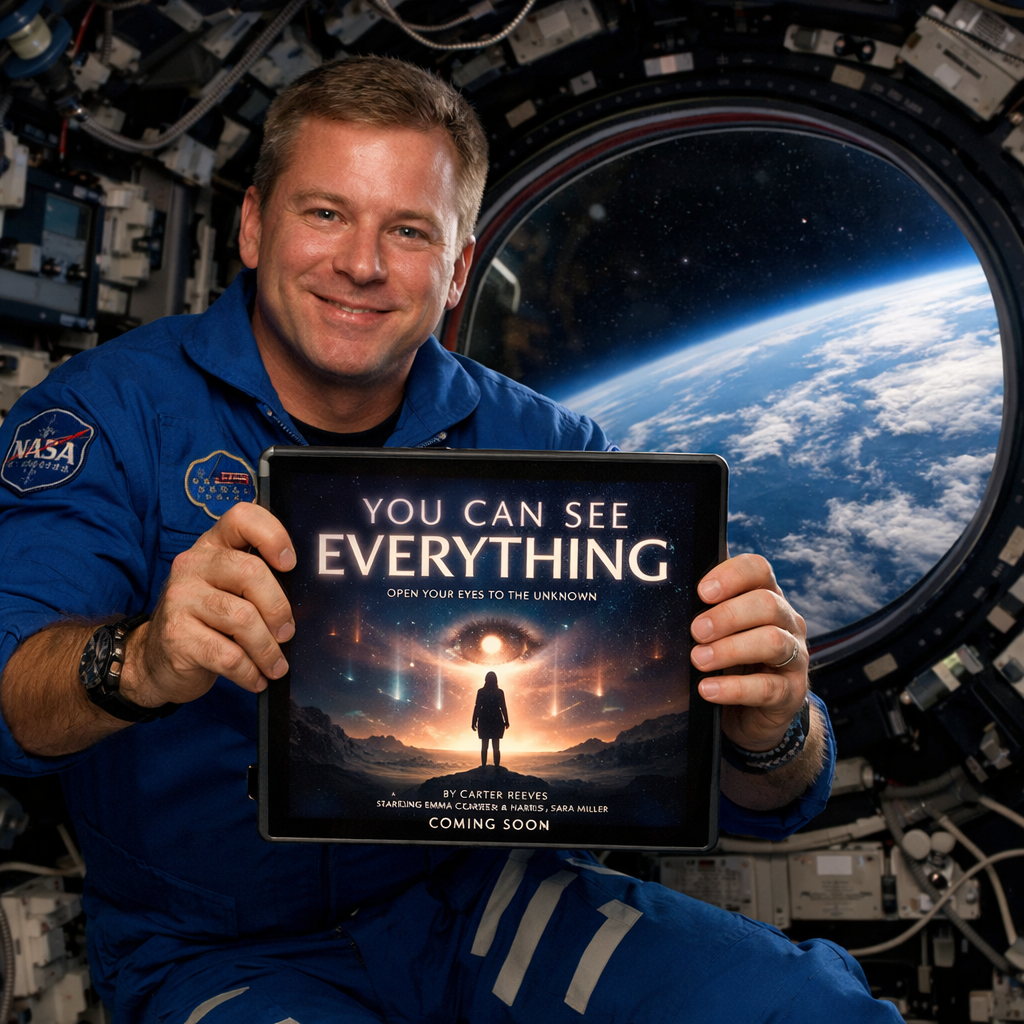
A24 has arranged for its documentary film You Can See Everything—which dives deep into the life and legacy of Elizabeth Holmes—to be screened aboard the International Space Station (ISS), even as it remains unreleased in several European markets. The studio granted NASA’s request for the space screening just as the film leads the U.S. box office following its limited theatrical launch.
Co-directed by Nathan Fielder and Lance Oppenheim, the film hit theaters in North America in a limited release. It quickly gained traction, topping box-office charts and drawing international interest. Sony Pictures has since secured rights for territories like Germany, South Korea and Latin America, though it hasn’t revealed precise release dates for those markets yet.
In the UK, You Can See Everything won’t reach audiences until November 20. French viewers will have to wait even longer—its release is scheduled for December 30. Yet for a lucky few aboard the ISS, the film is already viewable in outer space, weeks ahead of its UK debut.
Why the Space Screening Matters
This marks one of the rare occasions where a documentary with limited domestic release is showcased in orbit prior to availability in several major global markets. For NASA astronauts with limited access to entertainment options, this move highlights the demand for high-profile cultural content even off-planet. It also underscores the documentary’s buzz—and the prestige that comes from being brought aboard the ISS.
International rollout strategies like this require careful legal and logistical coordination. Sony’s acquisition deals for overseas distribution suggest that while approval exists, timing remains constrained by local censorship, festival tie-ins, dubbing, and marketing campaigns. Meanwhile, allowing an ISS screening skirts many of those traditional hurdles.
Though the film is now accessible in space, its terrestrial release plan is still unfolding. Sony’s acquisition doesn’t cover every market yet, and in regions where it’s been picked up, the release schedule varies. For instance, German theatergoers may get it sooner than those in France, whose wait extends into the final month of the year.
This documentary, which probes Holmes’ mindset and the veracity of her public narrative, continues to generate debate—and its reach is swelling. From outer space to theaters, its path to audiences reflects the evolving dynamics between content, distribution and demand.
What this development means is more than novelty. It reveals how content creators are experimenting with every imaginable platform to build momentum, especially for films tackling controversial or high-profile figures. The ability to screen something in space before certain Earth-bound regions have access flips traditional release precedents. Keep an eye on what comes after: when will the remaining regions get the film? Could this kind of strategy become a marketing staple for prestige media about to land in cinemas—or even orbit?