XCENA’s $135M Funding Boosts AI Efficiency by Tackling Memory Bottlenecks
In the rapidly evolving landscape of artificial intelligence (AI), the efficiency of data processing is paramount. XCENA, a pioneering startup with operations in South Korea and the United States, is addressing a critical challenge in AI infrastructure: the memory bottleneck. By securing $135 million in a Series B funding round, elevating its valuation to $570 million, XCENA is poised to revolutionize how AI systems handle data.
The AI Data Processing Challenge
When users interact with AI models like ChatGPT, each query initiates a complex data journey. Data moves from memory to the central processing unit (CPU) for initial processing, then to the graphics processing unit (GPU) for intensive computations, and back to memory. This cycle repeats for every word generated by the AI, leading to significant inefficiencies due to the constant shuttling between components.
XCENA’s Innovative Solution
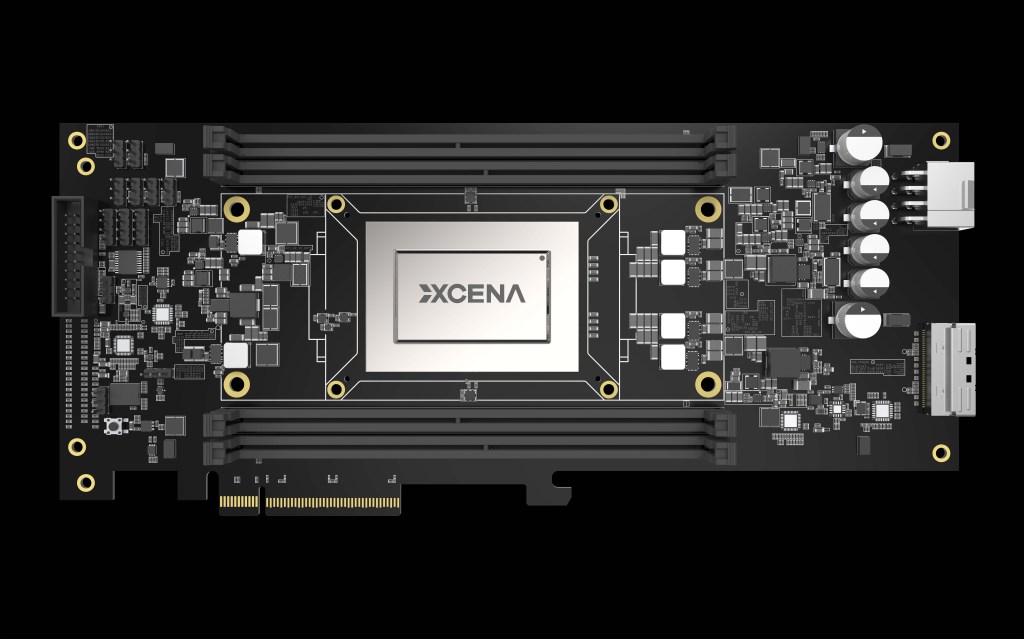
Founded in 2022 by CEO Jin Kim, CTO Dohun Kim, and CPO Harry Juhyun Kim—all veterans from industry giants Samsung and SK Hynix—XCENA aims to streamline this process. The company’s flagship product, the MX1 chip, integrates computing capabilities directly with dynamic random-access memory (DRAM). This design allows routine data operations to occur near the memory, reducing the need for data to traverse between CPUs, GPUs, and memory modules.
The MX1 chip connects to the CPU via Compute Express Link (CXL), a high-speed interface that facilitates efficient data processing within the memory module itself. By bringing computation closer to the data, XCENA’s approach has the potential to significantly reduce the number of servers required for AI tasks. The company asserts that processes previously necessitating ten servers could now be managed by just one, leading to substantial cost savings and enhanced performance.
Industry Implications and Market Timing
The timing of XCENA’s innovation aligns with a broader industry shift towards memory-centric architectures. CEO Jin Kim highlights that while CPUs and GPUs have advanced over the years, memory technology has remained relatively static. XCENA’s strategy addresses this gap, positioning the company at the forefront of a significant transformation in AI infrastructure.
The recent surge in memory prices and the valuation milestones achieved by major memory chip manufacturers—Samsung, SK Hynix, and Micron each surpassing a trillion-dollar valuation—underscore the growing importance of memory solutions in AI development. XCENA’s focus on enhancing memory efficiency resonates with this trend, attracting substantial investor interest.
Investor Confidence and Future Prospects
The $135 million Series B funding round, co-led by Seoul-based venture capital firms Altinum and IMM Investment, along with Corstone Asia and existing investors SBI Investment and Mirae Asset Capital, reflects strong confidence in XCENA’s vision. This investment brings the company’s total funding to $185 million, providing the resources needed to advance its technology and expand its market presence.
XCENA is currently in discussions with several global memory vendors to integrate its technology into broader AI infrastructure solutions. While specific partners have not been disclosed, the company’s target market includes hyperscale data centers that invest heavily in AI capabilities. Even modest improvements in memory efficiency can translate into significant cost reductions for these large-scale operations.
Competitive Landscape and Technological Edge
In the competitive realm of AI hardware, XCENA distinguishes itself by focusing on the memory bottleneck—a critical yet often overlooked aspect of AI performance. While other companies like Astera Labs and Marvell are developing next-generation memory connectivity solutions, XCENA’s approach involves a high degree of vertical integration. The MX1 chip features thousands of cores built on the open-source RISC-V architecture, optimized specifically for data processing tasks. This design choice ensures efficiency and scalability, setting XCENA apart from competitors that may rely on a limited number of general-purpose cores.
Additionally, XCENA designs its internal memory hierarchy, interconnect bus, and DRAM controller, achieving a level of integration that enhances performance and reduces reliance on external components. This comprehensive approach positions XCENA as a formidable player in the AI hardware sector.
Looking Ahead
Currently, the MX1 chip is in the prototype stage, with mass production slated to commence at Samsung’s foundry by the end of 2026. XCENA anticipates generating revenue starting in 2027, marking a significant milestone in its journey to redefine AI infrastructure.
As AI applications continue to proliferate across various industries, the demand for efficient and cost-effective data processing solutions will intensify. XCENA’s innovative approach to integrating computation with memory addresses a fundamental challenge in AI systems, offering a promising path toward more efficient and scalable AI solutions.