Security researchers uncovered a WordPress website hosting not one, but 13 separate “ClickFix” traps—malicious social engineering lures that trick visitors into pasting dangerous commands into their system. The commands are designed to execute malware under the guise of a fake CAPTCHA or reCAPTCHA, bypassing many typical browser and download filters. Multiple threat groups appear to have had access to the compromised site, which was reused for overlapping campaigns. Notably, in some cases scripts actively fight one another for control, suggesting both coordination and conflict among bad actors.
How the Traps Operate
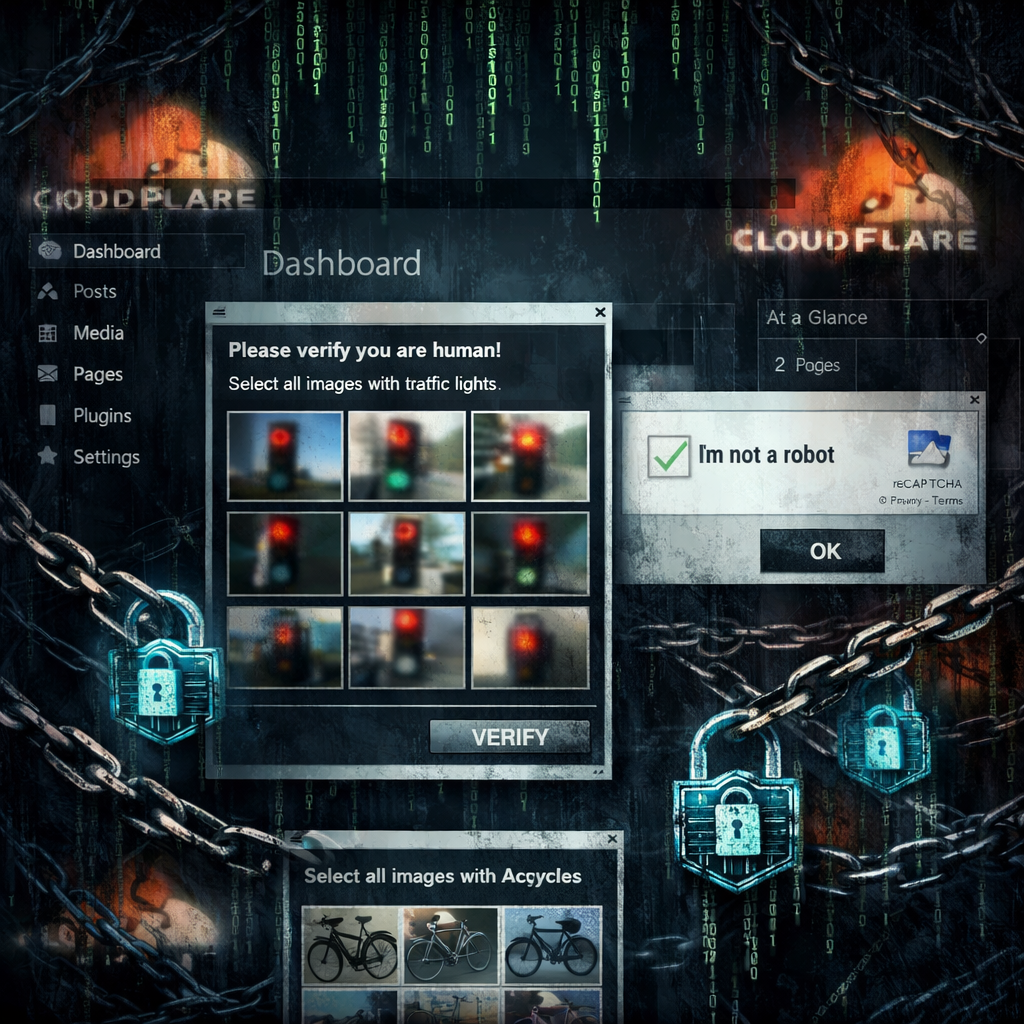
An analyst at URLScan first spotted the compromise while reviewing a live-browsing security test that captures clipboard behavior. The infected site, academicpipelinedatabase[.]net, displayed a fake reCAPTCHA overlay on a blurred Cloudflare page and embedded more than twenty obfuscated script blocks. Visitors were instructed—or tricked—into clicking a box which silently copied a command to the clipboard. Once the user pastes and executes it in PowerShell, Terminal, or a similar command-line tool, the malware payload begins installing itself.
The majority of the traps—nine out of thirteen—stem from a malware kit labeled “LOM,” identified by the “/lom” path in its URLs. LOM distinguishes between operating systems, delivering PowerShell-based scripts for Windows users and zsh shell scripts for macOS. Payloads are delivered variously: inline code, base64 blobs, fake plugin tags mimicking security tools such as “wordpress-defender,” or even via methods dubbed EtherHiding, which conceal the actual command-and-control server address inside a Polygon blockchain contract. That makes blocking single domains nearly useless, since the infrastructure can pivot by updating the blockchain data.
Duels Between Rival Malware Kits
Two other kits also share the same infected site. One mirrors techniques used by ErrTraffic: servers are hidden in distributed contracts and scripts target only Windows systems. Once execution begins, the malware downloads ZIP archives, unpacks them into hidden folders, and sets persistence mechanisms like startup registry entries—one using the innocuous name “nurture_river_mountain.” These scripts can survive even after cleaning typical databases or caches because some are installed in theme or plugin files.
The third kit focuses on macOS users and disguises itself as a Google Analytics tag. Its process involves downloading, executing, then deleting the installer script and wiping shell history afterwards. Increasingly, campaigns like this are zeroing in on Mac systems with tailored payloads. In rare cases on this site, the malware kits actively disrupted each other—one loader overwrote another’s functions, rendering parts of the infection inert.
Security teams warn that even removing a single infection layer isn’t enough. Some loaders on the site did not fully execute, but the presence of partial scripts suggests deeper lingering threats. Experts recommend thoroughly auditing theme and plugin files stored on disk—not just database entries—and applying patches immediately.
Included in the investigation are a number of Indicators of Compromise (IoCs), like specific domains, IP addresses, file paths, and even registry entry names, such as the aforementioned “nurture_river_mountain.” These also include EtherHiding-related Polygon contract addresses, which serve as part of the infrastructure to evade detection.
Site owners are urged to check for any ShadowCaptcha-style hacks, clean up both database and file-based injections, and reinstate good security hygiene. As for visitors, never paste code from a web page into systems like PowerShell, Terminal, or similar run environments—it’s a vector increasingly exploited.
The discovery of these 13 ClickFix traps on a single domain underscores how one site breach can become a battleground for multiple malware operators, each with different targets, techniques, and goals. It also highlights evolving attack techniques—like EtherHiding via blockchain contracts—that make countermeasures far more complex. For defenders, the takeaway is clear: detection and cleanup efforts must be holistic, covering both visible site elements and the hidden, file-level injects. It’s not just about removing bad code—it’s about rooting out the entire infrastructure behind it.