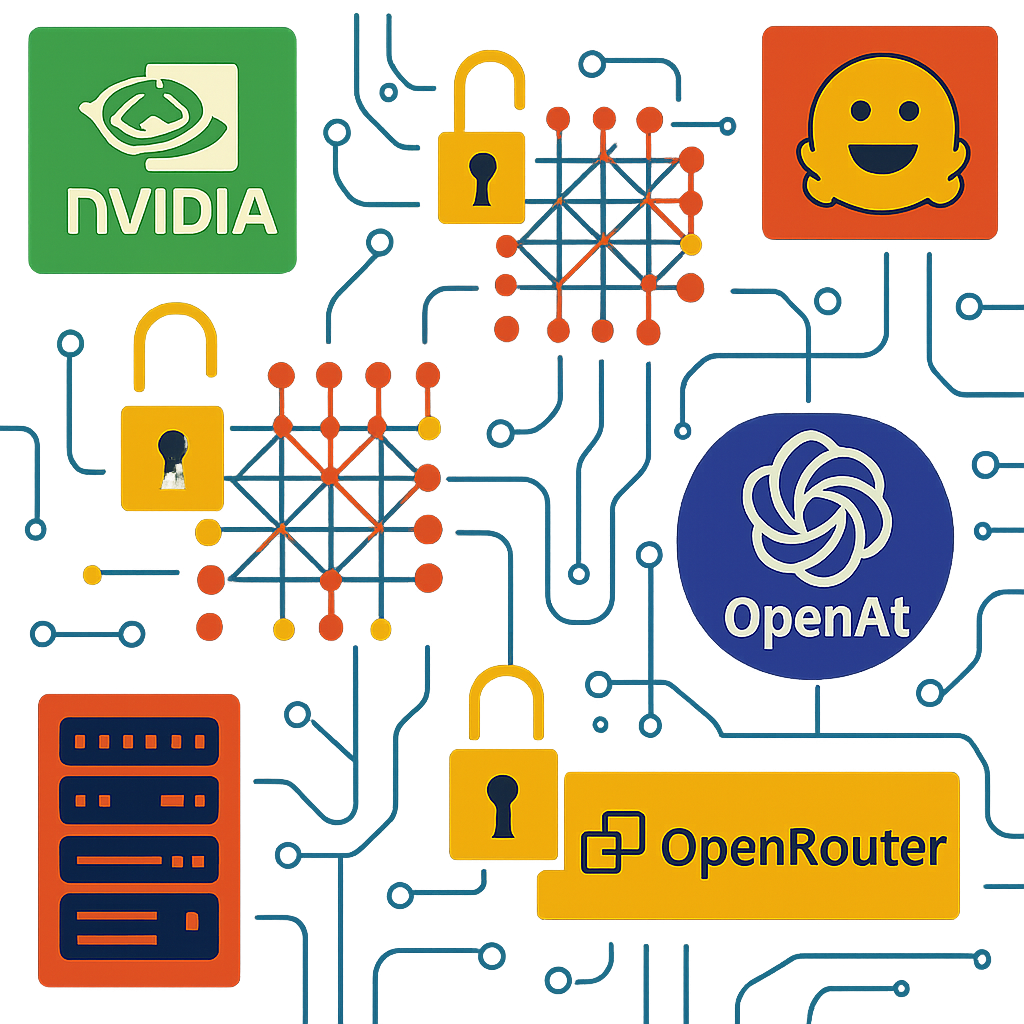
Open-weight AI platforms—those that share model weights and benchmarks openly—are rapidly becoming the most coveted prizes in Silicon Valley M&A. Several major acquisitions signal this shift: Nvidia is in talks to acquire Hugging Face for roughly $13 billion; Stripe snapped up OpenRouter for over $7 billion; and Nvidia also made a $6 billion deal with Poolside, bringing its team under Nvidia’s fold. These moves reflect growing recognition that control over freely shared models is now a powerful lever in AI infrastructure.
Open Models, Big Bets
What exactly is an open-weight model? It’s an AI system whose parameters (weights), evaluation benchmarks, and sometimes full training data are made public. This model of openness allows developers to inspect, modify, or self-host these models—ideal for companies with high-volume, repetitive workloads like customer support, where the same model answers many similar queries.
Stripe’s acquisition of OpenRouter was motivated by cost savings and efficiency: for businesses facing expensive AI inference bills, being able to deploy open models rather than depending exclusively on frontier models like those from OpenAI or Anthropic offers financial relief. But open models are also prized for configurability and signal control—businesses gain flexibility to adapt models to their specific use cases.
The Players and the Ecosystem Shift
Nvidia’s interest in this space is strategic. As model labs like OpenAI roll out their own inference chips (for example, OpenAI’s Jalapeño announced this week), Nvidia wants to ensure it doesn’t get sidelined. With its Nemotron family of open models already in the mix, acquiring open-weight platforms offers access to large user bases while aligning with Nvidia’s core strength in hardware.
Meanwhile, smaller players like Fireworks—which routes and hosts open models for corporate users—report massive scales, processing the equivalent of tens of trillions of tokens daily. The CEO of Fireworks argues that as companies improve their AI workflows and workloads mature, most will build specialized models tuned to their domain or product. This points toward a future where not just massive labs, but many businesses will own and operate bespoke AI models.
Despite compelling financial incentives and enterprise interest, open-weight models are still used by a minority—just 6% of companies, and only 2% of software engineers in surveys—because for many, frontier models are easier to access or more practical for complex reasoning tasks. But as pricing pressures grow, that usage is likely to expand.
These acquisitions suggest the dominance of proprietary AI labs isn’t guaranteed. In a fast-evolving AI landscape, open technology isn’t just ideals—it’s turning into a strategic asset. Major tech firms are looking to hedge their bets, not just by competing in model development but by absorbing infrastructure and ecosystems built around openness.
Why this matters: ownership of open-weight platforms gives companies not only technical control, but leverage over standards, users, and pricing across the AI stack. What to watch now: how leading labs respond—will they open up more, or double down on exclusivity? Also consequential will be regulation and demand: if transparency, liability, or fairness become legal issues, open-weight might shift from niche virtue to compliance necessity.